THE ADVENTURE COLLECTIVE® · Independent discovery and booking for outdoor travel

A concise 3-day trek from Pokhara to Poon Hill delivers a sunrise panorama across the Annapurna and Dhaulagiri ranges, village tea-house stays, and rhododendron forests. Ideal for hikers seeking a short, high-value Himalayan experience with manageable elevation gain.
A concise 3-day trek from Pokhara to Poon Hill delivers a sunrise panorama across the Annapurna and Dhaulagiri ranges, village tea-house stays, and rhododendron forests. Ideal for hikers seeking a short, high-value Himalayan experience with manageable elevation gain.
Morning light strips the valley bare and the first gold appears on towering snowfields; you stand on Poon Hill’s rounded summit while a 360° arc of Annapurna and Dhaulagiri peaks wake one by one. The trail climbs out of Pokhara’s softer foothills, through terraced rice fields and dense rhododendron forest, and finishes with a short, steep stairway to the viewpoint that makes the early alarm worth it.
Verified experiences and guided adventures in the surrounding area.
Operated by Eco Holidays Nepal · Pokhara, Gandaki Province
Morning light strips the valley bare and the first gold appears on towering snowfields; you stand on Poon Hill’s rounded summit while a 360° arc of Annapurna and Dhaulagiri peaks wake one by one. The trail climbs out of Pokhara’s softer foothills, through terraced rice fields and dense rhododendron forest, and finishes with a short, steep stairway to the viewpoint that makes the early alarm worth it.
Geologically the route traces the lesser Himalaya—folded sedimentary and metamorphic rock uplifted by the India-Asia collision. Culturally the path links hill villages where Gurung and Magar communities keep traditional farm rhythms; tea houses provide simple hospitality and a chance to sample dal bhat and local conversation.
Expect cool mornings at 2,800–3,200 m, thick spring rhododendron blooms, and clear winter air that offers the best long-range visibility. The trek’s character is mid-hill: forested singletrack, stone steps between steeper pitches, and short stretches of exposed ridge. Navigation is straightforward on the established Ghorepani–Poon Hill route, but weather can change quickly.
Practical guidance: start before dawn for the sunrise; carry warm layers and headlamp; plan acclimatization by keeping daily gains modest; use tea-house accommodation to travel light. Hydrate at regular intervals and pack basic blister care—the stair sections can be deceptively punishing to knees. With three days you get sunrise views, village culture, and manageable high-elevation exposure—an efficient introduction to the Annapurna foothills for hikers in good walking shape.
moderate.
2–3 days.
Suitable for hikers who can handle 4–6 hours walking per day with sustained uphill sections; basic cardio and leg strength recommended
No technical high-altitude experience is required—Poon Hill reaches about 3,210 m—but you should be comfortable with sustained uphill hiking and allow time to acclimatize.
Accommodation is typically basic tea-house rooms with twin sharing; expect simple hot meals and communal dining areas.
October–December and March–May offer the clearest views and comfortable temperatures; spring brings rhododendron blooms while winter provides crisp visibility.
Many operators include a duffel bag and sleeping bag in the package and handle basic transfers; verify baggage limits with your provider before travel.
The Ghorepani–Poon Hill trail has long linked Gurung and Magar farming communities to Pokhara’s markets; it grew in popularity with trekkers during the late-20th-century rise of Annapurna tourism.
Stick to marked trails and tea-house systems to limit erosion; local lodges promote waste-reduction—carry a reusable bottle and pack out non-biodegradable trash.
Eco Holidays Nepal operates guided outdoor trips and adventures with an emphasis on safety, stewardship, and memorable experiences.
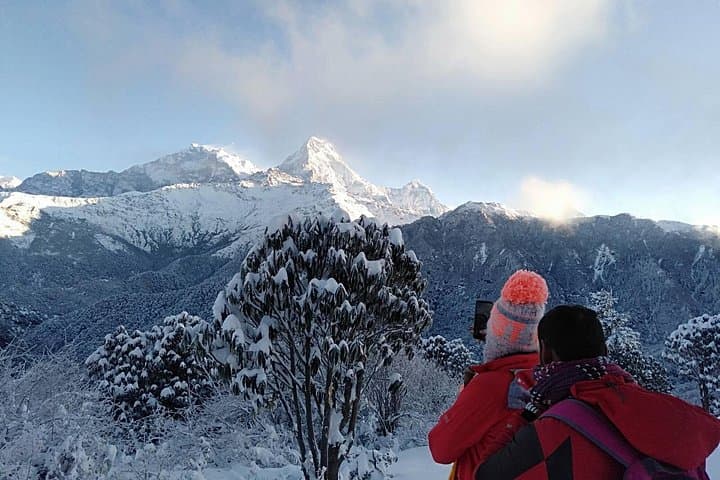
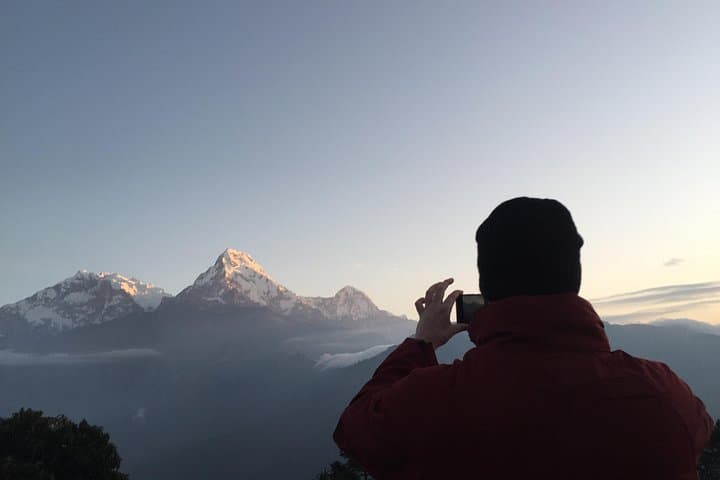
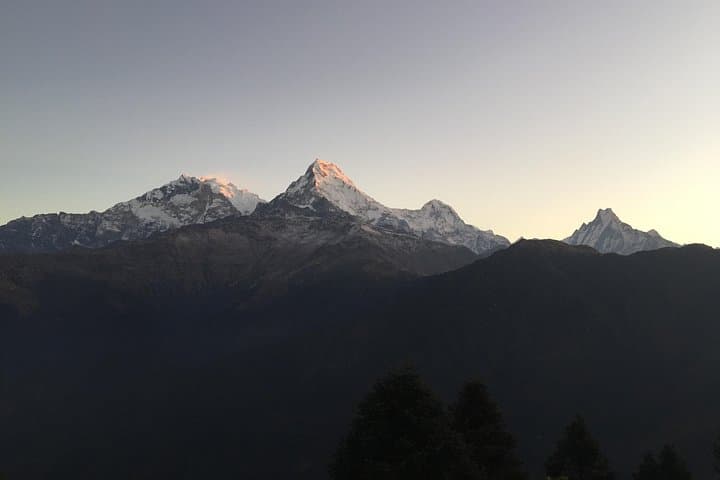
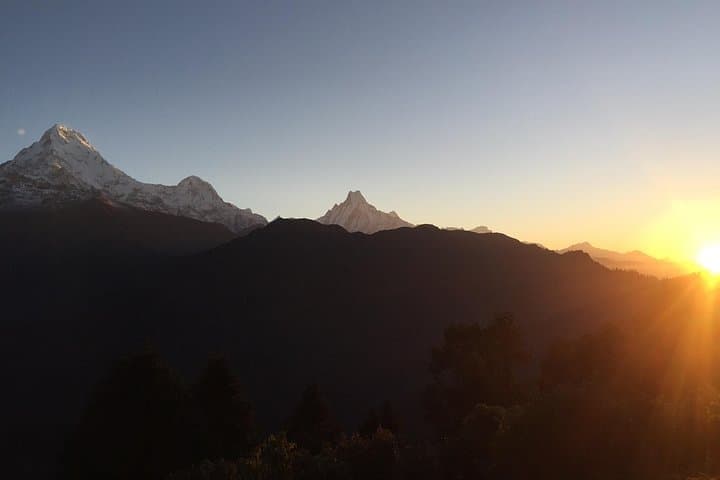
Morning light strips the valley bare and the first gold appears on towering snowfields; you stand on Poon Hill’s rounded summit while a 360° arc of Annapurna and Dhaulagiri peaks wake one by one. The trail climbs out of Pokhara’s softer foothills, through terraced rice fields and dense rhododendron forest, and finishes with a short, steep stairway to the viewpoint that makes the early alarm worth it.
Morning light strips the valley bare and the first gold appears on towering snowfields; you stand on Poon Hill’s rounded summit while a 360° arc of Annapurna and Dhaulagiri peaks wake one by one. The trail climbs out of Pokhara’s softer foothills, through terraced rice fields and dense rhododendron forest, and finishes with a short, steep stairway to the viewpoint that makes the early alarm worth it.
Geologically the route traces the lesser Himalaya—folded sedimentary and metamorphic rock uplifted by the India-Asia collision. Culturally the path links hill villages where Gurung and Magar communities keep traditional farm rhythms; tea houses provide simple hospitality and a chance to sample dal bhat and local conversation.
Expect cool mornings at 2,800–3,200 m, thick spring rhododendron blooms, and clear winter air that offers the best long-range visibility. The trek’s character is mid-hill: forested singletrack, stone steps between steeper pitches, and short stretches of exposed ridge. Navigation is straightforward on the established Ghorepani–Poon Hill route, but weather can change quickly.
Practical guidance: start before dawn for the sunrise; carry warm layers and headlamp; plan acclimatization by keeping daily gains modest; use tea-house accommodation to travel light. Hydrate at regular intervals and pack basic blister care—the stair sections can be deceptively punishing to knees. With three days you get sunrise views, village culture, and manageable high-elevation exposure—an efficient introduction to the Annapurna foothills for hikers in good walking shape.