THE ADVENTURE COLLECTIVE® · Independent discovery and booking for outdoor travel

See Jordan’s must-sees in three days: walk the Siq to Petra’s Treasury, ride a jeep across Wadi Rum’s wind-sculpted deserts and float at the Dead Sea. This private tour blends history, dramatic geology and practical logistics for a compact, immersive itinerary.
See Jordan’s must-sees in three days: walk the Siq to Petra’s Treasury, ride a jeep across Wadi Rum’s wind-sculpted deserts and float at the Dead Sea. This private tour blends history, dramatic geology and practical logistics for a compact, immersive itinerary.
Morning light slides down the narrow cleft of the Siq, turning the sandstone walls of Petra from rust to molten gold. You walk in single file with the crush of other visitors, the path a steady 1.2 km ribbon between two sheer rock faces until the Treasury bursts into view — carved, improbably, from living stone. That opening moment is the tour’s heartbeat: ancient engineering and desert silence meet busier modern rhythms. Over three days you move from high limestone ridges and Nabatean tombs to the broad pink sand of Wadi Rum and finally to the hushed buoyancy of the Dead Sea.
Verified experiences and guided adventures in the surrounding area.
Operated by Bridge Travel · Wadi Musa, Ma'an
Morning light slides down the narrow cleft of the Siq, turning the sandstone walls of Petra from rust to molten gold. You walk in single file with the crush of other visitors, the path a steady 1.2 km ribbon between two sheer rock faces until the Treasury bursts into view — carved, improbably, from living stone. That opening moment is the tour’s heartbeat: ancient engineering and desert silence meet busier modern rhythms. Over three days you move from high limestone ridges and Nabatean tombs to the broad pink sand of Wadi Rum and finally to the hushed buoyancy of the Dead Sea.
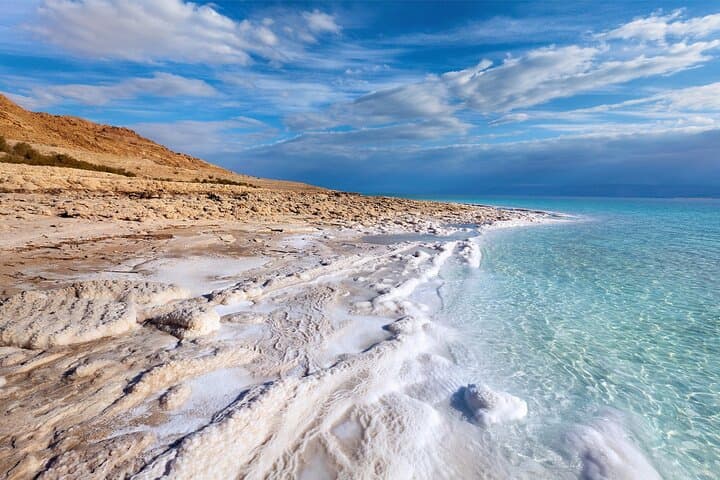
Petra’s story is geology and trade: a Nabatean capital cut into a Jurassic-era sandstone gorge where water management and stonework made a stop on incense and spice routes possible. Nearby, Shobak Castle still wears the scars of Crusader ambitions, and Little Petra reads as a caravanserai — a practical annex where merchants once rested. Wadi Rum is younger in human terms but older in stone; wind-carved monoliths and aeolian forms create cliffs that seem to move when the light shifts. Finishing at the Dead Sea — roughly 430 m below sea level — you’ll experience a landscape defined by salt and buoyancy rather than stone.
The itinerary packs distance and variety: expect about 6–8 km of walking inside Petra to see the Treasury, Royal Tombs and the Roman theater, with steeper sections and optional stair climbs (the Monastery involves several hundred steps from the valley floor). Wadi Rum is explored by a 2-hour jeep safari that covers tens of kilometers of desert track and short walks to alcoves and viewpoints. Travel time is a reality: Amman to Petra is roughly 3–4 hours by road, Petra to Wadi Rum about 2 hours, and Wadi Rum to the Dead Sea a longer drive that loops back toward Amman.
Practical edge: start Petra at first light to avoid mid-day heat and crowds, carry at least 2–3 liters of water, and use a sun hat and high-SPF sunscreen — the canyon traps heat. Footwear should be sturdy walking shoes with good grip; some surfaces are worn smooth. For the Wadi Rum night, expect cool desert evenings — a warm layer helps. Plan for cash for small purchases and tips; entry fees and optional horse rides in Petra are paid locally.
This private, door-to-door tour bundles logistics: hotel pickup in Amman, one night in a 3-star Petra hotel, a deluxe tent in a Wadi Rum camp with Bedouin dinner, and a Dead Sea stop for a swim. It’s an efficient three-day loop for travelers who want classic Jordan without the rental car math, but bring energy and respect for fragile desert landscapes — the places you visit are both ancient and increasingly visited.
moderate.
3 days (approx. 72 hours).
Moderate fitness recommended — able to walk 6–8 km in a day with some stair climbs and short hikes.
Entrance fees are not included in this tour price and are paid locally; the guide can assist with ticket purchase and timing.
You’ll stay in a deluxe Bedouin-style tent with basic comforts; camps typically provide mattresses, blankets and shared or private facilities depending on the option.
Yes — the third day includes time at the Dead Sea for swimming and lunch, but plan for a long drive back to Amman afterward.
People with moderate mobility can participate, but the itinerary includes walking on uneven terrain; it’s not recommended for those with serious spinal or heart issues as noted in booking restrictions.
Travel insurance that covers medical evacuation and activity-related incidents is strongly recommended; no special permits are required beyond site entry tickets.
The tour includes an English-speaking driver; additional English-speaking guides for specific sites can usually be arranged if required.
Petra flourished as the Nabatean capital from the 4th century BCE as a crossroads for Arabian trade; its stone-cut facades are both tombs and indicators of an urbanized caravan economy.
Visitors are asked to stay on established paths and avoid carving or climbing on fragile sandstone; local camps and guides increasingly promote low-impact practices and water conservation.
Bridge Travel operates guided outdoor trips and adventures with an emphasis on safety, stewardship, and memorable experiences.
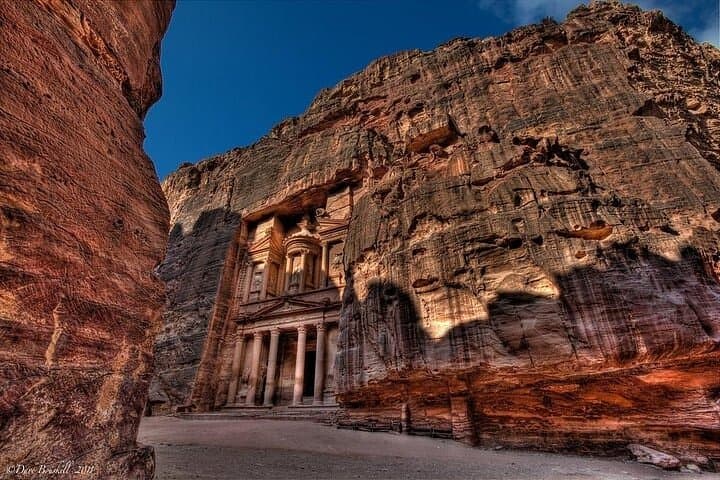
Morning light slides down the narrow cleft of the Siq, turning the sandstone walls of Petra from rust to molten gold. You walk in single file with the crush of other visitors, the path a steady 1.2 km ribbon between two sheer rock faces until the Treasury bursts into view — carved, improbably, from living stone. That opening moment is the tour’s heartbeat: ancient engineering and desert silence meet busier modern rhythms. Over three days you move from high limestone ridges and Nabatean tombs to the broad pink sand of Wadi Rum and finally to the hushed buoyancy of the Dead Sea.
Morning light slides down the narrow cleft of the Siq, turning the sandstone walls of Petra from rust to molten gold. You walk in single file with the crush of other visitors, the path a steady 1.2 km ribbon between two sheer rock faces until the Treasury bursts into view — carved, improbably, from living stone. That opening moment is the tour’s heartbeat: ancient engineering and desert silence meet busier modern rhythms. Over three days you move from high limestone ridges and Nabatean tombs to the broad pink sand of Wadi Rum and finally to the hushed buoyancy of the Dead Sea.
Petra’s story is geology and trade: a Nabatean capital cut into a Jurassic-era sandstone gorge where water management and stonework made a stop on incense and spice routes possible. Nearby, Shobak Castle still wears the scars of Crusader ambitions, and Little Petra reads as a caravanserai — a practical annex where merchants once rested. Wadi Rum is younger in human terms but older in stone; wind-carved monoliths and aeolian forms create cliffs that seem to move when the light shifts. Finishing at the Dead Sea — roughly 430 m below sea level — you’ll experience a landscape defined by salt and buoyancy rather than stone.
The itinerary packs distance and variety: expect about 6–8 km of walking inside Petra to see the Treasury, Royal Tombs and the Roman theater, with steeper sections and optional stair climbs (the Monastery involves several hundred steps from the valley floor). Wadi Rum is explored by a 2-hour jeep safari that covers tens of kilometers of desert track and short walks to alcoves and viewpoints. Travel time is a reality: Amman to Petra is roughly 3–4 hours by road, Petra to Wadi Rum about 2 hours, and Wadi Rum to the Dead Sea a longer drive that loops back toward Amman.
Practical edge: start Petra at first light to avoid mid-day heat and crowds, carry at least 2–3 liters of water, and use a sun hat and high-SPF sunscreen — the canyon traps heat. Footwear should be sturdy walking shoes with good grip; some surfaces are worn smooth. For the Wadi Rum night, expect cool desert evenings — a warm layer helps. Plan for cash for small purchases and tips; entry fees and optional horse rides in Petra are paid locally.
This private, door-to-door tour bundles logistics: hotel pickup in Amman, one night in a 3-star Petra hotel, a deluxe tent in a Wadi Rum camp with Bedouin dinner, and a Dead Sea stop for a swim. It’s an efficient three-day loop for travelers who want classic Jordan without the rental car math, but bring energy and respect for fragile desert landscapes — the places you visit are both ancient and increasingly visited.