THE ADVENTURE COLLECTIVE® · Independent discovery and booking for outdoor travel

A private three-day loop from Amman to Petra, across Wadi Rum and down to the Dead Sea that pairs Nabataean ruins, sweeping desert drives, and a buoyant shoreline experience. Perfect for travelers who want dramatic landscapes with guided logistics.
A private three-day loop from Amman to Petra, across Wadi Rum and down to the Dead Sea that pairs Nabataean ruins, sweeping desert drives, and a buoyant shoreline experience. Perfect for travelers who want dramatic landscapes with guided logistics.
Morning light slices the sandstone of the Siq into bands of ochre and gold. You walk the narrow canyon and the rock seems to breathe — slow, ancient inhalations that have polished facades and carved frescos into living stone. By afternoon you'll be crossing a desert older than the maps that name it, watching limestone ridges and mushroom-shaped monoliths slide past as your Jeep negotiates the red dunes of Wadi Rum. On day two the landscape gives way again — a four-hour drive to the Dead Sea, where the edge of the world tilts and the water refuses to let you sink.
Verified experiences and guided adventures in the surrounding area.
Operated by Tour Experts · Wadi Musa, Ma'an Governorate
Morning light slices the sandstone of the Siq into bands of ochre and gold. You walk the narrow canyon and the rock seems to breathe — slow, ancient inhalations that have polished facades and carved frescos into living stone. By afternoon you'll be crossing a desert older than the maps that name it, watching limestone ridges and mushroom-shaped monoliths slide past as your Jeep negotiates the red dunes of Wadi Rum. On day two the landscape gives way again — a four-hour drive to the Dead Sea, where the edge of the world tilts and the water refuses to let you sink.
This private three-day itinerary strings together Jordan’s three headline landscapes and the stories that built them. Petra, the Nabataean capital, is an engineering and artistic achievement: a city carved into sandstone with a water-management system that made a desert society thrive. Wadi Rum, a recently inscribed UNESCO World Heritage Site, records millennia of human presence in petroglyphs and Bedouin camps; its sculpted sandstone and granite was a backdrop for Lawrence of Arabia and later desert filmmakers. The Dead Sea, 408 meters below sea level, is a geological low point of the Rift Valley, where hyper-saline water and mineral-rich mud draw both floaters and curiosity seekers.
Geology and human history interlock here: erosion has hollowed the Siq and sculpted Rum’s towers; trade and ingenuity carved Petra’s façades. Culturally, the tour offers encounters with modern Bedouin hospitality — camp dinners, off-road excursions — plus the quiet of a mineral-laden shoreline where prehistoric migration routes once converged.
Practical edge: the trip covers long drives (Amman to Petra ≈ 3 hours by road; Wadi Rum to the Dead Sea ≈ 4 hours). Petra’s core requires several hours on foot — expect paved rock, staircases, and loose scree on side-trails. Wadi Rum touring is by 4x4 over sandy and rocky terrain with short walks; camps vary from basic to luxury tents. At the Dead Sea, plan for limited shade, high sun exposure, and slippery, oily mud. Bring a lightweight daypack, sun protection, and quick-drying clothing.
Timing matters: start early at Petra to avoid heat and crowds; late afternoon light is best for photos in the Siq and at the Treasury. In summer, temperatures can exceed 40°C in the desert; winter nights are cold in tents. Respect local norms — modest dress in towns and at archaeological sites — and follow your guide’s safety instructions for swimming and floating at the Dead Sea.
For travelers who want a concentrated slice of Jordan, this private tour delivers sweeping geology, living culture, and hours of quiet at one of Earth’s most singular shorelines — all stitched together with the convenience of private transport and local guides.
moderate.
3 days (approx. 72 hours).
Moderate — you should be comfortable walking several hours with some elevation change and uneven ground.
Yes—private air-conditioned vehicle and English-speaking driver are included for all transfers in the itinerary.
Entrance to Petra is required and can be purchased at the site or arranged by the operator; Dead Sea beach access may be included depending on hotel choice—confirm at booking.
Camp standards vary from VIP/luxury tents with en-suite facilities to simpler Martian-style tents; the itinerary lists options—confirm your selection when booking.
The tour notes stroller and wheelchair-accessible transport for some transfers, but Petra’s site has uneven trails—contact the operator to confirm accessibility for specific needs.
Floating is generally safe; avoid getting water in your eyes or mouth, and do not cut or shave before bathing. If you have severe skin conditions, consult your doctor first.
Breakfasts and one dinner (typically at Wadi Rum camp) are included; additional meals and optional activities such as hot-air balloon rides are payable locally unless stated otherwise.
Petra grew as the Nabataean kingdom’s hydraulic and trade hub; Wadi Rum’s rock art and camps record millennia of Bedouin life and ties to Lawrence of Arabia.
Wadi Rum’s UNESCO status encourages low-impact tourism and Bedouin stewardship; visitors should stick to established tracks, avoid removing artifacts, and support local guides and camps.
Tour Experts operates guided outdoor trips and adventures with an emphasis on safety, stewardship, and memorable experiences.
Morning light slices the sandstone of the Siq into bands of ochre and gold. You walk the narrow canyon and the rock seems to breathe — slow, ancient inhalations that have polished facades and carved frescos into living stone. By afternoon you'll be crossing a desert older than the maps that name it, watching limestone ridges and mushroom-shaped monoliths slide past as your Jeep negotiates the red dunes of Wadi Rum. On day two the landscape gives way again — a four-hour drive to the Dead Sea, where the edge of the world tilts and the water refuses to let you sink.
Morning light slices the sandstone of the Siq into bands of ochre and gold. You walk the narrow canyon and the rock seems to breathe — slow, ancient inhalations that have polished facades and carved frescos into living stone. By afternoon you'll be crossing a desert older than the maps that name it, watching limestone ridges and mushroom-shaped monoliths slide past as your Jeep negotiates the red dunes of Wadi Rum. On day two the landscape gives way again — a four-hour drive to the Dead Sea, where the edge of the world tilts and the water refuses to let you sink.
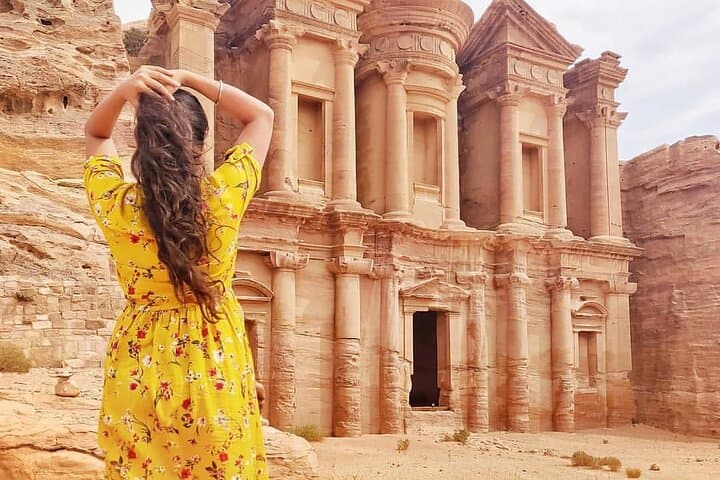
This private three-day itinerary strings together Jordan’s three headline landscapes and the stories that built them. Petra, the Nabataean capital, is an engineering and artistic achievement: a city carved into sandstone with a water-management system that made a desert society thrive. Wadi Rum, a recently inscribed UNESCO World Heritage Site, records millennia of human presence in petroglyphs and Bedouin camps; its sculpted sandstone and granite was a backdrop for Lawrence of Arabia and later desert filmmakers. The Dead Sea, 408 meters below sea level, is a geological low point of the Rift Valley, where hyper-saline water and mineral-rich mud draw both floaters and curiosity seekers.
Geology and human history interlock here: erosion has hollowed the Siq and sculpted Rum’s towers; trade and ingenuity carved Petra’s façades. Culturally, the tour offers encounters with modern Bedouin hospitality — camp dinners, off-road excursions — plus the quiet of a mineral-laden shoreline where prehistoric migration routes once converged.
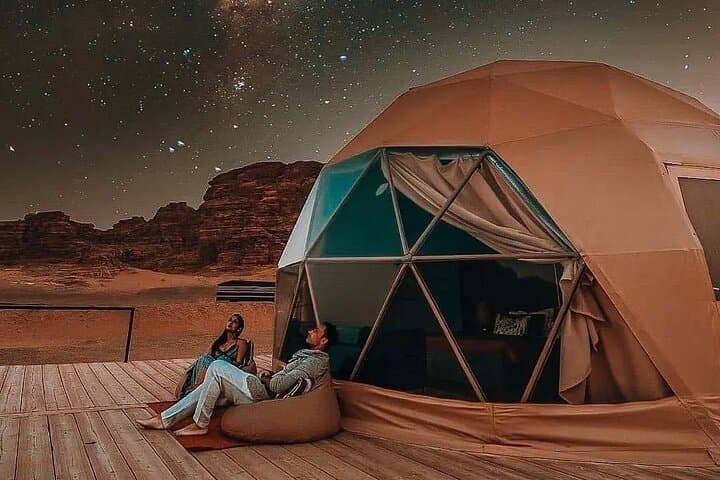
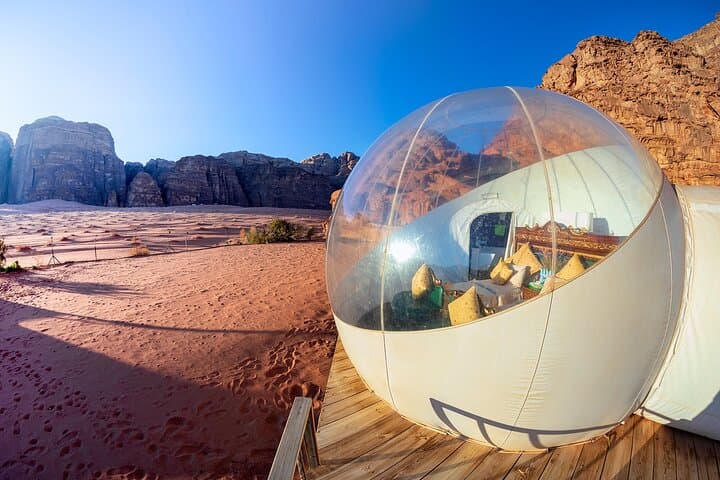
Practical edge: the trip covers long drives (Amman to Petra ≈ 3 hours by road; Wadi Rum to the Dead Sea ≈ 4 hours). Petra’s core requires several hours on foot — expect paved rock, staircases, and loose scree on side-trails. Wadi Rum touring is by 4x4 over sandy and rocky terrain with short walks; camps vary from basic to luxury tents. At the Dead Sea, plan for limited shade, high sun exposure, and slippery, oily mud. Bring a lightweight daypack, sun protection, and quick-drying clothing.
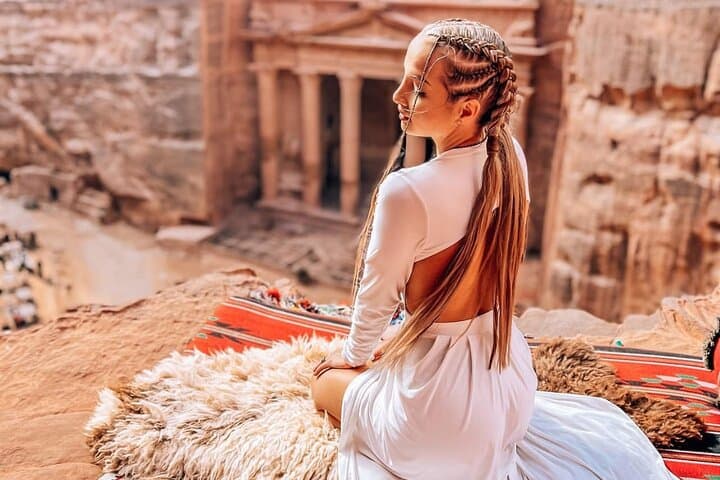
Timing matters: start early at Petra to avoid heat and crowds; late afternoon light is best for photos in the Siq and at the Treasury. In summer, temperatures can exceed 40°C in the desert; winter nights are cold in tents. Respect local norms — modest dress in towns and at archaeological sites — and follow your guide’s safety instructions for swimming and floating at the Dead Sea.
For travelers who want a concentrated slice of Jordan, this private tour delivers sweeping geology, living culture, and hours of quiet at one of Earth’s most singular shorelines — all stitched together with the convenience of private transport and local guides.