THE ADVENTURE COLLECTIVE® · Independent discovery and booking for outdoor travel

A three-day Bohol circuit that pairs Pamilacan Island snorkeling and dolphin-watching with the Chocolate Hills, tarsier viewing, Loboc River paddling, and countryside culture. Practical, active, and rich in coastal and karst landscapes.
A three-day Bohol circuit that pairs Pamilacan Island snorkeling and dolphin-watching with the Chocolate Hills, tarsier viewing, Loboc River paddling, and countryside culture. Practical, active, and rich in coastal and karst landscapes.
Stepping off the banca onto Pamilacan’s white sand, the sea seems to pull you forward like a curious companion. The second day of this three-day loop is all marine motion—snorkel-slick water, coral gardens that hum with fishes, and boats that rock gently as the horizon widens.
Verified experiences and guided adventures in the surrounding area.
Operated by Abraham Tours Philippines · Panglao, Bohol
Stepping off the banca onto Pamilacan’s white sand, the sea seems to pull you forward like a curious companion. The second day of this three-day loop is all marine motion—snorkel-slick water, coral gardens that hum with fishes, and boats that rock gently as the horizon widens.
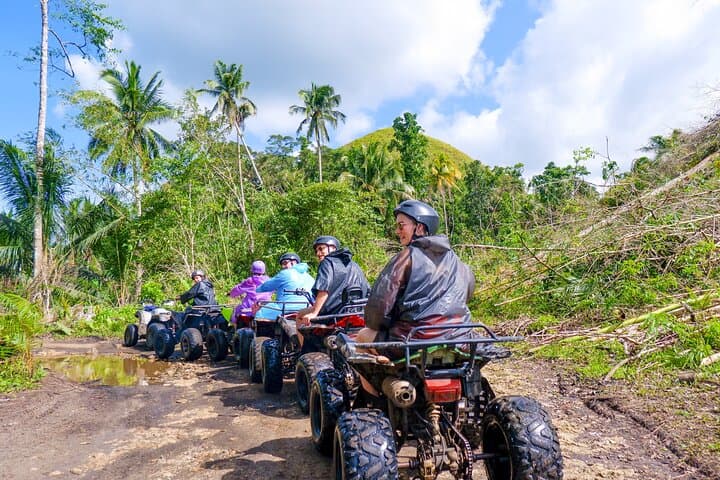
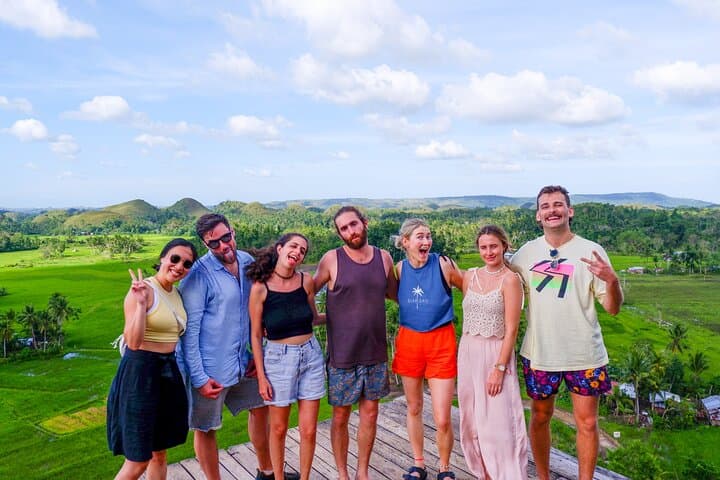
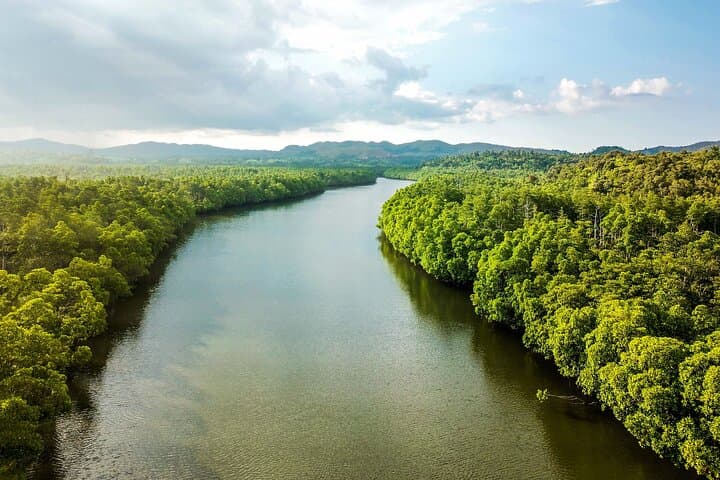
Bohol’s land tells a different story. The Chocolate Hills are limestone karst remnants shaped by millennia of marine deposition and erosion, a geological oddity rising out of farmland. Baclayon Church recalls Spanish-era missions and the island’s deep Catholic traditions; nearby salt-making workshops preserve centuries-old techniques. The Loboc River still carries the slow commerce of the interior, its banks shaded by secondary forest and planted palms.
Wildlife here is small but magnetic—Bohol’s tarsiers, one of the world’s smallest primates, demand quiet respect; offshore, schools of reef fish and the occasional sea turtle animate the shallows. Local guides emphasize low-impact travel: no flash photography at the tarsier sanctuary, reef-safe sunscreen for coral health, and supporting family-run eateries and salt makers.
Practical side: expect active mornings—boat transfers and short swims—so pack quick-dry layers, reef-safe sun protection, and water shoes. Start early at the Chocolate Hills to beat the crowds and consider a paddle on the Loboc in late afternoon light when the river cools and the current eases. Fitness needn’t be extreme, but moderate stamina makes island hopping and SUP more enjoyable. With simple preparation this mix of sea and countryside becomes an efficient, connective taste of Bohol’s natural and cultural highlights.
moderate.
3 days (approx. 72 hours).
Moderate fitness—comfortable with repeated short boat rides, snorkeling and a few hours of walking or paddling per day.
Boat transfers for scheduled island activities (like the Pamilacan day trip) are included as part of the itinerary; confirm exact pickup times with your operator.
Dolphin sightings are common around Pamilacan; sightings of larger species like whale sharks are less predictable and should not be guaranteed.
Yes—children can visit but must remain quiet and follow guide instructions to avoid disturbing the tarsiers; flash photography is prohibited.
You need basic swimming and comfort in shallow reef water; guided snorkeling is suitable for beginners but those uneasy in open water should disclose this to guides.
Baclayon Church is one of the oldest stone churches in the Philippines, reflecting Spanish colonial mission history and centuries of local religious practice.
Bohol relies on community-based conservation: support local guides, use reef-safe products, and follow sanctuary rules to reduce impact on tarsiers and coral reefs.
Abraham Tours Philippines operates guided outdoor trips and adventures with an emphasis on safety, stewardship, and memorable experiences.
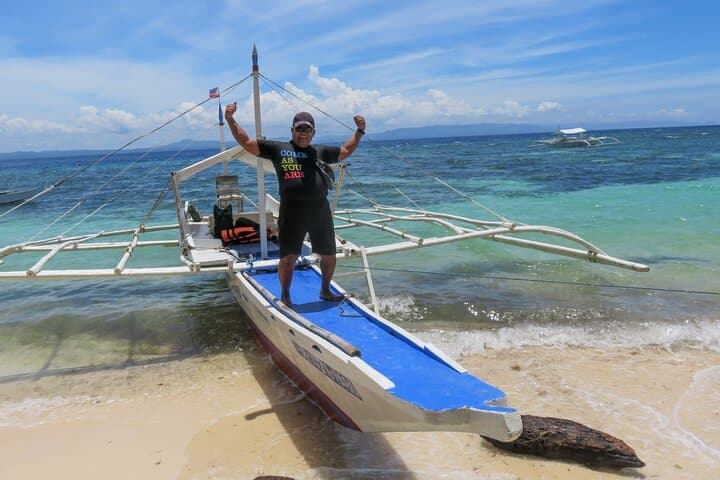
Stepping off the banca onto Pamilacan’s white sand, the sea seems to pull you forward like a curious companion. The second day of this three-day loop is all marine motion—snorkel-slick water, coral gardens that hum with fishes, and boats that rock gently as the horizon widens.
Stepping off the banca onto Pamilacan’s white sand, the sea seems to pull you forward like a curious companion. The second day of this three-day loop is all marine motion—snorkel-slick water, coral gardens that hum with fishes, and boats that rock gently as the horizon widens.
Bohol’s land tells a different story. The Chocolate Hills are limestone karst remnants shaped by millennia of marine deposition and erosion, a geological oddity rising out of farmland. Baclayon Church recalls Spanish-era missions and the island’s deep Catholic traditions; nearby salt-making workshops preserve centuries-old techniques. The Loboc River still carries the slow commerce of the interior, its banks shaded by secondary forest and planted palms.
Wildlife here is small but magnetic—Bohol’s tarsiers, one of the world’s smallest primates, demand quiet respect; offshore, schools of reef fish and the occasional sea turtle animate the shallows. Local guides emphasize low-impact travel: no flash photography at the tarsier sanctuary, reef-safe sunscreen for coral health, and supporting family-run eateries and salt makers.
Practical side: expect active mornings—boat transfers and short swims—so pack quick-dry layers, reef-safe sun protection, and water shoes. Start early at the Chocolate Hills to beat the crowds and consider a paddle on the Loboc in late afternoon light when the river cools and the current eases. Fitness needn’t be extreme, but moderate stamina makes island hopping and SUP more enjoyable. With simple preparation this mix of sea and countryside becomes an efficient, connective taste of Bohol’s natural and cultural highlights.