THE ADVENTURE COLLECTIVE® · Independent discovery and booking for outdoor travel

Explore western Turkey’s great archaeological corridors in three days—walk Pamukkale’s white terraces, roam Ephesus’s marble avenues and visit quieter sanctuaries at Stratonikeia and Lagina. This semi‑private tour balances iconic sites with village crafts and practical logistics.
Explore western Turkey’s great archaeological corridors in three days—walk Pamukkale’s white terraces, roam Ephesus’s marble avenues and visit quieter sanctuaries at Stratonikeia and Lagina. This semi‑private tour balances iconic sites with village crafts and practical logistics.
Dawn finds the travertine terraces of Pamukkale glowing like chalk cut from the sky as a guide gathers a small group for three days of archaeology, hot springs, and Aegean villages. Over the next 72 hours travelers move from calcium‑rich cascades and Roman baths to the marble streets of Ephesus, then inland to lesser‑visited sanctuaries and gymnasia at Stratonikeia and Laodicea.
Verified experiences and guided adventures in the surrounding area.
Operated by Turkey Experiences · Kuşadası, Aydın
Dawn finds the travertine terraces of Pamukkale glowing like chalk cut from the sky as a guide gathers a small group for three days of archaeology, hot springs, and Aegean villages. Over the next 72 hours travelers move from calcium‑rich cascades and Roman baths to the marble streets of Ephesus, then inland to lesser‑visited sanctuaries and gymnasia at Stratonikeia and Laodicea.
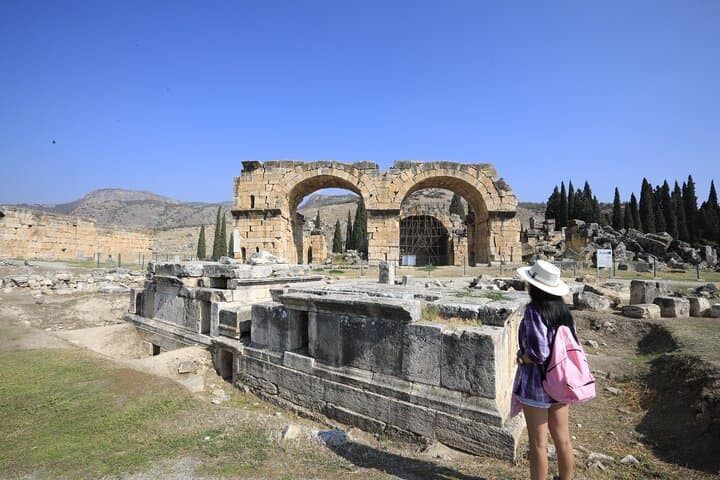
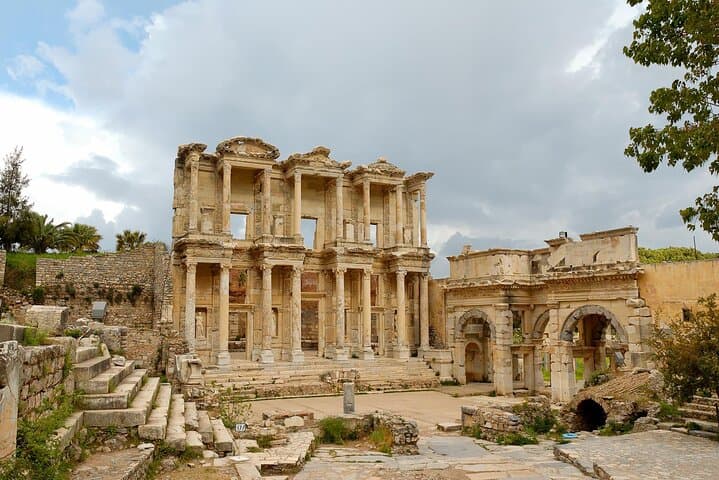
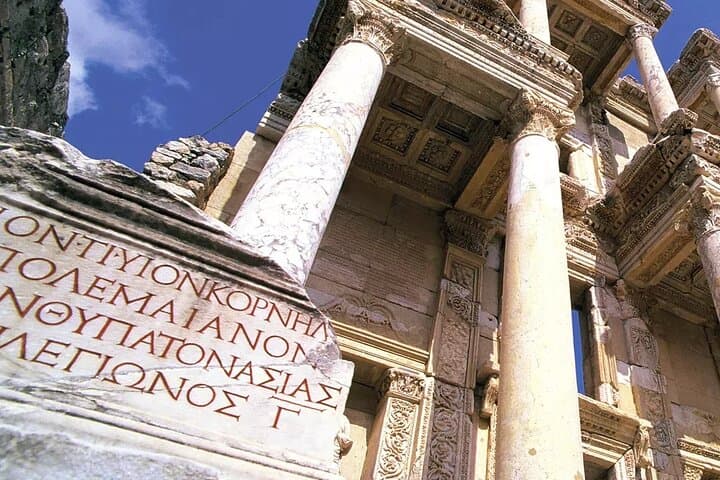
Geologically Pamukkale is a flowing formation of travertine deposited by thermal springs; its white carbonate shelves formed over millennia and make an unusual walking surface. Historically the region stitches Hellenistic kingdoms, Roman urbanism and early Christian communities—Ephesus alone offers the Celsus Library, Great Theater and the footprint of the Temple of Artemis. Lagina and Stratonikeia reveal ritual roads and a civic life organized around sacred festivals and athletics.
Culturally the tour pairs museum stops, village weaving cooperatives and a taste of Aegean cuisine: expect slow‑cooked mezes, flatbreads and coastal olive oil flavors at midday lunches. Practicalities are straightforward: the itinerary includes moderate daily walking (roughly 4–8 km cumulatively, uneven stone and steps), two nights in Kuşadası‑area hotels, and domestic flight options if you extend to Cappadocia.
Pack sturdy shoes, sun protection and a small towel if you plan the optional Cleopatra pool; remember you must remove footwear on the travertine terraces and follow site rules to protect fragile deposits. Morning light and off‑peak hours give the clearest photos and the most comfortable walking—bring water, a light layer for wind on coastal evenings, and an appetite for history.
moderate.
3 days.
Suitable for travelers with moderate fitness who can walk several hours over uneven surfaces and climb steps.
Guides will distribute entrance tickets for the scheduled sites; specific optional extras (Antique/Cleopatra Pool, paragliding) are usually extra.
Bathing is restricted on the natural white travertines to protect them; designated pools and the paid Antique Pool are the places to swim.
Many ancient sites have uneven ground and steps; the tour is not recommended for those with serious spinal or mobility problems—check accessibility for specific stops before booking.
Yes—there is an option to fly onward to Cappadocia instead of returning to Istanbul; inform the operator at booking and provide passport details for domestic flight reservations.
The route stitches Hellenistic, Roman and Byzantine layers—Ephesus was a major Roman port and Pamukkale (Hierapolis) grew as a thermal spa town tied to healing cults.
Pamukkale’s travertines are fragile—visitors must follow designated paths and avoid soaps or lotions in thermal waters to protect mineral deposits.
Turkey Experiences operates guided outdoor trips and adventures with an emphasis on safety, stewardship, and memorable experiences.

Dawn finds the travertine terraces of Pamukkale glowing like chalk cut from the sky as a guide gathers a small group for three days of archaeology, hot springs, and Aegean villages. Over the next 72 hours travelers move from calcium‑rich cascades and Roman baths to the marble streets of Ephesus, then inland to lesser‑visited sanctuaries and gymnasia at Stratonikeia and Laodicea.
Dawn finds the travertine terraces of Pamukkale glowing like chalk cut from the sky as a guide gathers a small group for three days of archaeology, hot springs, and Aegean villages. Over the next 72 hours travelers move from calcium‑rich cascades and Roman baths to the marble streets of Ephesus, then inland to lesser‑visited sanctuaries and gymnasia at Stratonikeia and Laodicea.
Geologically Pamukkale is a flowing formation of travertine deposited by thermal springs; its white carbonate shelves formed over millennia and make an unusual walking surface. Historically the region stitches Hellenistic kingdoms, Roman urbanism and early Christian communities—Ephesus alone offers the Celsus Library, Great Theater and the footprint of the Temple of Artemis. Lagina and Stratonikeia reveal ritual roads and a civic life organized around sacred festivals and athletics.
Culturally the tour pairs museum stops, village weaving cooperatives and a taste of Aegean cuisine: expect slow‑cooked mezes, flatbreads and coastal olive oil flavors at midday lunches. Practicalities are straightforward: the itinerary includes moderate daily walking (roughly 4–8 km cumulatively, uneven stone and steps), two nights in Kuşadası‑area hotels, and domestic flight options if you extend to Cappadocia.
Pack sturdy shoes, sun protection and a small towel if you plan the optional Cleopatra pool; remember you must remove footwear on the travertine terraces and follow site rules to protect fragile deposits. Morning light and off‑peak hours give the clearest photos and the most comfortable walking—bring water, a light layer for wind on coastal evenings, and an appetite for history.