THE ADVENTURE COLLECTIVE® · Independent discovery and booking for outdoor travel

Cross the Pentland Firth into Orkney on a three-day small-group tour from Inverness that combines Neolithic wonders, Viking traces and coastal scenery. Short walks, included admissions and island culture make this a compact introduction to Orkney's deep history.
Cross the Pentland Firth into Orkney on a three-day small-group tour from Inverness that combines Neolithic wonders, Viking traces and coastal scenery. Short walks, included admissions and island culture make this a compact introduction to Orkney's deep history.
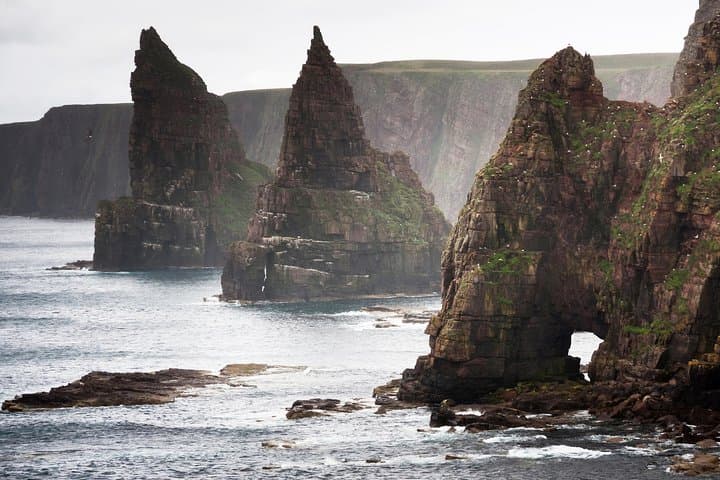
You step onto the mini-coach in Inverness and the road climbs toward the far north, the sea widening until the ferry across the Pentland Firth becomes a promise of islands. Salt and wind shape the view: red sandstone cliffs cutting into grey water, skuas and gannets wheel overhead, and small harbors flash like punched holes in a vast coastline.
Verified experiences and guided adventures in the surrounding area.
Operated by Rabbies Trail Burners · Kirkwall, Orkney Islands
You step onto the mini-coach in Inverness and the road climbs toward the far north, the sea widening until the ferry across the Pentland Firth becomes a promise of islands. Salt and wind shape the view: red sandstone cliffs cutting into grey water, skuas and gannets wheel overhead, and small harbors flash like punched holes in a vast coastline.
Orkney’s skeleton is ancient stone and hard coastline. The islands sit on Old Red Sandstone and glacial sediments; their fields hide some of Europe’s best-preserved Neolithic sites. On this three-day loop you visit Skara Brae — a 5,000-year-old stone village — Maeshowe’s chambered tomb with its Viking runes, and the Ring of Brodgar and Stones of Stenness, part of the Heart of Neolithic Orkney World Heritage Site. Kirkwall adds later layers: St Magnus Cathedral, Norse place names, and the improvised charm of island communities in cafes and harbor shops.
Practical edge: the tour uses a 16-seat coach and includes admission to Skara Brae and Maeshowe; the Italian Chapel visit requires an onboard ticket purchase. Walks at sites are short but over uneven ground and can be exposed to wind. Luggage is restricted to a 14kg carry-on-sized bag; no children under five. Bring a waterproof, windproof layer, sturdy shoes with good grip, and a small daypack for layers and camera. Plan for variable weather and tight itineraries: ferry crossings and site times are scheduled, so punctuality matters. A multi-day taste of Orkney pairs raw coastal geography with living island culture — compact, historic, and unmistakably northern.
easy.
3 days.
Suitable for travelers comfortable with short walks (10–90 minutes) on uneven ground and standing during guided visits.
Admission to Skara Brae and Maeshowe is included; some smaller stops like the Italian Chapel require a separate ticket purchased on tour.
All Inverness tours depart from the bus stop next to Inverness Cathedral, Ardross Street, IV3 5NS, and return to Inverness early evening on day three.
Children under five cannot be accommodated; the operator enforces this policy and may refuse travel without refund if not followed.
Luggage is restricted to one piece per person up to approximately 14kg (31lbs) and a small personal item for use onboard.
Orkney’s Neolithic monuments form the Heart of Neolithic Orkney World Heritage Site; later Norse settlement left cathedral, place names and runic graffiti in Maeshowe.
These archaeological landscapes are fragile—stay on marked paths, follow site guidance, and avoid touching exposed structures to limit erosion and damage.
Rabbies Trail Burners operates guided outdoor trips and adventures with an emphasis on safety, stewardship, and memorable experiences.
You step onto the mini-coach in Inverness and the road climbs toward the far north, the sea widening until the ferry across the Pentland Firth becomes a promise of islands. Salt and wind shape the view: red sandstone cliffs cutting into grey water, skuas and gannets wheel overhead, and small harbors flash like punched holes in a vast coastline.
You step onto the mini-coach in Inverness and the road climbs toward the far north, the sea widening until the ferry across the Pentland Firth becomes a promise of islands. Salt and wind shape the view: red sandstone cliffs cutting into grey water, skuas and gannets wheel overhead, and small harbors flash like punched holes in a vast coastline.
Orkney’s skeleton is ancient stone and hard coastline. The islands sit on Old Red Sandstone and glacial sediments; their fields hide some of Europe’s best-preserved Neolithic sites. On this three-day loop you visit Skara Brae — a 5,000-year-old stone village — Maeshowe’s chambered tomb with its Viking runes, and the Ring of Brodgar and Stones of Stenness, part of the Heart of Neolithic Orkney World Heritage Site. Kirkwall adds later layers: St Magnus Cathedral, Norse place names, and the improvised charm of island communities in cafes and harbor shops.
Practical edge: the tour uses a 16-seat coach and includes admission to Skara Brae and Maeshowe; the Italian Chapel visit requires an onboard ticket purchase. Walks at sites are short but over uneven ground and can be exposed to wind. Luggage is restricted to a 14kg carry-on-sized bag; no children under five. Bring a waterproof, windproof layer, sturdy shoes with good grip, and a small daypack for layers and camera. Plan for variable weather and tight itineraries: ferry crossings and site times are scheduled, so punctuality matters. A multi-day taste of Orkney pairs raw coastal geography with living island culture — compact, historic, and unmistakably northern.