THE ADVENTURE COLLECTIVE® · Independent discovery and booking for outdoor travel

Three days of guided PADI-style training in the Gulf of Aqaba take beginners from confined-water practice to open-water dives on world-class reefs. Expect expert instruction, strong safety focus, and close encounters with vibrant Red Sea marine life.
Three days of guided PADI-style training in the Gulf of Aqaba take beginners from confined-water practice to open-water dives on world-class reefs. Expect expert instruction, strong safety focus, and close encounters with vibrant Red Sea marine life.
The sea opens like a cool blue promise as students step off the dock in Aqaba, Jordan. Salt air and the distant call of fishing boats frame the first breath as instructors brief newcomers on gear and signals. Over three days the bay’s reefs move from unfamiliar shapes to a navigable landscape under a soft surface light.
Verified experiences and guided adventures in the surrounding area.
Operated by Waves diving center · Aqaba, Aqaba Governorate
The sea opens like a cool blue promise as students step off the dock in Aqaba, Jordan. Salt air and the distant call of fishing boats frame the first breath as instructors brief newcomers on gear and signals. Over three days the bay’s reefs move from unfamiliar shapes to a navigable landscape under a soft surface light.
Aqaba sits at the northern tip of the Red Sea, a crossroads of trade and cultures whose coral gardens have grown on limestone shelves carved by ancient currents. Geologically simple but ecologically rich, the reef systems here survived millennia of sea-level shifts and now shelter vibrant hard corals and schooling fish. The local dive scene blends Bedouin coastal culture, modern tourism, and Jordanian maritime history — expect practical hospitality and an emphasis on safety and conservation.
The course balances confined-water skills and theory with four open-water dives that test buoyancy, navigation, and emergency procedures. Visibility is typically excellent; instructors will coach equalization, air management, and reef-aware buoyancy so divers leave with both certification and confidence. Underwater photography during dives documents progress and reef life.
Practical guidance: arrive rested, log any medical concerns, and hydrate—dehydration worsens nitrogen effects. Bring a shorty or 3–5mm wetsuit depending on season, your own mask if possible, and reef-safe sunscreen. Plan for early morning boat runs to avoid afternoon wind; expect classroom briefings and hands-on gear sessions between dives. For new divers the Aqaba course is immersive, structured, and paced to build real underwater skill.
moderate.
3 days (72 hours).
Basic swimming fitness and comfort in open water; able to perform short surface swims and climb ladders.
No—this open water course is designed for beginners; confined-water sessions teach core skills before open-water dives.
Many centers accept junior divers (often 10+), but age policies vary—confirm minimum age with the operator when booking.
Most courses include basic scuba equipment and a wetsuit, but bringing a personal mask and dive computer is recommended if you own them.
Cardiovascular or respiratory issues and recent ear surgery typically restrict diving; complete the operator medical questionnaire and seek physician clearance if unsure.
Aqaba has long been a Red Sea trading port; modern diving expanded here in the late 20th century as tourism and conservation efforts grew.
Corals in the Gulf of Aqaba are valued for their resilience; divers are asked to practice reef-safe buoyancy and avoid touching or standing on corals.
Waves diving center operates guided outdoor trips and adventures with an emphasis on safety, stewardship, and memorable experiences.
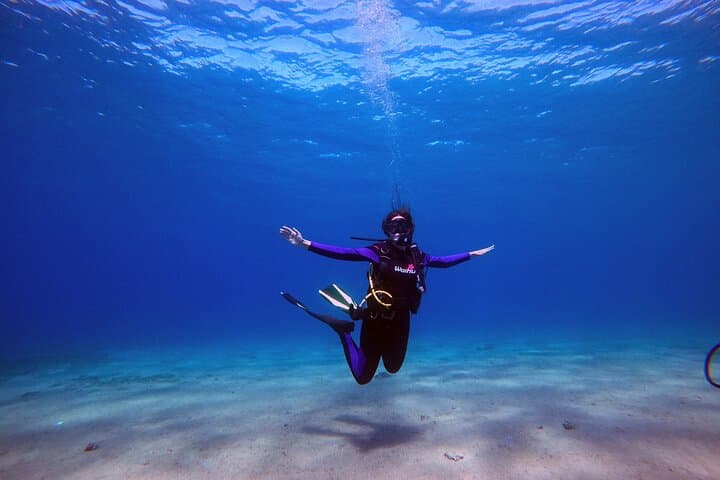


The sea opens like a cool blue promise as students step off the dock in Aqaba, Jordan. Salt air and the distant call of fishing boats frame the first breath as instructors brief newcomers on gear and signals. Over three days the bay’s reefs move from unfamiliar shapes to a navigable landscape under a soft surface light.
The sea opens like a cool blue promise as students step off the dock in Aqaba, Jordan. Salt air and the distant call of fishing boats frame the first breath as instructors brief newcomers on gear and signals. Over three days the bay’s reefs move from unfamiliar shapes to a navigable landscape under a soft surface light.
Aqaba sits at the northern tip of the Red Sea, a crossroads of trade and cultures whose coral gardens have grown on limestone shelves carved by ancient currents. Geologically simple but ecologically rich, the reef systems here survived millennia of sea-level shifts and now shelter vibrant hard corals and schooling fish. The local dive scene blends Bedouin coastal culture, modern tourism, and Jordanian maritime history — expect practical hospitality and an emphasis on safety and conservation.
The course balances confined-water skills and theory with four open-water dives that test buoyancy, navigation, and emergency procedures. Visibility is typically excellent; instructors will coach equalization, air management, and reef-aware buoyancy so divers leave with both certification and confidence. Underwater photography during dives documents progress and reef life.
Practical guidance: arrive rested, log any medical concerns, and hydrate—dehydration worsens nitrogen effects. Bring a shorty or 3–5mm wetsuit depending on season, your own mask if possible, and reef-safe sunscreen. Plan for early morning boat runs to avoid afternoon wind; expect classroom briefings and hands-on gear sessions between dives. For new divers the Aqaba course is immersive, structured, and paced to build real underwater skill.