THE ADVENTURE COLLECTIVE® · Independent discovery and booking for outdoor travel

Follow ancient rock carvings, cinematic sand dunes and Western Xia imperial tombs across three days in Ningxia. This guided route blends desert nights, cultural archaeology and accessible outdoor exploration—ideal for travelers who want immersive landscape without technical demands.
Follow ancient rock carvings, cinematic sand dunes and Western Xia imperial tombs across three days in Ningxia. This guided route blends desert nights, cultural archaeology and accessible outdoor exploration—ideal for travelers who want immersive landscape without technical demands.
The first light over the Helan Mountains strips the stars from the desert and the sand cools beneath your boots.
Verified experiences and guided adventures in the surrounding area.
Operated by China Silk Road Travel · Yinchuan, Ningxia
The first light over the Helan Mountains strips the stars from the desert and the sand cools beneath your boots.
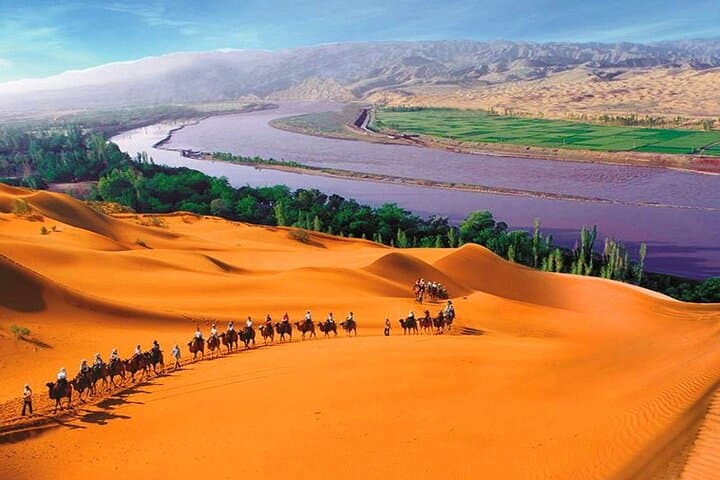
On this three‑day route out of Yinchuan you trade the city grid for wind‑sculpted ridgelines, cinematic desert night skies and weathered rock faces that still tell stories of nomadic life. The Western Xia imperial tombs sit like geometric mounds on the eastern slopes, their layout echoing a celestial order crafted by the Tangut rulers. Higher up, Helanshan’s rock carvings—running deer, blue sheep and flying birds—push through the stone like an old language insisting on being read.
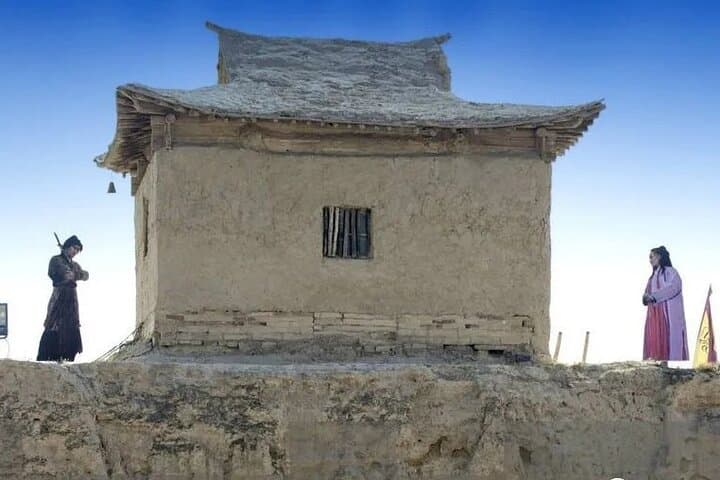
Geology here is plain and blunt: granite folds and sandy loess meet where the Yellow River plain ends and the desert begins. Culture is equally tangible—the 108 pagodas at Qingtong Gorge were built as a Buddhist rite to clear human vexations, while Shapotou’s resonant sand fields have been a playground for both locals and filmmakers.
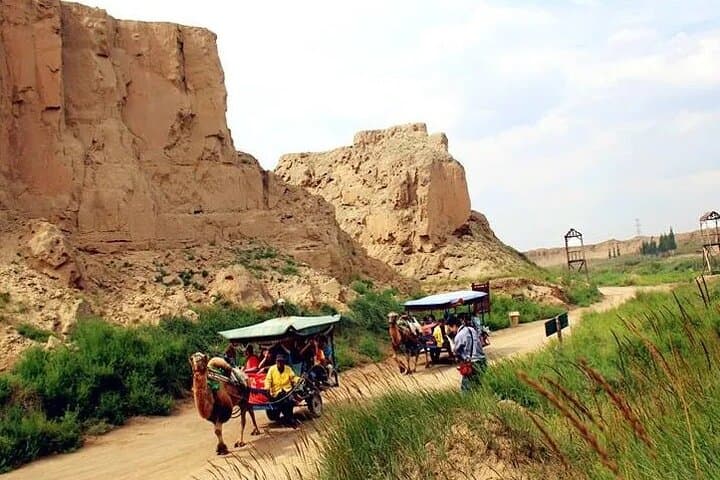
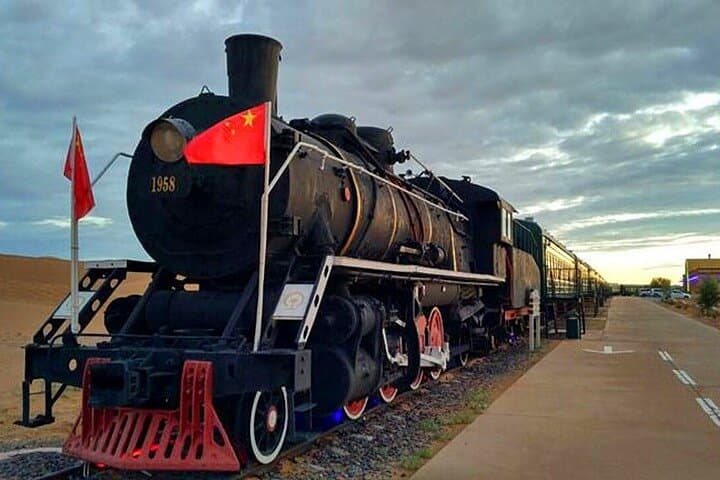
Expect practical comforts alongside raw landscape: private transport with air conditioning, an overnight in the Jinshahai desert theme train hotel, and guided visits to Shuidonggou and the Ming military works on the last day.
Bring sun protection, layers for cold desert nights, and plenty of water; respect carved panels and stay on designated trails. Timing your walks for morning and late afternoon avoids peak heat and brings the rock art and dunes into better relief. This trip is as much about listening—to wind on the dunes and to the slow history scratched into stone—as it is about sight, and it delivers both with direct, accessible logistics.
easy.
3 days.
Suitable for most travelers in normal health; minimal hiking on uneven ground and sand requires balance but not technical fitness
The itinerary is rated easy—most movement is short walks around sites and dune slopes; no technical climbing is required.
One night is spent in the Jinshahai desert theme train hotel, a themed accommodation at Shapotou; other nights are in Yinchuan lodgings.
Admission fees listed in the itinerary are included and a private English‑speaking guide is provided throughout the tour.
The tour notes stroller accessibility for infants on some transfers; however uneven sand and steps at historic sites may limit access for those with reduced mobility.
The Western Xia (Tangut) rulers built distinctive royal tomb complexes on Helan’s slopes; many local sites date to Tangut, Ming and nomadic periods.
The Helanshan and Shapotou areas face desertification pressures—visitors are urged to stay on established routes, avoid touching rock art and limit waste.
China Silk Road Travel operates guided outdoor trips and adventures with an emphasis on safety, stewardship, and memorable experiences.
The first light over the Helan Mountains strips the stars from the desert and the sand cools beneath your boots.
The first light over the Helan Mountains strips the stars from the desert and the sand cools beneath your boots.
On this three‑day route out of Yinchuan you trade the city grid for wind‑sculpted ridgelines, cinematic desert night skies and weathered rock faces that still tell stories of nomadic life. The Western Xia imperial tombs sit like geometric mounds on the eastern slopes, their layout echoing a celestial order crafted by the Tangut rulers. Higher up, Helanshan’s rock carvings—running deer, blue sheep and flying birds—push through the stone like an old language insisting on being read.
Geology here is plain and blunt: granite folds and sandy loess meet where the Yellow River plain ends and the desert begins. Culture is equally tangible—the 108 pagodas at Qingtong Gorge were built as a Buddhist rite to clear human vexations, while Shapotou’s resonant sand fields have been a playground for both locals and filmmakers.
Expect practical comforts alongside raw landscape: private transport with air conditioning, an overnight in the Jinshahai desert theme train hotel, and guided visits to Shuidonggou and the Ming military works on the last day.
Bring sun protection, layers for cold desert nights, and plenty of water; respect carved panels and stay on designated trails. Timing your walks for morning and late afternoon avoids peak heat and brings the rock art and dunes into better relief. This trip is as much about listening—to wind on the dunes and to the slow history scratched into stone—as it is about sight, and it delivers both with direct, accessible logistics.