THE ADVENTURE COLLECTIVE® · Independent discovery and booking for outdoor travel

Challenge yourself with a three-day trek up Mount Toubkal, North Africa’s highest peak, followed by a serene evening dining experience in Morocco’s Agafay Desert. Discover Berber culture, rugged mountain terrain, and the contrasting beauty of desert landscapes on this immersive adventure.
Challenge yourself with a three-day trek up Mount Toubkal, North Africa’s highest peak, followed by a serene evening dining experience in Morocco’s Agafay Desert. Discover Berber culture, rugged mountain terrain, and the contrasting beauty of desert landscapes on this immersive adventure.
Rising sharply from the High Atlas Mountains, Mount Toubkal commands respect—the highest summit in North Africa at 4,167 meters. This three-day journey starts in Marrakech, where the city’s vibrant bustle gives way to winding mountain roads through deep valleys and traditional Berber villages. Your trek begins in Imlil (1,745 m), shadowed by ever-present peaks and the steady murmur of the Oued Ghighya river.
Verified experiences and guided adventures in the surrounding area.
Operated by Adrar Trips From Marrakech · Marrakech, Marrakech-Safi
Rising sharply from the High Atlas Mountains, Mount Toubkal commands respect—the highest summit in North Africa at 4,167 meters. This three-day journey starts in Marrakech, where the city’s vibrant bustle gives way to winding mountain roads through deep valleys and traditional Berber villages. Your trek begins in Imlil (1,745 m), shadowed by ever-present peaks and the steady murmur of the Oued Ghighya river.
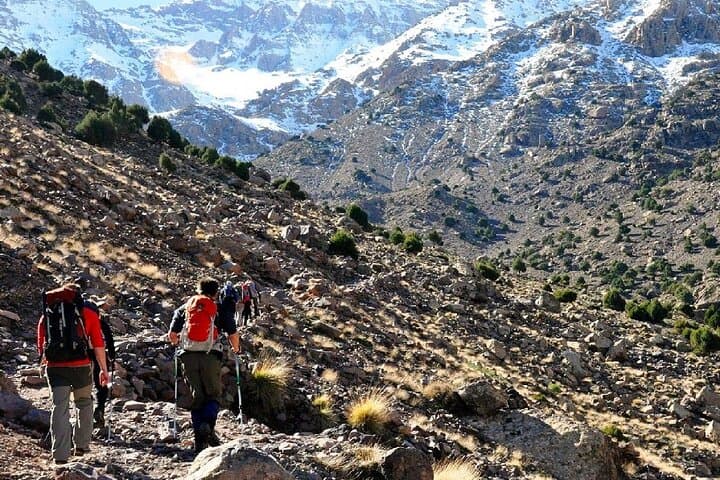
On Day 1, the trail ascends through the Aït Mizane Valley to the village of Armed, threading past a cascading waterfall where cool mists invite brief respite. The path bends toward Sidi Chamharouch, home to a revered shrine. Here, local guides share stories over steaming cups of Moroccan mint tea. The climb continues with a series of switchbacks, each step pushing you higher until you reach the Toubkal Refuge (3,207 m) for the night. The shelter, perched above the tree line, offers rugged comfort and a front-row seat to the mountain’s raw atmosphere.
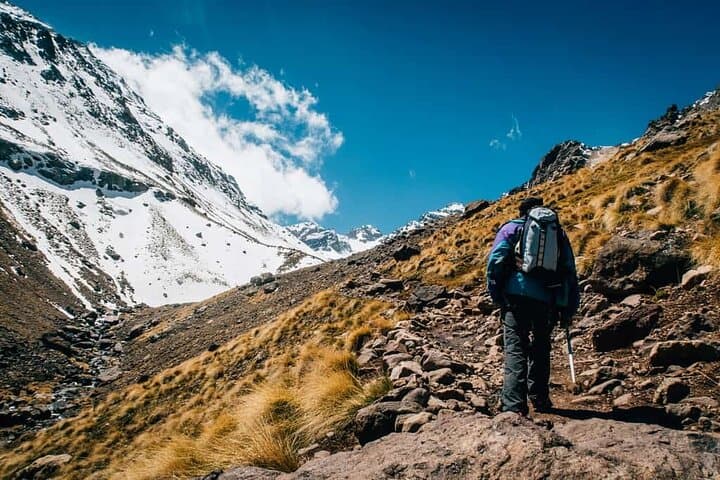
Day 2 demands an early start—around 5 a.m.—to tackle the summit via often snowy slopes. The final ascent challenges your stamina as the thin mountain air pulls at your breath. Reach the summit: panoramic views stretch endlessly—the green ridges of the Anti-Atlas fold toward the horizon, and beyond, the vast Sahara Desert unfolds in a patchwork of ochre and gold. After savoring the view, the descent lasts roughly six hours, dropping back to Imlil where a traditional Berber dinner with a local family awaits. This cultural immersion reveals daily mountain life, with home-cooked dishes and heartfelt hospitality in Aït Souka.
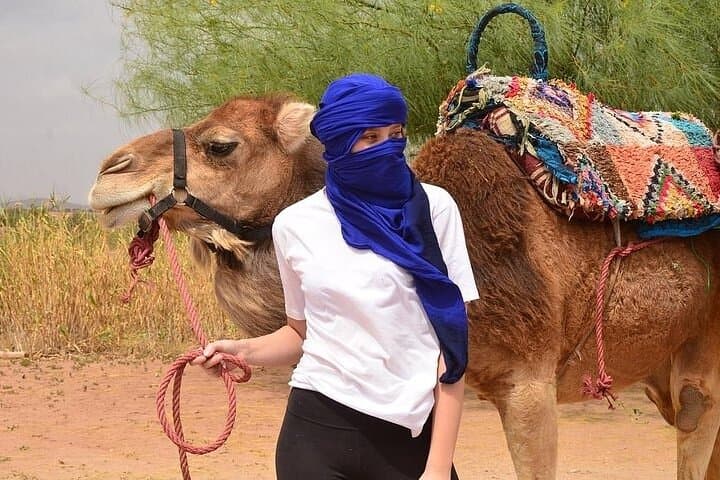
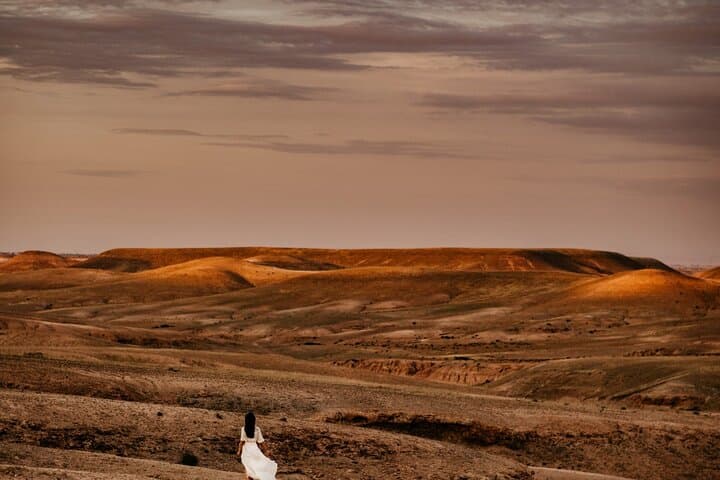
Day 3 blends relaxation and exploration. After a hearty breakfast, you’ll rest at the guest house surrounded by Atlas peaks. Later, venture toward the Kek Plateau and the stark, rocky Agafay Desert. Here, the evening unfolds under a vast sky at a desert camp beside Lalla Takerkoust Lake. Sip on local tea as the sun dips below rugged stone hills, then embark on a camel ride that traces golden sands at sunset. This final night melds mountain and desert, a landscape contrast that underscores Morocco’s rich geographic diversity.
Travelers should bring layered clothing to navigate changing temperatures—from warm days to brisk nights—and be prepared for moderate to challenging terrain, including uneven stone paths and altitude adjustments. Good hiking boots, hydration packs, and trekking poles enhance comfort and safety. The best months for this trek are spring and fall when mountain weather is stable.
This multi-day trek blends physical challenge with cultural insight, pairing the natural force of the High Atlas with intimate moments in Berber homes and the open silence of the Agafay Desert. It’s an invitation to experience Morocco beyond its cities—a journey where mountain and desert landscapes dare you to explore more than just terrain, but tradition itself.
challenging.
3 days.
Requires moderate to good physical fitness capable of sustained uphill hiking at altitude with heavy exertion.
The summit of Mount Toubkal at 4,167 meters is the highest point on the route.
No technical skills are required but you should have a moderate level of fitness due to altitude and terrain.
Accommodation includes nights at the Toubkal Refuge mountain shelter and a guest house with local families.
Yes, all breakfasts, lunches, and dinners are included, with some meals shared with Berber families to experience local culture.
The trek involves steep ascents, rocky paths, and potential snow near the summit, making it moderately challenging.
Spring and fall are ideal for stable weather and comfortable temperatures.
Mount Toubkal has been a spiritual landmark for Berber communities, long considered a gateway to their ancestral High Atlas homelands.
Efforts focus on responsible trekking practices to protect fragile mountain ecosystems and support sustainable tourism in Berber villages.
Adrar Trips From Marrakech operates guided outdoor trips and adventures with an emphasis on safety, stewardship, and memorable experiences.
Rising sharply from the High Atlas Mountains, Mount Toubkal commands respect—the highest summit in North Africa at 4,167 meters. This three-day journey starts in Marrakech, where the city’s vibrant bustle gives way to winding mountain roads through deep valleys and traditional Berber villages. Your trek begins in Imlil (1,745 m), shadowed by ever-present peaks and the steady murmur of the Oued Ghighya river.
Rising sharply from the High Atlas Mountains, Mount Toubkal commands respect—the highest summit in North Africa at 4,167 meters. This three-day journey starts in Marrakech, where the city’s vibrant bustle gives way to winding mountain roads through deep valleys and traditional Berber villages. Your trek begins in Imlil (1,745 m), shadowed by ever-present peaks and the steady murmur of the Oued Ghighya river.
On Day 1, the trail ascends through the Aït Mizane Valley to the village of Armed, threading past a cascading waterfall where cool mists invite brief respite. The path bends toward Sidi Chamharouch, home to a revered shrine. Here, local guides share stories over steaming cups of Moroccan mint tea. The climb continues with a series of switchbacks, each step pushing you higher until you reach the Toubkal Refuge (3,207 m) for the night. The shelter, perched above the tree line, offers rugged comfort and a front-row seat to the mountain’s raw atmosphere.
Day 2 demands an early start—around 5 a.m.—to tackle the summit via often snowy slopes. The final ascent challenges your stamina as the thin mountain air pulls at your breath. Reach the summit: panoramic views stretch endlessly—the green ridges of the Anti-Atlas fold toward the horizon, and beyond, the vast Sahara Desert unfolds in a patchwork of ochre and gold. After savoring the view, the descent lasts roughly six hours, dropping back to Imlil where a traditional Berber dinner with a local family awaits. This cultural immersion reveals daily mountain life, with home-cooked dishes and heartfelt hospitality in Aït Souka.
Day 3 blends relaxation and exploration. After a hearty breakfast, you’ll rest at the guest house surrounded by Atlas peaks. Later, venture toward the Kek Plateau and the stark, rocky Agafay Desert. Here, the evening unfolds under a vast sky at a desert camp beside Lalla Takerkoust Lake. Sip on local tea as the sun dips below rugged stone hills, then embark on a camel ride that traces golden sands at sunset. This final night melds mountain and desert, a landscape contrast that underscores Morocco’s rich geographic diversity.
Travelers should bring layered clothing to navigate changing temperatures—from warm days to brisk nights—and be prepared for moderate to challenging terrain, including uneven stone paths and altitude adjustments. Good hiking boots, hydration packs, and trekking poles enhance comfort and safety. The best months for this trek are spring and fall when mountain weather is stable.
This multi-day trek blends physical challenge with cultural insight, pairing the natural force of the High Atlas with intimate moments in Berber homes and the open silence of the Agafay Desert. It’s an invitation to experience Morocco beyond its cities—a journey where mountain and desert landscapes dare you to explore more than just terrain, but tradition itself.