THE ADVENTURE COLLECTIVE® · Independent discovery and booking for outdoor travel

A compact, challenging three-day trek from Marrakech to the summit of Jebel Toubkal (4,167 m). Expect village trails, mule support, and a strenuous summit day with sweeping High Atlas views.
A compact, challenging three-day trek from Marrakech to the summit of Jebel Toubkal (4,167 m). Expect village trails, mule support, and a strenuous summit day with sweeping High Atlas views.
You leave the dust and noise of Marrakech behind as the road climbs toward the High Atlas, the city shrinking into orange roofs and olive groves. By Imlil the air is cooler; a stream dares you to slow down as muleteers sling packs and a pine-scented trail draws you upriver toward Imouzer waterfalls.
Verified experiences and guided adventures in the surrounding area.
Operated by Chez Ali Marrakech · Imlil, Marrakesh-Safi
You leave the dust and noise of Marrakech behind as the road climbs toward the High Atlas, the city shrinking into orange roofs and olive groves. By Imlil the air is cooler; a stream dares you to slow down as muleteers sling packs and a pine-scented trail draws you upriver toward Imouzer waterfalls.
Over three days the landscape tightens and opens: river valleys, chestnut and pine woods, then the stony arena above Neltner refuge. The second-day push moves from the big ravine toward the 4,000 m pass and then the final ridge to Jebel Toubkal (4,167 m). The summit rewards a wide sweep of jagged High Atlas peaks and remote valleys where Berber villages cling to terraces. The massif itself is the product of Alpine-age uplift — folded, faulted rock exposing schist and metamorphosed sediments punctuated by granite intrusions — giving steep cols and loose scree on upper slopes.
Cultural touchstones appear between stages: the shrine of Sidi Chamarouch, remote guest houses in Armed, and platefuls of tagine and mint tea. Guides and mule teams are standard; nights alternate between basic camping near the refuge and simple local lodging.
Practical guidance: expect long uphill sections and altitude gain—plan for 5–8 hours on day one, 8–10 on summit day, 4 hours descent the last day. Pack sturdy boots, layered clothing for high UV and cold summit winds, a warm sleeping system, and water treatment. Start early on summit day to avoid afternoon weather and allow time for descent. If you have heart or severe back issues, consider a lower-altitude option; altitude acclimatization and steady pacing make the climb far more manageable.
challenging.
3 days (total ~17 hours walking; day 1: ~5h, day 2: ~8–10h, day 3: ~4h).
Good cardiovascular fitness and leg endurance; able to hike uphill for multiple hours with a daypack.
The route is non-technical but strenuous due to sustained elevation gain and high altitude; expect long days and steep sections, particularly on summit day.
A licensed local guide is strongly recommended for navigation, local logistics, and to arrange mule support and accommodations; many routes cross loose scree and remote terrain.
Late spring to early fall (May–October) offers the most stable conditions; winter can bring deep snow requiring mountaineering equipment and experience.
Typical 3-day packages include two breakfasts, two dinners, transport from Marrakech, a local guide, and two nights’ accommodation (camp/guesthouse), but confirm specifics with the operator.
The High Atlas have long been home to Amazigh (Berber) communities; traditional terraces, stone houses, and seasonal transhumance shaped village life along these valleys.
Stick to established trails, avoid feeding or disturbing wildlife, and pack out waste; local guides often support community-based tourism that funds trail maintenance and natural-resource stewardship.
Chez Ali Marrakech operates guided outdoor trips and adventures with an emphasis on safety, stewardship, and memorable experiences.

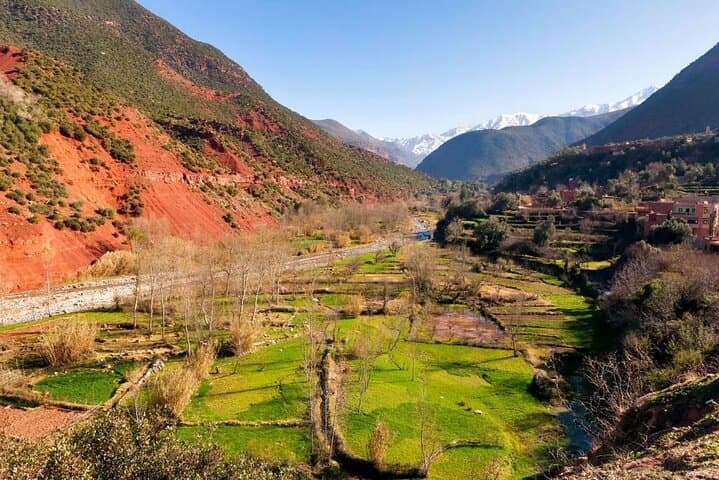


You leave the dust and noise of Marrakech behind as the road climbs toward the High Atlas, the city shrinking into orange roofs and olive groves. By Imlil the air is cooler; a stream dares you to slow down as muleteers sling packs and a pine-scented trail draws you upriver toward Imouzer waterfalls.
You leave the dust and noise of Marrakech behind as the road climbs toward the High Atlas, the city shrinking into orange roofs and olive groves. By Imlil the air is cooler; a stream dares you to slow down as muleteers sling packs and a pine-scented trail draws you upriver toward Imouzer waterfalls.
Over three days the landscape tightens and opens: river valleys, chestnut and pine woods, then the stony arena above Neltner refuge. The second-day push moves from the big ravine toward the 4,000 m pass and then the final ridge to Jebel Toubkal (4,167 m). The summit rewards a wide sweep of jagged High Atlas peaks and remote valleys where Berber villages cling to terraces. The massif itself is the product of Alpine-age uplift — folded, faulted rock exposing schist and metamorphosed sediments punctuated by granite intrusions — giving steep cols and loose scree on upper slopes.
Cultural touchstones appear between stages: the shrine of Sidi Chamarouch, remote guest houses in Armed, and platefuls of tagine and mint tea. Guides and mule teams are standard; nights alternate between basic camping near the refuge and simple local lodging.
Practical guidance: expect long uphill sections and altitude gain—plan for 5–8 hours on day one, 8–10 on summit day, 4 hours descent the last day. Pack sturdy boots, layered clothing for high UV and cold summit winds, a warm sleeping system, and water treatment. Start early on summit day to avoid afternoon weather and allow time for descent. If you have heart or severe back issues, consider a lower-altitude option; altitude acclimatization and steady pacing make the climb far more manageable.