THE ADVENTURE COLLECTIVE® · Independent discovery and booking for outdoor travel

A demanding 3-day trek that hits Mount Rinjani’s summit, the Segara Anak crater lake, hot springs and both Sembalun and Senaru crater rims. Expect long days, scree slopes, and sunrise from above the clouds.
A demanding 3-day trek that hits Mount Rinjani’s summit, the Segara Anak crater lake, hot springs and both Sembalun and Senaru crater rims. Expect long days, scree slopes, and sunrise from above the clouds.
Pre-dawn in the Sembalun Valley feels raw — a chill wind pushes across grasslands while headlamps pick out the loose volcanic scree ahead. The climb begins steady, then steepens into a slow, rhythmic grind as the mountain tightens its grip; by sunrise the summit opens into a wide, wind-carved rim and the blue-green Segara Anak lake below dares you to come closer.
Verified experiences and guided adventures in the surrounding area.
Operated by Go Backpacker Rinjani · Senaru, West Nusa Tenggara
Pre-dawn in the Sembalun Valley feels raw — a chill wind pushes across grasslands while headlamps pick out the loose volcanic scree ahead. The climb begins steady, then steepens into a slow, rhythmic grind as the mountain tightens its grip; by sunrise the summit opens into a wide, wind-carved rim and the blue-green Segara Anak lake below dares you to come closer.
Rinjani is an active stratovolcano rising to about 3,726 m. Its caldera holds Segara Anak, a volcanic lake formed by collapse, and has long been sacred to the Sasak people; the area also bears geologic layers of ash and hardened lava that shape the trail underfoot. Local culture centers on small mountain hamlets — Senaru and Sembalun — where guides, porters, and simple homestays support treks.
Practical guidance: the itinerary typically uses Sembalun for ascent to the crater rim (≈1,150 m → ~2,600–2,700 m in 6–8 hours) then a pre-dawn summit push (+~1,000 m, 2–3 hours) and descent to Segara Anak. Expect long uphill days with scree, volcanic sand, and loose rock; average daily hiking is 5–8 hours. Pack a warm layer for the summit, a reliable rain jacket in the monsoon months, and a headlamp for the 2–4 a.m. starts.
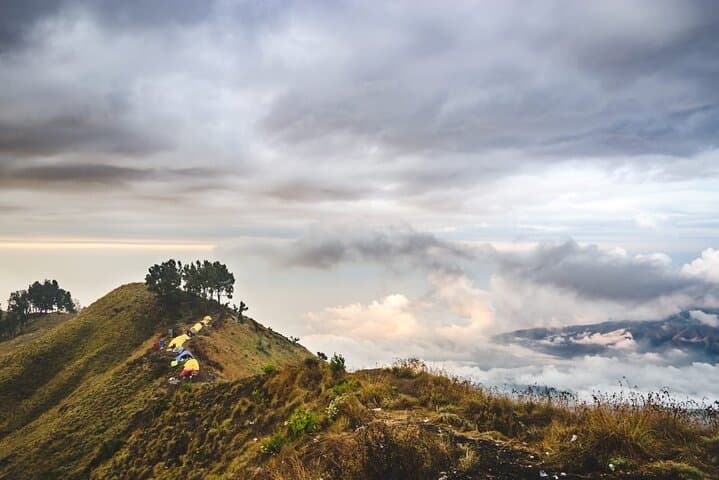
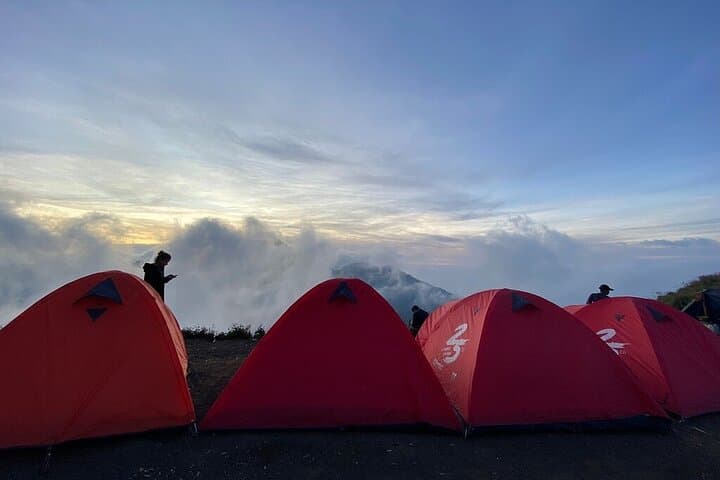
The park charges entrance fees and requires guides/porters for multi-day treks; fitness is the single most important preparation — build long uphill training hikes and practice with a loaded pack. Respect trail etiquette: pack out waste, stick to established campsites, and allow the mountain and its lake to reclaim quiet once your tent is down.
challenging.
3 days (approx. 48–60 hours total).
High level of cardiovascular fitness and stamina for sustained uphill hiking at altitude; prior multi-day hiking experience recommended.
Yes — entrance fees and park permits apply and multi-day treks require registered guides and local porters; fees are typically included when booked through operators.
The summit push is steep and exposed with loose scree; expect 2–3 hours ascent from the crater rim and altitude-related strain — good fitness is essential.
You can, but conditions differ: the dry season (roughly April–October) is safest for firm trails and clearer views; the monsoon brings heavy rain, slippery slopes, and limited visibility.
Operators advise against booking if pregnant or with serious heart/cardiovascular conditions; travelers should be in strong physical condition and disclose medical details when booking.
Rinjani’s caldera formed from massive eruptions; Segara Anak lake sits in the collapsed crater and holds cultural significance for the Sasak and Balinese Hindu communities.
Mount Rinjani is part of a national park with entrance fees funding conservation; follow Leave No Trace, avoid off-trail camping, and use local guides to reduce environmental impact.
Go Backpacker Rinjani operates guided outdoor trips and adventures with an emphasis on safety, stewardship, and memorable experiences.
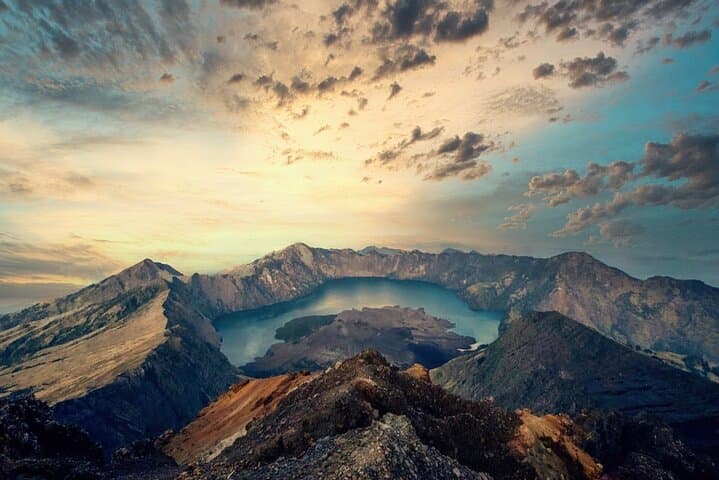
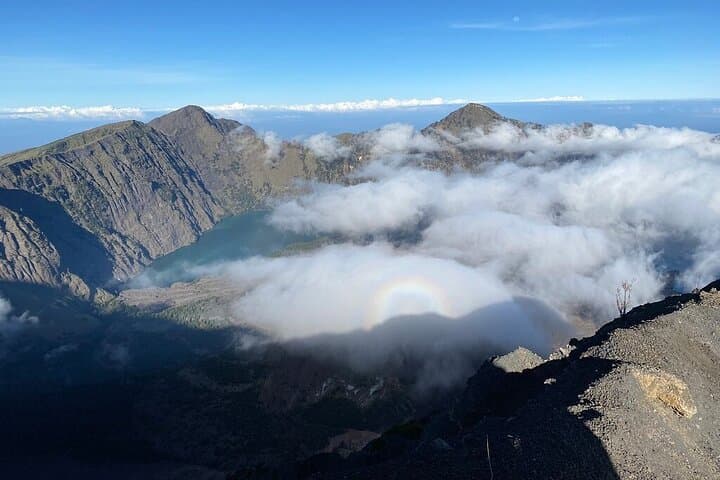
Pre-dawn in the Sembalun Valley feels raw — a chill wind pushes across grasslands while headlamps pick out the loose volcanic scree ahead. The climb begins steady, then steepens into a slow, rhythmic grind as the mountain tightens its grip; by sunrise the summit opens into a wide, wind-carved rim and the blue-green Segara Anak lake below dares you to come closer.
Pre-dawn in the Sembalun Valley feels raw — a chill wind pushes across grasslands while headlamps pick out the loose volcanic scree ahead. The climb begins steady, then steepens into a slow, rhythmic grind as the mountain tightens its grip; by sunrise the summit opens into a wide, wind-carved rim and the blue-green Segara Anak lake below dares you to come closer.
Rinjani is an active stratovolcano rising to about 3,726 m. Its caldera holds Segara Anak, a volcanic lake formed by collapse, and has long been sacred to the Sasak people; the area also bears geologic layers of ash and hardened lava that shape the trail underfoot. Local culture centers on small mountain hamlets — Senaru and Sembalun — where guides, porters, and simple homestays support treks.
Practical guidance: the itinerary typically uses Sembalun for ascent to the crater rim (≈1,150 m → ~2,600–2,700 m in 6–8 hours) then a pre-dawn summit push (+~1,000 m, 2–3 hours) and descent to Segara Anak. Expect long uphill days with scree, volcanic sand, and loose rock; average daily hiking is 5–8 hours. Pack a warm layer for the summit, a reliable rain jacket in the monsoon months, and a headlamp for the 2–4 a.m. starts.
The park charges entrance fees and requires guides/porters for multi-day treks; fitness is the single most important preparation — build long uphill training hikes and practice with a loaded pack. Respect trail etiquette: pack out waste, stick to established campsites, and allow the mountain and its lake to reclaim quiet once your tent is down.