THE ADVENTURE COLLECTIVE® · Independent discovery and booking for outdoor travel

A three-day, community-led climb up Mount Meru gives trekkers a rigorous summit, wildlife-rich forest, and targeted acclimatization before Kilimanjaro. Expect volcanic ash slopes, early-morning summit pushes, and sweeping views over Arusha National Park.
A three-day, community-led climb up Mount Meru gives trekkers a rigorous summit, wildlife-rich forest, and targeted acclimatization before Kilimanjaro. Expect volcanic ash slopes, early-morning summit pushes, and sweeping views over Arusha National Park.
You leave Arusha before dawn, the town shrinking behind the bus windows as farmland and fever trees take over. By the time the trail swallows the last radio hum, the air has sharpened; the slopes of Mount Meru rise ahead, a volcanic shoulder cutting through cloud. The first day is a patient walk through acacia and farmland edges, but by night the vegetation has thinned to heath and alpine scrub and the mountain begins to show its long, volcanic ribs.
Verified experiences and guided adventures in the surrounding area.
Operated by Signature Safari · Arusha, Arusha Region
You leave Arusha before dawn, the town shrinking behind the bus windows as farmland and fever trees take over. By the time the trail swallows the last radio hum, the air has sharpened; the slopes of Mount Meru rise ahead, a volcanic shoulder cutting through cloud. The first day is a patient walk through acacia and farmland edges, but by night the vegetation has thinned to heath and alpine scrub and the mountain begins to show its long, volcanic ribs.
Mount Meru sits inside Arusha National Park and, at roughly 4,568 meters, is Tanzania’s second-highest peak. Geologically it is a young stratovolcano with a large crater and an amphitheater of ridgelines. Centuries of volcanic activity shaped the steep ash slopes and the Maundi Crater that hikers skirt on the classic three-day route. The mountain’s lower flanks are still the realm of giraffe, buffalo, and colobus monkeys—wildlife that shares surprisingly close quarters with trekkers in the national park.
Culturally, Meru has long been a backdrop to Maasai pastoral life; the park’s grasslands and riverine pockets support both traditional grazing routes and modern conservation efforts. Climbs are run with local guides and porters, an arrangement that supports community income while concentrating visitor impact on established campsites.
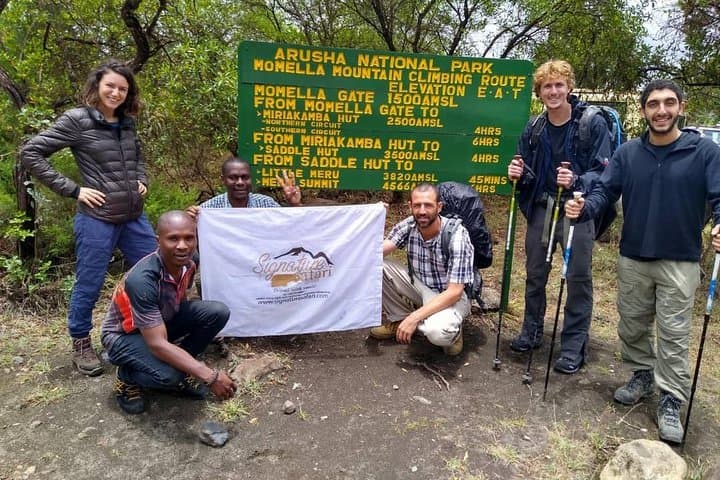
The standard itinerary spreads the ascent across three days to prioritize acclimatization: a steady first day through forest to Miriakamba Hut, a higher push to Saddle or Rhino Point on day two, and a pre-dawn summit bid on day three followed by a long descent back to the park gate. Expect 30–36 km total and roughly 2,700–3,150 m of elevation gain depending on where you start. Terrain ranges from soft volcanic ash and packed trail to rocky switchbacks and exposed high ridge.
Practical edge: drink often and pace conservatively—altitude, not distance, is the real test. A guided climb includes park fees and basic hut or tent camping, but pack your own layering system, a warm sleeping bag, and high-calorie snacks. The dry months (June–October and January–February) offer the most reliable weather; cloud and rain make the ash slopes slippery and views fleeting.
If Kilimanjaro is on your list, Meru is the ideal warm-up: it builds altitude exposure without the heavy crowds and gives a strong dose of Tanzanian wildlife and highland scenery. Finish the descent with time in Arusha: a hot shower, the chance to visit a local coffee farm, and a quiet appreciation for how rapidly a landscape can test and return you.
challenging.
3 days (approx. 72 hours).
Suitable for trekkers with good cardiovascular fitness and experience on multi-day hikes; be prepared for sustained uphill walking and high altitude.
No technical experience is required, but you should have multi-day hiking experience and good fitness; the three-day itinerary is designed to help acclimatize.
Dry months—June to October and January to February—offer the most stable weather and clearer summit views.
Guided climbs include park fees and guide services when booked through reputable operators, but confirm exactly what is covered when you book.
The summit bid is an overnight start and typically 8–12 hours round-trip from the high camp depending on pace and conditions.
Yes—lower slopes pass through parkland where you can spot giraffe, buffalo, colobus monkeys, and diverse birdlife, especially in morning and late afternoon.
AMS is possible above 3,000 m; follow guide advice, ascend slowly, hydrate, and report symptoms early—evacuation plans are standard with guided groups.
Meru has been a landscape marker for local Maasai communities and was later incorporated into Arusha National Park when Tanzania prioritized wildlife corridors and tourism.
Climbing operations concentrate camping on established sites and use park fees to fund rangers; choose operators who follow leave-no-trace practices and hire local porters.
Signature Safari operates guided outdoor trips and adventures with an emphasis on safety, stewardship, and memorable experiences.
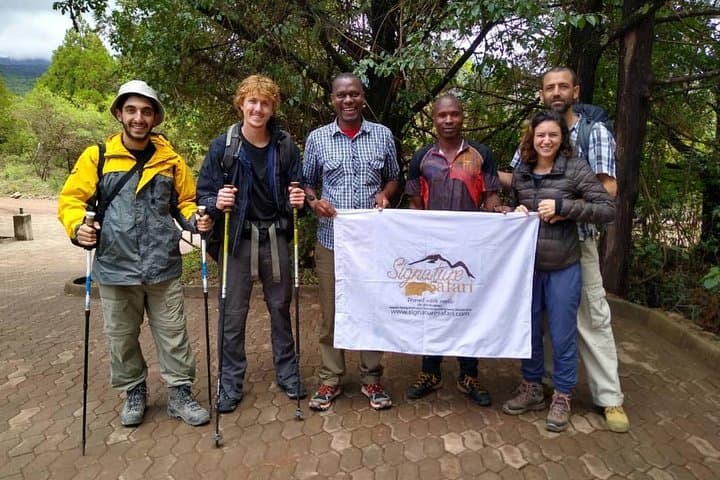
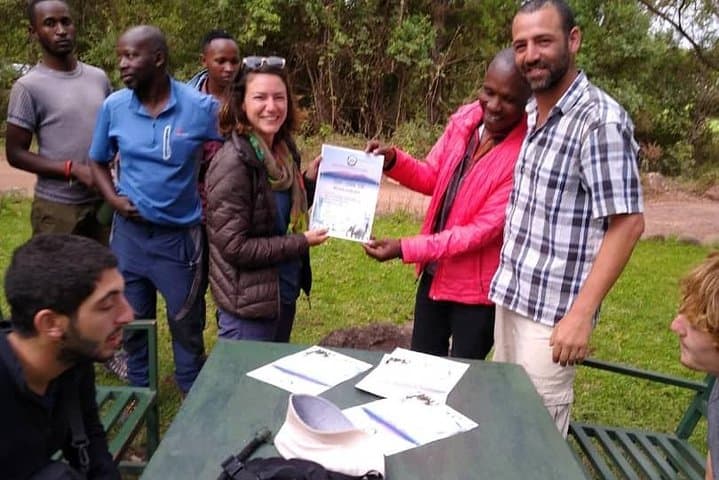
You leave Arusha before dawn, the town shrinking behind the bus windows as farmland and fever trees take over. By the time the trail swallows the last radio hum, the air has sharpened; the slopes of Mount Meru rise ahead, a volcanic shoulder cutting through cloud. The first day is a patient walk through acacia and farmland edges, but by night the vegetation has thinned to heath and alpine scrub and the mountain begins to show its long, volcanic ribs.
You leave Arusha before dawn, the town shrinking behind the bus windows as farmland and fever trees take over. By the time the trail swallows the last radio hum, the air has sharpened; the slopes of Mount Meru rise ahead, a volcanic shoulder cutting through cloud. The first day is a patient walk through acacia and farmland edges, but by night the vegetation has thinned to heath and alpine scrub and the mountain begins to show its long, volcanic ribs.
Mount Meru sits inside Arusha National Park and, at roughly 4,568 meters, is Tanzania’s second-highest peak. Geologically it is a young stratovolcano with a large crater and an amphitheater of ridgelines. Centuries of volcanic activity shaped the steep ash slopes and the Maundi Crater that hikers skirt on the classic three-day route. The mountain’s lower flanks are still the realm of giraffe, buffalo, and colobus monkeys—wildlife that shares surprisingly close quarters with trekkers in the national park.
Culturally, Meru has long been a backdrop to Maasai pastoral life; the park’s grasslands and riverine pockets support both traditional grazing routes and modern conservation efforts. Climbs are run with local guides and porters, an arrangement that supports community income while concentrating visitor impact on established campsites.
The standard itinerary spreads the ascent across three days to prioritize acclimatization: a steady first day through forest to Miriakamba Hut, a higher push to Saddle or Rhino Point on day two, and a pre-dawn summit bid on day three followed by a long descent back to the park gate. Expect 30–36 km total and roughly 2,700–3,150 m of elevation gain depending on where you start. Terrain ranges from soft volcanic ash and packed trail to rocky switchbacks and exposed high ridge.
Practical edge: drink often and pace conservatively—altitude, not distance, is the real test. A guided climb includes park fees and basic hut or tent camping, but pack your own layering system, a warm sleeping bag, and high-calorie snacks. The dry months (June–October and January–February) offer the most reliable weather; cloud and rain make the ash slopes slippery and views fleeting.
If Kilimanjaro is on your list, Meru is the ideal warm-up: it builds altitude exposure without the heavy crowds and gives a strong dose of Tanzanian wildlife and highland scenery. Finish the descent with time in Arusha: a hot shower, the chance to visit a local coffee farm, and a quiet appreciation for how rapidly a landscape can test and return you.