THE ADVENTURE COLLECTIVE® · Independent discovery and booking for outdoor travel

Three days moving from Tangier’s cosmopolitan shore to Fes’s medieval medina and Chefchaouen’s blue alleys—this private tour pairs Roman ruins, Islamic architecture and Rif Mountain scenery with timed logistics and a local guide.
Three days moving from Tangier’s cosmopolitan shore to Fes’s medieval medina and Chefchaouen’s blue alleys—this private tour pairs Roman ruins, Islamic architecture and Rif Mountain scenery with timed logistics and a local guide.
Salt wind pushes across the Strait of Gibraltar as your minivan pulls away from Tangier’s port, the city’s cosmopolitan edges receding behind you.
Verified experiences and guided adventures in the surrounding area.
Operated by bbktours · Tangier, Tanger-Tetouan-Al Hoceima
Salt wind pushes across the Strait of Gibraltar as your minivan pulls away from Tangier’s port, the city’s cosmopolitan edges receding behind you.
On day one the landscape opens—cliffs at Cap Spartel glaring where Atlantic waves and Mediterranean current jostle, then the sea cave with its Africa-shaped aperture offering a framed, cinematic view of surf and sky. The road climbs into the Rif and the Rif’s slow geology—limestone folds and terraced slopes—becomes a living map that leads to Volubilis’ sun-baked mosaics: Roman stonework that still names the rhythms of ancient trade.
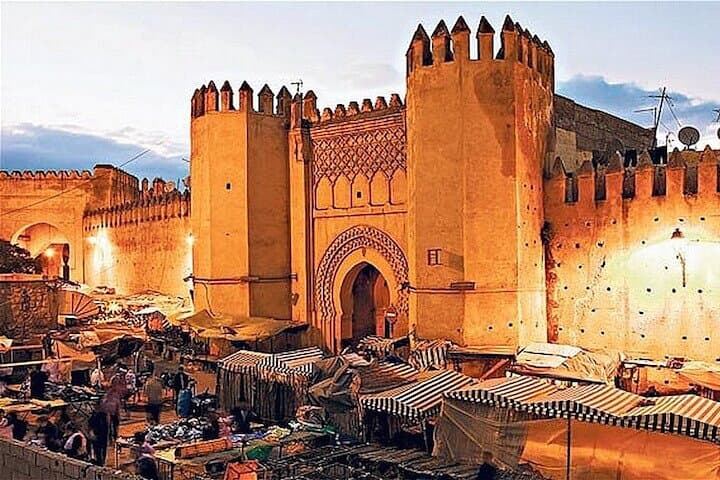
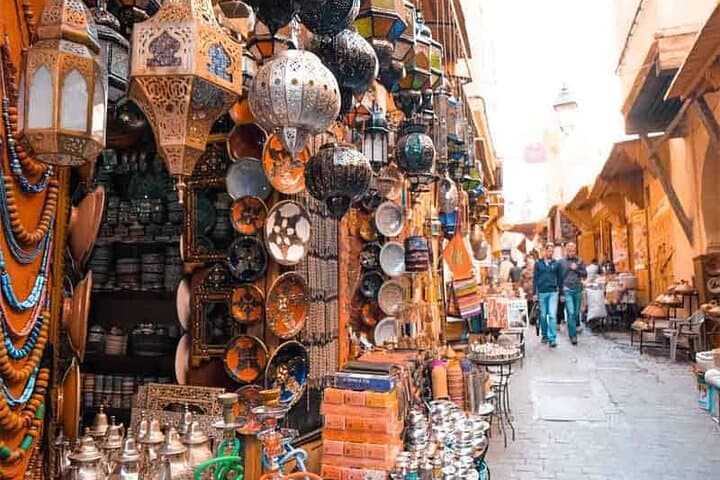
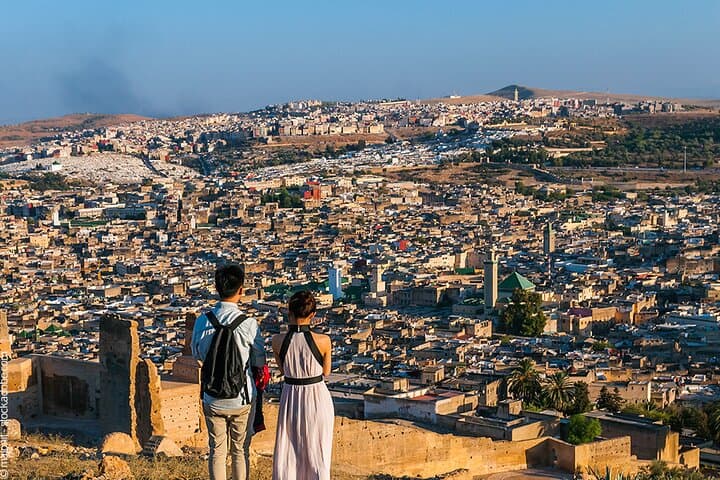
Fes arrives as a maze of lanes and workshops where tile and carved wood keep techniques passed down for centuries. A licensed local guide decodes the medina: Bou Inania’s carved stucco, Al-Attarine’s luminous courtyard and the narrow alleys that once rerouted caravans and ideas. Chefchaouen trades that bustle for blue-washed alleys and a quieter mountain hush; light shifts against the painted walls and the Rif frames the town with serrated ridgelines.
Practical notes: the tour is best for travelers comfortable with sustained walking on uneven cobbles and repeated short drives. Expect mornings for the busiest monuments to avoid crowds, bring cash for small artisan shops, and favor layered clothing—coastal breezes and mountain sun alternate quickly.
Hydration, sturdy walking shoes, and a small daypack make these days easier; allow extra time for photography at Volubilis and the Blue City. This itinerary pairs cultural depth with straightforward logistics—two nights’ accommodation, a bilingual driver-escort, and guided site visits—so you experience Morocco’s imperial past and living craft without constant planning overhead.
moderate.
3 days.
Moderate fitness—able to walk 3–5 miles across uneven surfaces and climb short stone steps over multiple days.
The itinerary includes uneven cobbles, steps and some walking at archaeological sites; travelers with limited mobility should contact the operator to discuss accessibility and possible adjustments.
A licensed local guide and bilingual driver-escort are included—English is commonly provided; confirm if you need another language when booking.
Two breakfasts and one traditional lunch in Fes are included; additional meals and drinks are at your expense unless otherwise noted.
Tipping is customary; prepare small bills in Moroccan dirham for your guide, driver, and riad staff—around 50–100 MAD for guides on full days is typical.
The route links Roman Volubilis, once a provincial capital, with Fes—founded in the 8th–9th centuries and long a center of Islamic learning—and Chefchaouen, established in the 15th century by Andalusian refugees.
Respect local heritage by staying on marked paths at archaeological sites and minimizing single-use plastics; many riads and small operators now favor sustainable practices and local sourcing.
bbktours operates guided outdoor trips and adventures with an emphasis on safety, stewardship, and memorable experiences.

Salt wind pushes across the Strait of Gibraltar as your minivan pulls away from Tangier’s port, the city’s cosmopolitan edges receding behind you.
Salt wind pushes across the Strait of Gibraltar as your minivan pulls away from Tangier’s port, the city’s cosmopolitan edges receding behind you.
On day one the landscape opens—cliffs at Cap Spartel glaring where Atlantic waves and Mediterranean current jostle, then the sea cave with its Africa-shaped aperture offering a framed, cinematic view of surf and sky. The road climbs into the Rif and the Rif’s slow geology—limestone folds and terraced slopes—becomes a living map that leads to Volubilis’ sun-baked mosaics: Roman stonework that still names the rhythms of ancient trade.
Fes arrives as a maze of lanes and workshops where tile and carved wood keep techniques passed down for centuries. A licensed local guide decodes the medina: Bou Inania’s carved stucco, Al-Attarine’s luminous courtyard and the narrow alleys that once rerouted caravans and ideas. Chefchaouen trades that bustle for blue-washed alleys and a quieter mountain hush; light shifts against the painted walls and the Rif frames the town with serrated ridgelines.
Practical notes: the tour is best for travelers comfortable with sustained walking on uneven cobbles and repeated short drives. Expect mornings for the busiest monuments to avoid crowds, bring cash for small artisan shops, and favor layered clothing—coastal breezes and mountain sun alternate quickly.
Hydration, sturdy walking shoes, and a small daypack make these days easier; allow extra time for photography at Volubilis and the Blue City. This itinerary pairs cultural depth with straightforward logistics—two nights’ accommodation, a bilingual driver-escort, and guided site visits—so you experience Morocco’s imperial past and living craft without constant planning overhead.