THE ADVENTURE COLLECTIVE® · Independent discovery and booking for outdoor travel

Cross the High Atlas and sleep under the stars on a three-day route from Marrakech to the Erg Chebbi dunes. This compact itinerary pairs UNESCO-listed Ait Ben Haddou, Todra Gorge walks, and a camel-led night in a desert camp.
Cross the High Atlas and sleep under the stars on a three-day route from Marrakech to the Erg Chebbi dunes. This compact itinerary pairs UNESCO-listed Ait Ben Haddou, Todra Gorge walks, and a camel-led night in a desert camp.
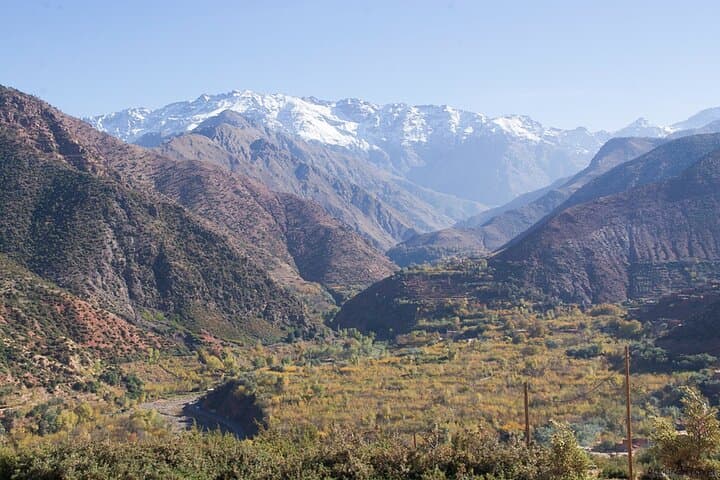
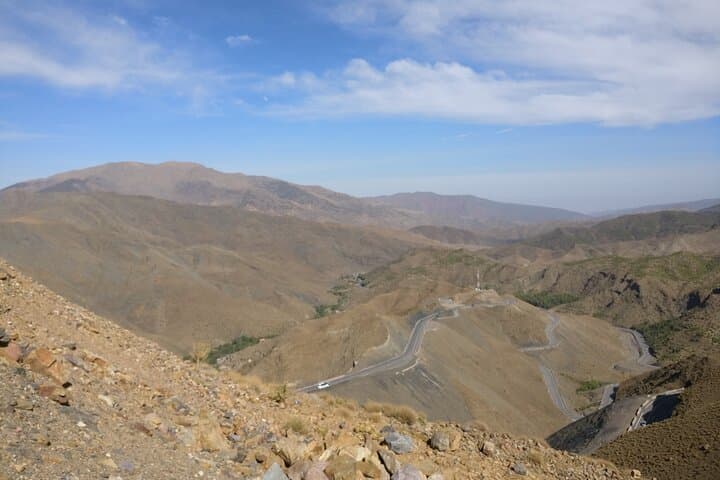
Dust rises on the road out of Marrakech as the minivan threads Tizi n’Tichka and the High Atlas exhales rock and wind. By midday the landscape changes—ochre passes give way to palm oases, ochre kasbahs, and finally the lip of Erg Chebbi, where sand slopes like a slow-moving ocean and the wind keeps time with your footsteps.
Verified experiences and guided adventures in the surrounding area.
Operated by Morocco Destination Tours · Merzouga, Drâa-Tafilalet
Dust rises on the road out of Marrakech as the minivan threads Tizi n’Tichka and the High Atlas exhales rock and wind. By midday the landscape changes—ochre passes give way to palm oases, ochre kasbahs, and finally the lip of Erg Chebbi, where sand slopes like a slow-moving ocean and the wind keeps time with your footsteps.
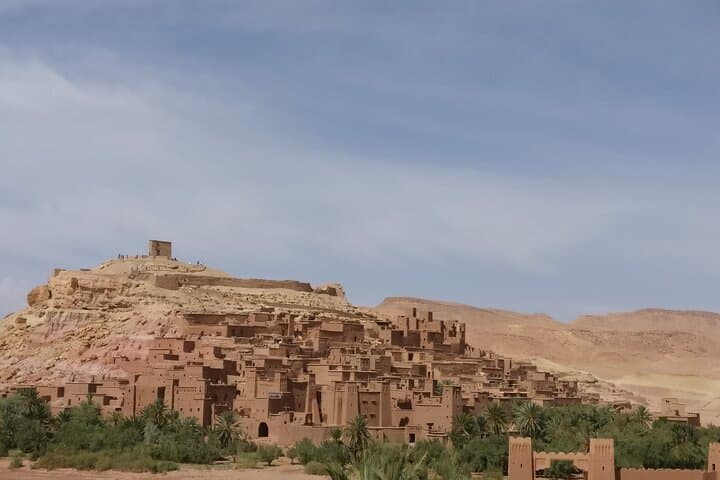
This three-day route follows ancient caravan corridors: Ait Ben Haddou’s mudbrick ksar (a UNESCO site) recalls trans-Saharan trade while Ouarzazate’s film studios point to modern storytelling in the desert. Todra Gorge cuts a sheer pale seam through the mountains—granite and limestone walls rising 250–300 meters—where local Berber villages cluster near irrigation palms and the Draa Valley spreads its ribbon of water and date palms to the south.
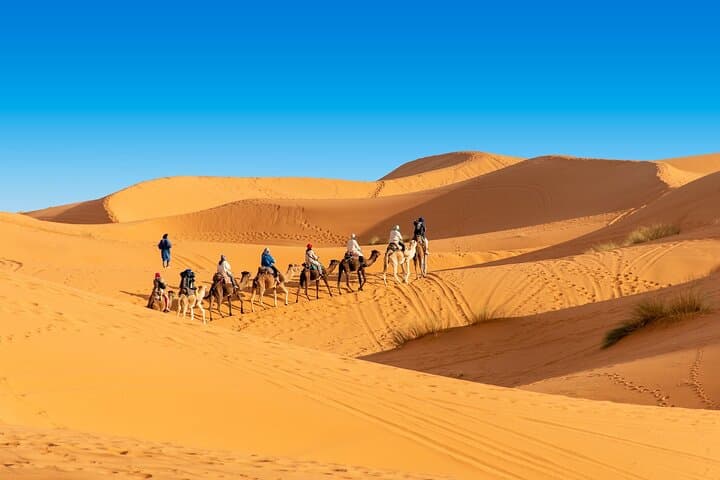
The core desert experience is practical and sensory: a camel trek across Erg Chebbi at golden hour, then a nomadic-style camp under a wide sky where temperatures drop sharply after sunset and stars feel close enough to touch. Guides typically provide dinner, a simple tent, and local music around a fire.
Plan for strong sun, cool nights, and sandy footing. Sturdy shoes, layered clothing, and at least 2–3 liters of water per day are essential. Morning departures from Marrakech maximize daylight for mountain passes; evenings in the dunes reward travelers with quiet and space. Expect modest walking at Todra and the soft challenge of moving over dune slopes—this is an immersive, low-technical adventure best approached with good hydration and a readiness to trade city comforts for clear skies and wide horizons.
moderate.
3 days.
Suitable for travelers with basic fitness: short hikes (20–60 minutes), long vehicle transfers, and walking on sand; expect some stair-like ascent on dunes.
The camel trek across Erg Chebbi is low-technical and paced for general travelers; expect 1–2 hours of sitting on the camel plus walking on soft sand—physical strain is moderate.
This itinerary includes one hotel night and one night in a nomadic-style desert camp with basic amenities, communal dining, and sleeping tents—comforts vary by camp standard.
The tour is generally family-friendly but not recommended for those with serious heart conditions; camel rides and dune walking can be tiring for very young children or people with limited mobility.
A guided tour simplifies logistics across long transfers, local permits, and camel handling; independent travel is possible but requires local arrangements for transport and overnight desert access.
The route follows former caravan corridors linking sub-Saharan trade to Marrakech; Ait Ben Haddou is a fortified ksar that grew wealthy on those routes and is now a UNESCO site.
Erg Chebbi’s dunes are sensitive to foot and vehicle traffic—stick to established routes, minimize campfire impact, and conserve water in this arid environment.
Morocco Destination Tours operates guided outdoor trips and adventures with an emphasis on safety, stewardship, and memorable experiences.
Dust rises on the road out of Marrakech as the minivan threads Tizi n’Tichka and the High Atlas exhales rock and wind. By midday the landscape changes—ochre passes give way to palm oases, ochre kasbahs, and finally the lip of Erg Chebbi, where sand slopes like a slow-moving ocean and the wind keeps time with your footsteps.
Dust rises on the road out of Marrakech as the minivan threads Tizi n’Tichka and the High Atlas exhales rock and wind. By midday the landscape changes—ochre passes give way to palm oases, ochre kasbahs, and finally the lip of Erg Chebbi, where sand slopes like a slow-moving ocean and the wind keeps time with your footsteps.
This three-day route follows ancient caravan corridors: Ait Ben Haddou’s mudbrick ksar (a UNESCO site) recalls trans-Saharan trade while Ouarzazate’s film studios point to modern storytelling in the desert. Todra Gorge cuts a sheer pale seam through the mountains—granite and limestone walls rising 250–300 meters—where local Berber villages cluster near irrigation palms and the Draa Valley spreads its ribbon of water and date palms to the south.
The core desert experience is practical and sensory: a camel trek across Erg Chebbi at golden hour, then a nomadic-style camp under a wide sky where temperatures drop sharply after sunset and stars feel close enough to touch. Guides typically provide dinner, a simple tent, and local music around a fire.
Plan for strong sun, cool nights, and sandy footing. Sturdy shoes, layered clothing, and at least 2–3 liters of water per day are essential. Morning departures from Marrakech maximize daylight for mountain passes; evenings in the dunes reward travelers with quiet and space. Expect modest walking at Todra and the soft challenge of moving over dune slopes—this is an immersive, low-technical adventure best approached with good hydration and a readiness to trade city comforts for clear skies and wide horizons.