THE ADVENTURE COLLECTIVE® · Independent discovery and booking for outdoor travel

Cross the High Atlas, trace ancient caravan routes and finish under the towering ridges of Erg Chebbi on this compact 3-day loop from Marrakech to Merzouga. Expect long drives, dramatic gorges, UNESCO kasbahs, sunrise dunes and an optional night in a traditional desert camp.
Cross the High Atlas, trace ancient caravan routes and finish under the towering ridges of Erg Chebbi on this compact 3-day loop from Marrakech to Merzouga. Expect long drives, dramatic gorges, UNESCO kasbahs, sunrise dunes and an optional night in a traditional desert camp.
The first time you crest Tizi n’Tichka, the High Atlas pushes a cold wind through the vehicle and the road drops you into light that belies the distance ahead—rock, kasbahs, and the long ribbon of asphalt toward the Sahara. By late afternoon on day two, the Erg Chebbi dunes rise like a deliberate ocean of sand, their ridgelines catching color as the sun slides west; camels and the hush of open air define the evening.
Verified experiences and guided adventures in the surrounding area.
Operated by GUÍAS DE ATLAS · Merzouga, Drâa-Tafilalet
The first time you crest Tizi n’Tichka, the High Atlas pushes a cold wind through the vehicle and the road drops you into light that belies the distance ahead—rock, kasbahs, and the long ribbon of asphalt toward the Sahara. By late afternoon on day two, the Erg Chebbi dunes rise like a deliberate ocean of sand, their ridgelines catching color as the sun slides west; camels and the hush of open air define the evening.
This three-day circuit links Marrakech to Merzouga via Ait Benhaddou and Ouarzazate, the Todra and Dades gorges, and the palm oases of Tineghir. Geologically the route follows Atlas uplift and river-cut gorges where limestone walls reach hundreds of meters; Erg Chebbi is a large barchan complex formed by persistent trade winds, with dunes locally exceeding 150–300 meters in height.
Culturally the route traces former caravan and film-industry corridors—Ait Benhaddou’s earthen kasbah is a UNESCO site and Ouarzazate grew as a cinema hub. Local Berber communities still run small guesthouses and desert camps (khaimas) offering tajine and shared fires.
Practical guidance: expect long drives—Marrakech to Merzouga is roughly 9–10 hours of driving split across two travel days—so pack layers for high passes (Tizi n’Tichka ~2,260 m) and warm nights in the desert. Footing in the gorges is rocky; dune walking is soft and tiring. Hydrate early, plan sunrise for the best dunes photography, and budget time for stops at kasbahs and viewpoints. If you opt for an overnight in a desert camp, check whether it includes blankets and toilets; choose a local guide to minimize environmental impact and get the most reliable timing for transfers and camel treks.
moderate.
3 days.
Suitable for travelers who can handle several hours of walking on uneven rock and soft sand and tolerate extended periods in a vehicle.
Plan for roughly 8–10 hours of driving total between Marrakech and Merzouga, divided across two travel days with scheduled stops at kasbahs and gorges.
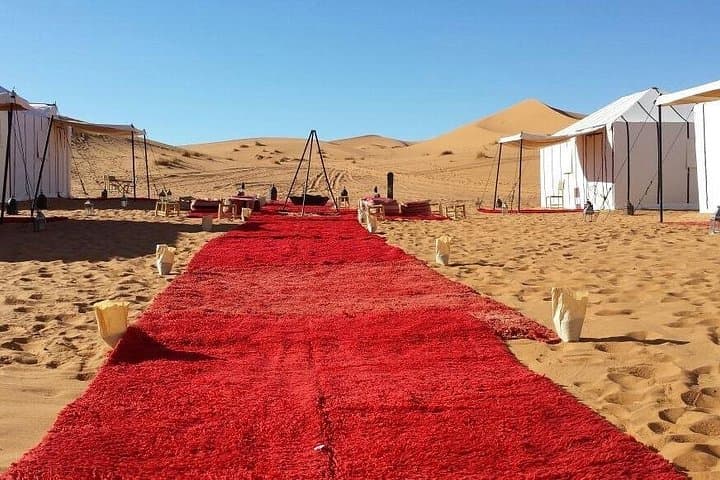
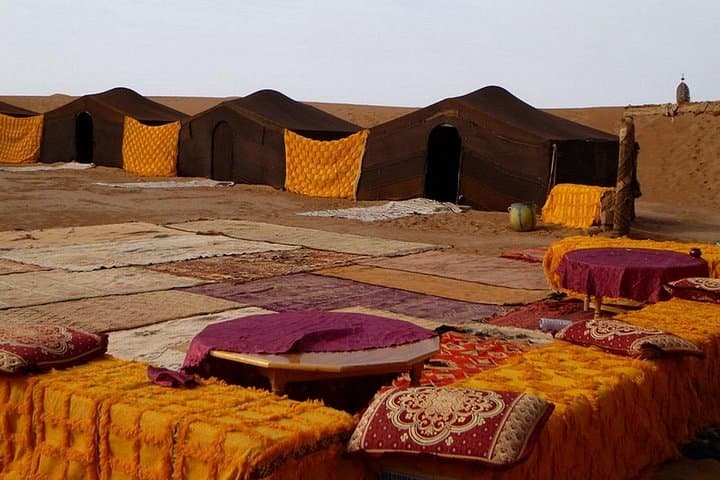
The tour often offers an optional night in a traditional khaima and short camel rides—confirm inclusions with the operator when booking.
No technical fitness is required, but you should be comfortable walking on uneven rock in gorges and soft sand on dune ascents.
Most operators provide tajine and couscous—vegetarian options are common but notify the operator in advance to ensure suitable meals.
The route follows historic caravan corridors; Ait Benhaddou is an earthen ksar that guarded trade routes and later became a film location for international productions.
The desert ecosystem is water-scarce and erosion-prone—stay on established tracks, avoid collecting artifacts and support local guides and accommodations that practice water and waste management.
GUÍAS DE ATLAS operates guided outdoor trips and adventures with an emphasis on safety, stewardship, and memorable experiences.
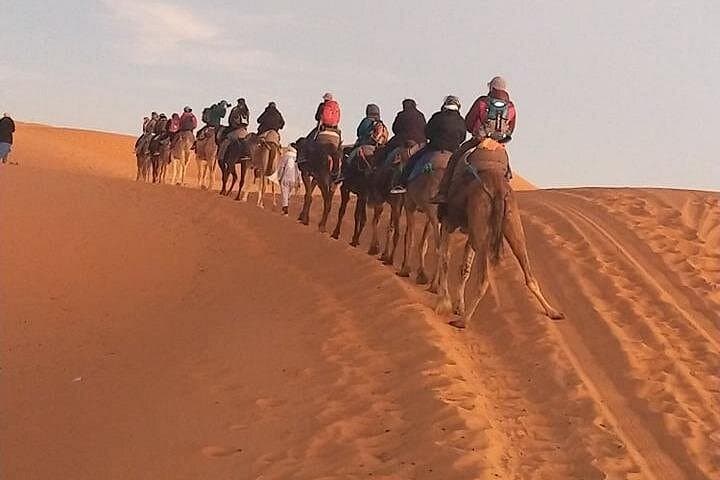
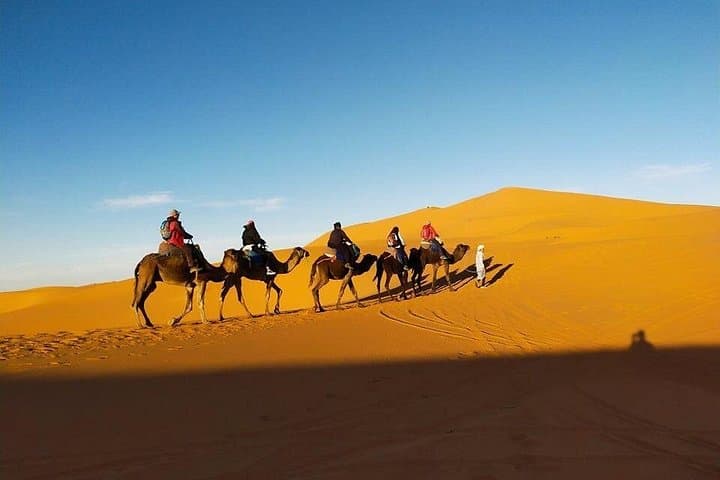
The first time you crest Tizi n’Tichka, the High Atlas pushes a cold wind through the vehicle and the road drops you into light that belies the distance ahead—rock, kasbahs, and the long ribbon of asphalt toward the Sahara. By late afternoon on day two, the Erg Chebbi dunes rise like a deliberate ocean of sand, their ridgelines catching color as the sun slides west; camels and the hush of open air define the evening.
The first time you crest Tizi n’Tichka, the High Atlas pushes a cold wind through the vehicle and the road drops you into light that belies the distance ahead—rock, kasbahs, and the long ribbon of asphalt toward the Sahara. By late afternoon on day two, the Erg Chebbi dunes rise like a deliberate ocean of sand, their ridgelines catching color as the sun slides west; camels and the hush of open air define the evening.
This three-day circuit links Marrakech to Merzouga via Ait Benhaddou and Ouarzazate, the Todra and Dades gorges, and the palm oases of Tineghir. Geologically the route follows Atlas uplift and river-cut gorges where limestone walls reach hundreds of meters; Erg Chebbi is a large barchan complex formed by persistent trade winds, with dunes locally exceeding 150–300 meters in height.
Culturally the route traces former caravan and film-industry corridors—Ait Benhaddou’s earthen kasbah is a UNESCO site and Ouarzazate grew as a cinema hub. Local Berber communities still run small guesthouses and desert camps (khaimas) offering tajine and shared fires.
Practical guidance: expect long drives—Marrakech to Merzouga is roughly 9–10 hours of driving split across two travel days—so pack layers for high passes (Tizi n’Tichka ~2,260 m) and warm nights in the desert. Footing in the gorges is rocky; dune walking is soft and tiring. Hydrate early, plan sunrise for the best dunes photography, and budget time for stops at kasbahs and viewpoints. If you opt for an overnight in a desert camp, check whether it includes blankets and toilets; choose a local guide to minimize environmental impact and get the most reliable timing for transfers and camel treks.