THE ADVENTURE COLLECTIVE® · Independent discovery and booking for outdoor travel

Cross the High Atlas, walk the alleys of Ait Ben Haddou, then ride camels into Erg Chebbi for a night under the stars. This three‑day loop from Marrakech combines cinematic kasbahs, towering gorges and a luxury desert bivouac.
Cross the High Atlas, walk the alleys of Ait Ben Haddou, then ride camels into Erg Chebbi for a night under the stars. This three‑day loop from Marrakech combines cinematic kasbahs, towering gorges and a luxury desert bivouac.
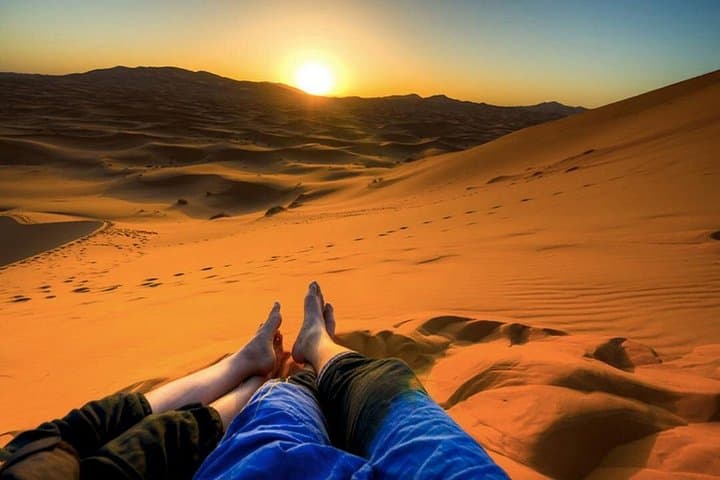
Sun slants across a ribbon of asphalt as the High Atlas climbs and the city’s heat thins into cold stone air. By late afternoon the road drops toward ochre kasbahs and the long shadow of Ait Ben Haddou presides over the valley; by night the dunes of Erg Chebbi become a dark ocean punctured by camp lanterns.
Verified experiences and guided adventures in the surrounding area.
Operated by morocco travel holidays · Merzouga, Drâa-Tafilalet
Sun slants across a ribbon of asphalt as the High Atlas climbs and the city’s heat thins into cold stone air. By late afternoon the road drops toward ochre kasbahs and the long shadow of Ait Ben Haddou presides over the valley; by night the dunes of Erg Chebbi become a dark ocean punctured by camp lanterns.
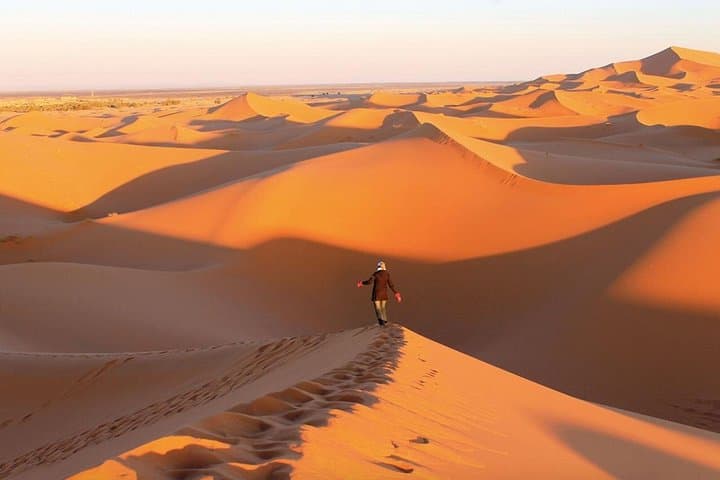
This route follows historic caravan tracks where salt and spice once moved between sub‑Saharan trade routes and Atlantic ports. Geologically, Erg Chebbi is a sweeping field of wind‑shaped sand ridges, formed by Saharan winds pressing dunes into hard, ever‑moving sculpture. Culturally the region is a meeting point—Berber villages, UNESCO‑listed kasbahs, Gnawa music in small towns and carpets woven with patterns that tell family histories.
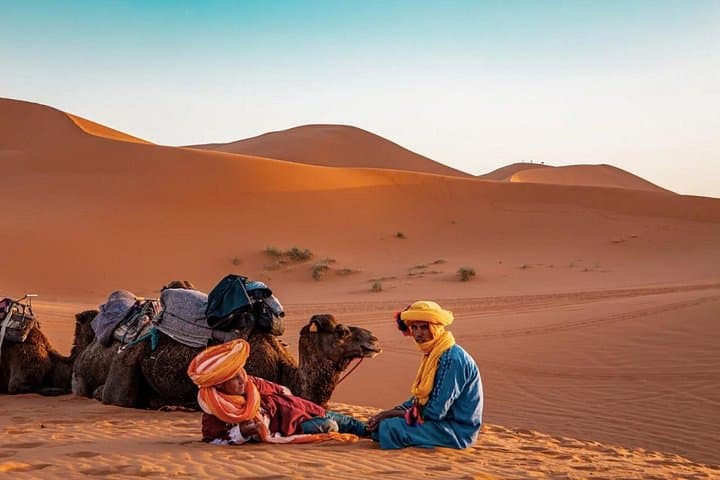
Expect two long driving days bookending a full night in the desert: a sunset camel trek up the dunes, dinner beneath clear skies, then sunrise return. Activities include sandboarding, guided walks in Todra Gorge, and visits to rose‑product valleys and mudbrick fortresses. The itinerary balances scenic stops with comfortable logistics—hotel pickups, air‑conditioned transport and a luxury bivouac for sleeping under canvas.
Practical guidance: time your trip to avoid midsummer heat, carry 3L+ of water, bring closed shoes for dunes and warm layers for night. If you’re prone to motion sickness, choose a 4×4 transfer rather than long stretches on small roads. Book with a provider who includes local guides and respects camp waste practices—this keeps dunes healthy and communities thriving.
moderate.
3 days (approx. 72 hours).
Suitable for travelers in average fitness: able to handle several hours of walking on uneven terrain and short camel rides.
Camel rides are low‑intensity but involve mounting and dismounting; you’ll sit for up to 90 minutes—basic mobility is sufficient.
Many luxury desert camps offer private or semi‑private tent accommodation with en‑suite or shared facilities—confirm level when booking.
Yes—operators often accommodate families, but check for camel ride age limits and book private transport if needed.
Spring and fall offer comfortable daytime temperatures and cool nights; avoid peak summer for extreme heat and midwinter for colder nights.
The route traces centuries‑old caravan corridors and features Ait Ben Haddou, a fortified ksar that guarded trans‑Saharan trade and later became a film location.
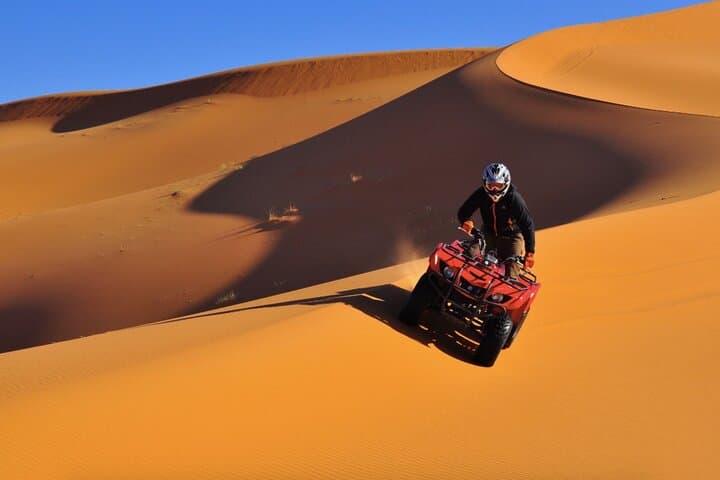
The dunes are an active, fragile system—stay on designated tracks, avoid driving on loose dune faces and minimize single‑use plastics to reduce impact.
morocco travel holidays operates guided outdoor trips and adventures with an emphasis on safety, stewardship, and memorable experiences.
Sun slants across a ribbon of asphalt as the High Atlas climbs and the city’s heat thins into cold stone air. By late afternoon the road drops toward ochre kasbahs and the long shadow of Ait Ben Haddou presides over the valley; by night the dunes of Erg Chebbi become a dark ocean punctured by camp lanterns.
Sun slants across a ribbon of asphalt as the High Atlas climbs and the city’s heat thins into cold stone air. By late afternoon the road drops toward ochre kasbahs and the long shadow of Ait Ben Haddou presides over the valley; by night the dunes of Erg Chebbi become a dark ocean punctured by camp lanterns.
This route follows historic caravan tracks where salt and spice once moved between sub‑Saharan trade routes and Atlantic ports. Geologically, Erg Chebbi is a sweeping field of wind‑shaped sand ridges, formed by Saharan winds pressing dunes into hard, ever‑moving sculpture. Culturally the region is a meeting point—Berber villages, UNESCO‑listed kasbahs, Gnawa music in small towns and carpets woven with patterns that tell family histories.
Expect two long driving days bookending a full night in the desert: a sunset camel trek up the dunes, dinner beneath clear skies, then sunrise return. Activities include sandboarding, guided walks in Todra Gorge, and visits to rose‑product valleys and mudbrick fortresses. The itinerary balances scenic stops with comfortable logistics—hotel pickups, air‑conditioned transport and a luxury bivouac for sleeping under canvas.
Practical guidance: time your trip to avoid midsummer heat, carry 3L+ of water, bring closed shoes for dunes and warm layers for night. If you’re prone to motion sickness, choose a 4×4 transfer rather than long stretches on small roads. Book with a provider who includes local guides and respects camp waste practices—this keeps dunes healthy and communities thriving.