THE ADVENTURE COLLECTIVE® · Independent discovery and booking for outdoor travel

Trade Marrakech’s bustle for the open light of Erg Chebbi on this three-day loop: High Atlas passes, UNESCO kasbahs, Todra Gorge, and a camel-led night under the dunes. Practical, doable, and rich in landscape contrasts, the tour packs big desert scenery into a compact itinerary.
Trade Marrakech’s bustle for the open light of Erg Chebbi on this three-day loop: High Atlas passes, UNESCO kasbahs, Todra Gorge, and a camel-led night under the dunes. Practical, doable, and rich in landscape contrasts, the tour packs big desert scenery into a compact itinerary.
Dust rises on the tarmac as the minivan snakes up Tizi n’Tichka, and the High Atlas pulls the horizon into jagged teeth. Travelers trade Marrakech’s pulse for wide light: kasbah-lined valleys, the rose-scented terraces of Kelaat Mgouna, and ultimately the orange swell of Erg Chebbi that eats the sky at sunset.
Verified experiences and guided adventures in the surrounding area.
Operated by Fajga Travel · Merzouga, Drâa-Tafilalet
Dust rises on the tarmac as the minivan snakes up Tizi n’Tichka, and the High Atlas pulls the horizon into jagged teeth. Travelers trade Marrakech’s pulse for wide light: kasbah-lined valleys, the rose-scented terraces of Kelaat Mgouna, and ultimately the orange swell of Erg Chebbi that eats the sky at sunset.
This route follows centuries-old caravan roads that once linked Marrakech to Saharan trade hubs. Geologically, the trip moves from folded Precambrian ridges through alluvial plains into the wind-sculpted quartz sands of the southern Sahara; the Todra Gorge cuts a basalt-and-limestone cleft where rivers still coax life into palm oases. Culturally, small Berber villages and kasbahs—Ait Ben Haddou among them—reveal adobe architecture adapted to aridity and film history that put this landscape on the world map.
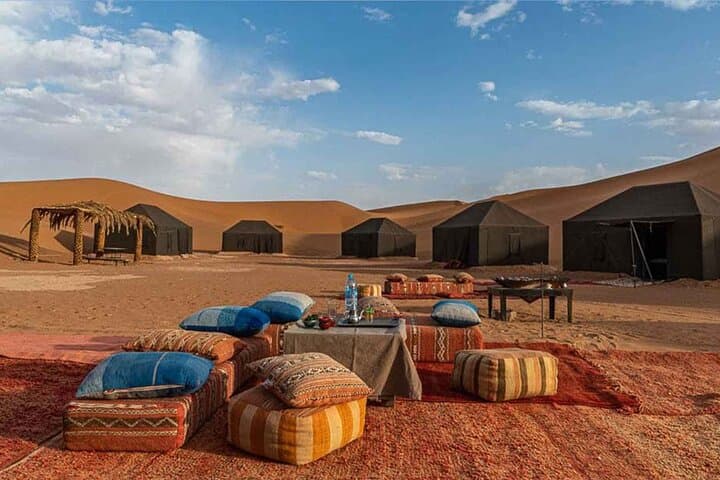
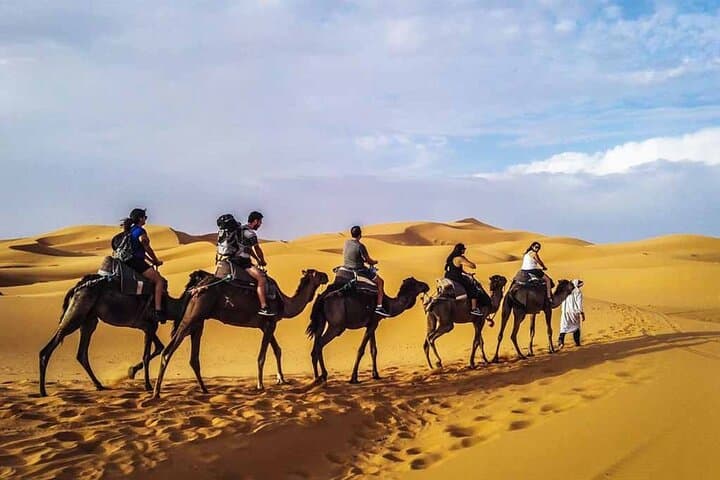
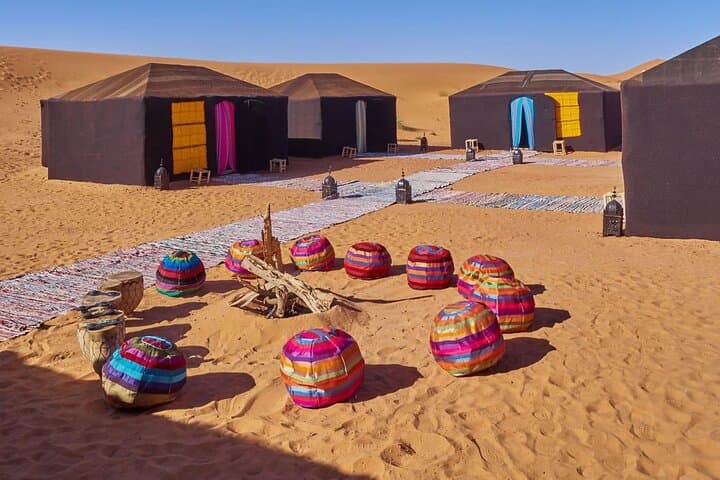
Expect a mix of driving days and active stops: short hikes in gorges, guided visits in fortified villages, and a late-afternoon camel trek across dunes to a Berber bivouac. Nights swing from cool at altitude to sharp-cold in the desert; drums and tea mark the camp routine.
Practical guidance: pack layers and sun protection, carry 2–3 liters of water per day, and be ready for uneven surfaces and sand travel. Camel saddles require basic balance and short walks to mount; porters handle large luggage when you switch to an overnight kit. Plan for long drives—early departures and flexible timing make the route manageable. With moderate fitness and sensible gear, the three-day loop delivers dramatic terrain transitions and an authentic taste of southeastern Morocco.
moderate.
36–40 hours (3 days).
Moderate fitness is required: able to manage several hours of walking over uneven ground and short camel rides.
No. Guides give a short orientation; rides are slow and paced for novices, but basic balance is helpful for mounting and dismounting.
Yes—shared transfer from central Marrakech is typically included; confirm your pickup point at booking and allow early departure times.
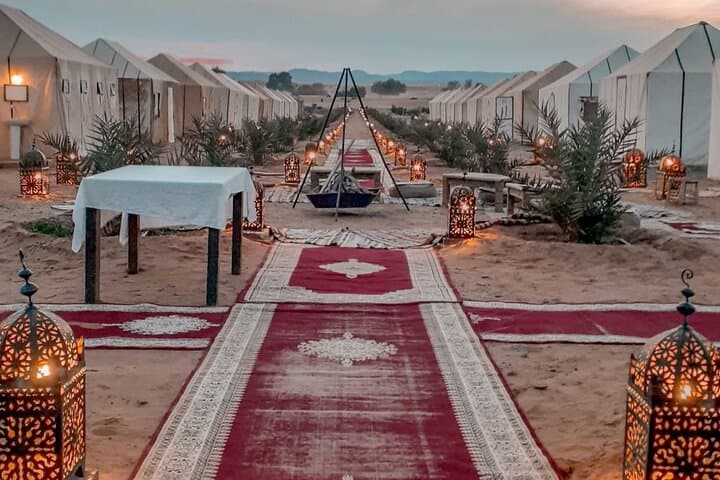
Hotels have standard facilities; the desert camp has simple wash stations and basic shared facilities—hot showers are usually available back in Merzouga hotel after the sunrise return.
Yes. Strong winds or heavy rain can prompt schedule changes for safety; operators may cancel or reroute affected segments and offer refunds per policy.
The route traces historic trans-Saharan caravan corridors and centuries of Berber settlement; fortified kasbahs served both defense and trade functions.
The Sahara’s dune ecosystems are fragile—stick to established tracks, avoid driving on dunes, and limit campfire impact to protect native flora and cultural sites.
Fajga Travel operates guided outdoor trips and adventures with an emphasis on safety, stewardship, and memorable experiences.
Dust rises on the tarmac as the minivan snakes up Tizi n’Tichka, and the High Atlas pulls the horizon into jagged teeth. Travelers trade Marrakech’s pulse for wide light: kasbah-lined valleys, the rose-scented terraces of Kelaat Mgouna, and ultimately the orange swell of Erg Chebbi that eats the sky at sunset.
Dust rises on the tarmac as the minivan snakes up Tizi n’Tichka, and the High Atlas pulls the horizon into jagged teeth. Travelers trade Marrakech’s pulse for wide light: kasbah-lined valleys, the rose-scented terraces of Kelaat Mgouna, and ultimately the orange swell of Erg Chebbi that eats the sky at sunset.
This route follows centuries-old caravan roads that once linked Marrakech to Saharan trade hubs. Geologically, the trip moves from folded Precambrian ridges through alluvial plains into the wind-sculpted quartz sands of the southern Sahara; the Todra Gorge cuts a basalt-and-limestone cleft where rivers still coax life into palm oases. Culturally, small Berber villages and kasbahs—Ait Ben Haddou among them—reveal adobe architecture adapted to aridity and film history that put this landscape on the world map.
Expect a mix of driving days and active stops: short hikes in gorges, guided visits in fortified villages, and a late-afternoon camel trek across dunes to a Berber bivouac. Nights swing from cool at altitude to sharp-cold in the desert; drums and tea mark the camp routine.
Practical guidance: pack layers and sun protection, carry 2–3 liters of water per day, and be ready for uneven surfaces and sand travel. Camel saddles require basic balance and short walks to mount; porters handle large luggage when you switch to an overnight kit. Plan for long drives—early departures and flexible timing make the route manageable. With moderate fitness and sensible gear, the three-day loop delivers dramatic terrain transitions and an authentic taste of southeastern Morocco.