THE ADVENTURE COLLECTIVE® · Independent discovery and booking for outdoor travel

Cross the High Atlas, walk through Aït Ben Haddou, and sleep in a Berber bivouac beneath Erg Chebbi’s dunes. This 3-day Merzouga tour balances long scenic drives with cultural stops and an authentic desert night.
Cross the High Atlas, walk through Aït Ben Haddou, and sleep in a Berber bivouac beneath Erg Chebbi’s dunes. This 3-day Merzouga tour balances long scenic drives with cultural stops and an authentic desert night.
A ribbon of asphalt peels away from Marrakech and climbs Tizi-n-Tichka, the High Atlas pass at 2,260 m, revealing stepped Berber villages and rocky ridgelines before the landscape softens into palm groves and, finally, dunes that breathe color at sunset.
Verified experiences and guided adventures in the surrounding area.
Operated by Itinerance Plus Agence de Voyage Marrakech · Merzouga, Errachidia Province
A ribbon of asphalt peels away from Marrakech and climbs Tizi-n-Tichka, the High Atlas pass at 2,260 m, revealing stepped Berber villages and rocky ridgelines before the landscape softens into palm groves and, finally, dunes that breathe color at sunset.
This three-day circuit follows historic trade routes: a stop at the UNESCO-listed Ksar of Aït Ben Haddou recalls the era of trans-Saharan caravans, while Ouarzazate’s film studios show another face of local culture. Geologically, the route moves from folded Atlas limestone through canyon-carved valleys (Todra and Dades) to wind-sculpted Erg Chebbi, where sand ridges reach tens of metres and shift daily under prevailing northeasterly winds.
Culturally the trip centers on Berber hospitality — rural guesthouses, mint tea rituals, and a night in a Berber bivouac where Gnawa and local drumming gather people around the fire. Expect a sunset camel ride into Merzouga’s dunes, a cold, star-filled bivouac night, and a sunrise return to the village.
Practical guidance: travel days are long (Marrakech–Merzouga is a full-day drive with scenic stops), so pack layers for high-altitude cold and desert heat, sun protection, and at least 2–3 liters of water per day. Wear sturdy closed shoes for rocky gorges and sand. Bring cash for remote villages and tipping; mobile connectivity is intermittent.
This itinerary suits travelers seeking immersive desert landscapes with cultural stops, moderate physical demand, and an emphasis on experiential overnight camping rather than rugged trekking.
moderate.
3 days.
Moderate — able to handle several hours of driving, short hikes in gorges, and camel-mounted transfers over soft sand.
Yes — the tour includes air-conditioned transport with a driver for the full three-day itinerary.
Both: nights are spent in hotels/guesthouses on the first night and a Berber bivouac (standard or upgraded tent options) in the desert on night two.
Yes — a guided camel ride transfers you to and from the desert bivouac, typically at sunset and sunrise.
Not recommended for pregnant travelers or those with serious back or heart conditions; children may join but plan for long travel days and limited medical facilities in remote stretches.
Aït Ben Haddou stands on ancient caravan routes and is a prime example of southern earthen architecture; the route traces trade and cultural exchange between the Atlas and Sahara.
The Sahara’s dune systems are fragile; avoid off-route driving, pack out waste, and support local guides to reduce environmental footprints.
Itinerance Plus Agence de Voyage Marrakech operates guided outdoor trips and adventures with an emphasis on safety, stewardship, and memorable experiences.
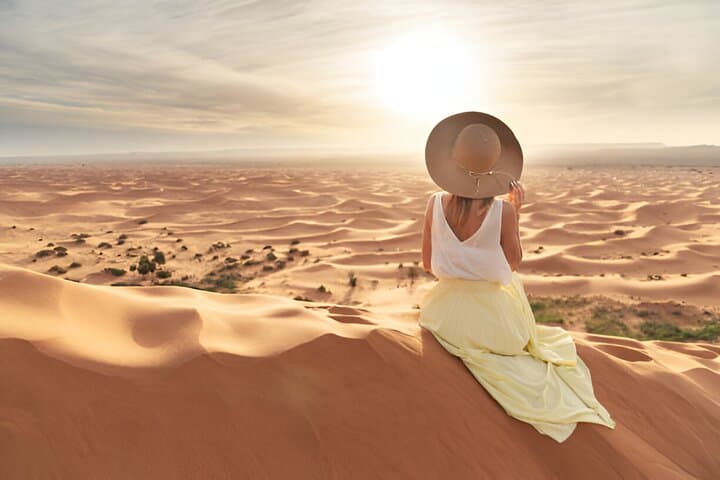
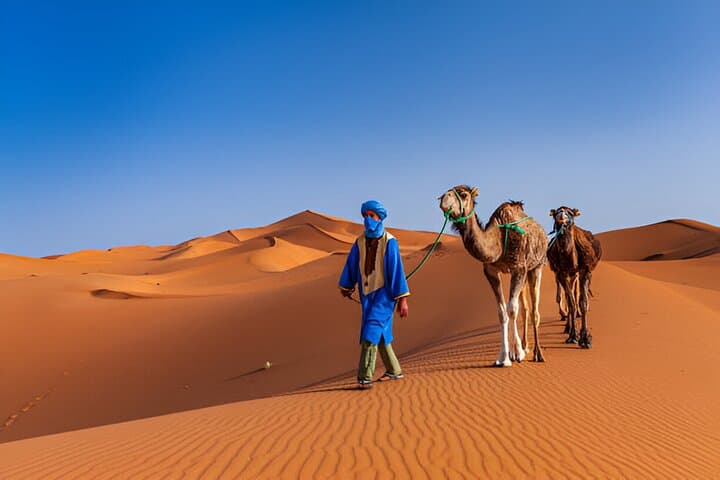
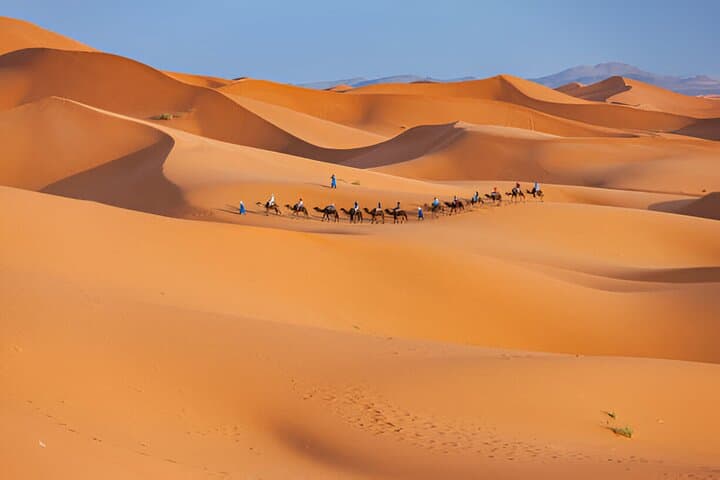
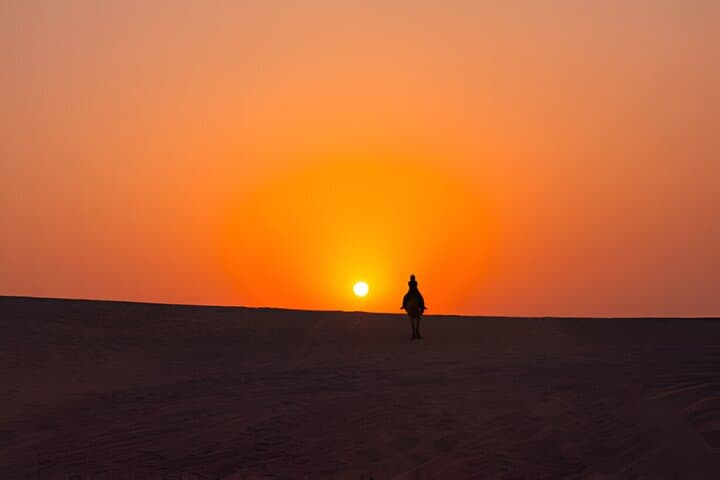
A ribbon of asphalt peels away from Marrakech and climbs Tizi-n-Tichka, the High Atlas pass at 2,260 m, revealing stepped Berber villages and rocky ridgelines before the landscape softens into palm groves and, finally, dunes that breathe color at sunset.
A ribbon of asphalt peels away from Marrakech and climbs Tizi-n-Tichka, the High Atlas pass at 2,260 m, revealing stepped Berber villages and rocky ridgelines before the landscape softens into palm groves and, finally, dunes that breathe color at sunset.
This three-day circuit follows historic trade routes: a stop at the UNESCO-listed Ksar of Aït Ben Haddou recalls the era of trans-Saharan caravans, while Ouarzazate’s film studios show another face of local culture. Geologically, the route moves from folded Atlas limestone through canyon-carved valleys (Todra and Dades) to wind-sculpted Erg Chebbi, where sand ridges reach tens of metres and shift daily under prevailing northeasterly winds.
Culturally the trip centers on Berber hospitality — rural guesthouses, mint tea rituals, and a night in a Berber bivouac where Gnawa and local drumming gather people around the fire. Expect a sunset camel ride into Merzouga’s dunes, a cold, star-filled bivouac night, and a sunrise return to the village.
Practical guidance: travel days are long (Marrakech–Merzouga is a full-day drive with scenic stops), so pack layers for high-altitude cold and desert heat, sun protection, and at least 2–3 liters of water per day. Wear sturdy closed shoes for rocky gorges and sand. Bring cash for remote villages and tipping; mobile connectivity is intermittent.
This itinerary suits travelers seeking immersive desert landscapes with cultural stops, moderate physical demand, and an emphasis on experiential overnight camping rather than rugged trekking.