THE ADVENTURE COLLECTIVE® · Independent discovery and booking for outdoor travel

Drive the High Atlas, sleep under desert stars, and ride camels over Erg Chebbi on this three-day loop from Marrakech. Visit Ait Ben Haddou, Dades and Todra gorges, and a traditional bivouac for sunrise and sunset over the dunes.
Drive the High Atlas, sleep under desert stars, and ride camels over Erg Chebbi on this three-day loop from Marrakech. Visit Ait Ben Haddou, Dades and Todra gorges, and a traditional bivouac for sunrise and sunset over the dunes.
A long day on the road becomes a visceral transition: the High Atlas folds away, villages thin to kasbahs of sun-baked mud, and by late afternoon the dunes of Erg Chebbi rise like an orange tide. Travelers arrive by jeep or minivan, swap wheels for camel, and climb the dune ridgeline as the sun drops—shadows lengthen, the wind composes a slow percussion across rippled sand, and the camp lanterns begin to glow.
Verified experiences and guided adventures in the surrounding area.
Operated by Marrakech Outdoor · Merzouga, Marrakech-Safi
A long day on the road becomes a visceral transition: the High Atlas folds away, villages thin to kasbahs of sun-baked mud, and by late afternoon the dunes of Erg Chebbi rise like an orange tide. Travelers arrive by jeep or minivan, swap wheels for camel, and climb the dune ridgeline as the sun drops—shadows lengthen, the wind composes a slow percussion across rippled sand, and the camp lanterns begin to glow.
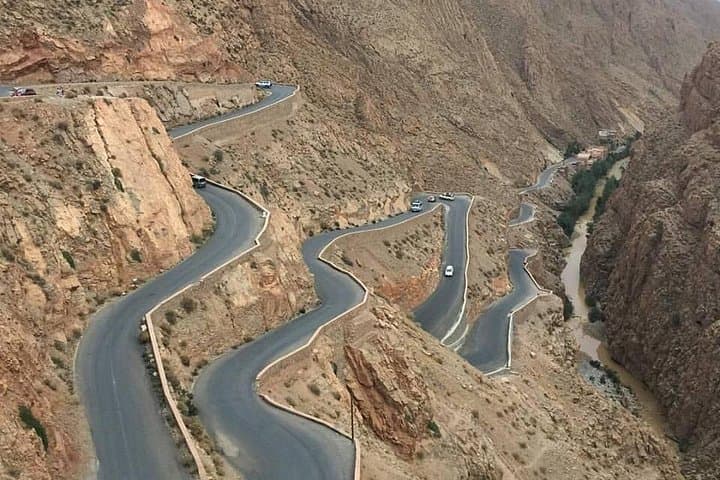
The route stitches together Morocco’s layered history: Tizi n’Tichka pass across folded sedimentary peaks, the fortified ksar of Ait Ben Haddou—once a caravan node on trans-Saharan trade—and the palm-lined Draa oasis fed by Atlas runoff. Geologically the area shifts from high Atlas limestone and volcanic Sarhro outcrops to wind-sculpted erg sand, producing a striking contrast between red gorges and pale dunes.
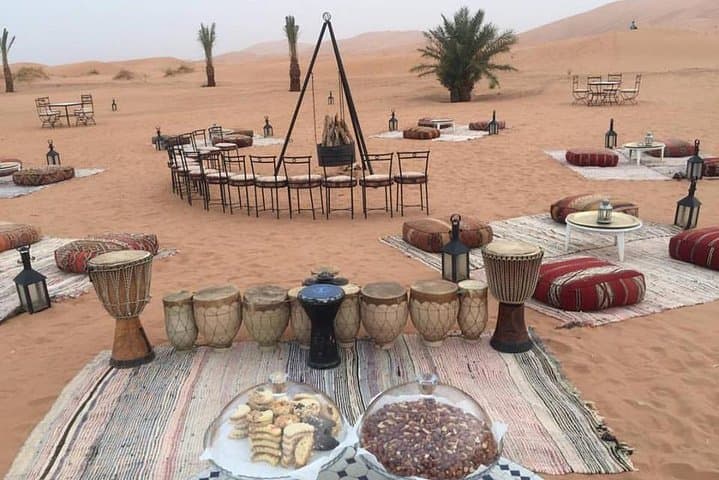
Cultural touchpoints punctuate the days: Berber kasbah architecture, local rose-farming around Skoura, and nomadic music at the bivouac. Expect simple desert camping—shared tents, communal dinners, and Berber hospitality around a fire.
Practical guidance: pack layered clothing for hot days and cold desert nights, sun protection, and good walking shoes for rocky gorges; camel rides are slow but unpadded, so padded shorts or a scarf help. Stay hydrated—carry at least 2 liters per day—plan sunrise and sunset dune walks for light and temperature, and allow extra time for mountain passes. Private pickup from Marrakech and air-conditioned transfer are standard; confirm pickup details, dietary needs, and any mobility limits before booking.
moderate.
3 days (approx. 72 hours).
Suitable for travelers in average fitness—long drives, short hikes in gorges, and non-technical camel rides require basic mobility.
Pickup and drop-off in Marrakech, two nights’ accommodation (hotel and desert bivouac), transport by air-conditioned minivan/4WD, meals as listed, camel ride, and a driver/guide are included.
Activities are low-impact: short hikes in gorges and 1-hour camel rides; comfortable for most people who can walk short distances and mount a camel.
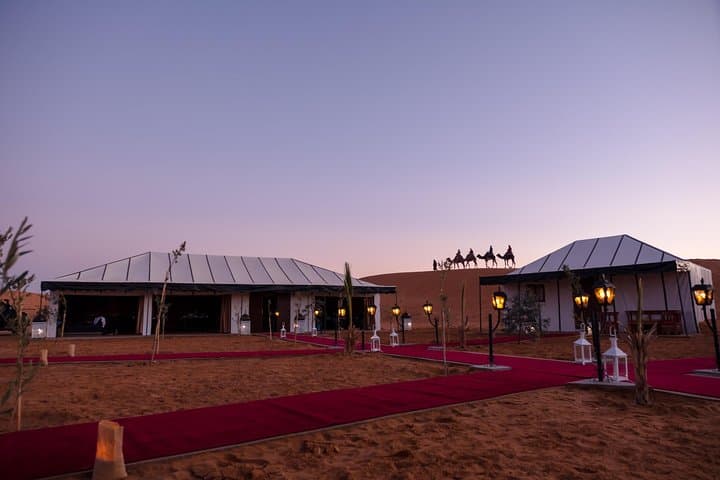
Guests stay in tents at a bivouac—sleeping mats or basic bedding are provided; amenities are simple and typically include shared bathroom facilities or a camp shower when available.
Tipping is customary; small cash tips for drivers, guides, and camel handlers are appreciated and often shared among local staff.
This corridor was part of trans-Saharan caravan routes; Ait Ben Haddou developed as a fortified trade stop connecting the Sahara to Marrakech via the Atlas passes.
The Saharan environment is fragile—stick to established tracks, minimize water use, respect local grazing areas, and follow campfire rules to reduce impact.
Marrakech Outdoor operates guided outdoor trips and adventures with an emphasis on safety, stewardship, and memorable experiences.
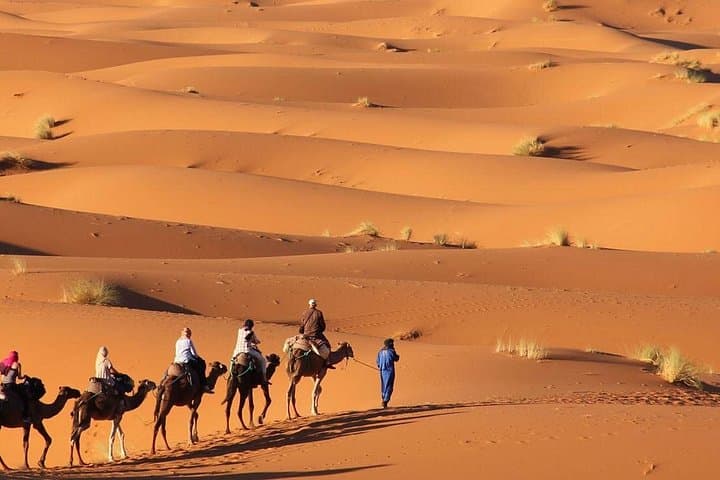
A long day on the road becomes a visceral transition: the High Atlas folds away, villages thin to kasbahs of sun-baked mud, and by late afternoon the dunes of Erg Chebbi rise like an orange tide. Travelers arrive by jeep or minivan, swap wheels for camel, and climb the dune ridgeline as the sun drops—shadows lengthen, the wind composes a slow percussion across rippled sand, and the camp lanterns begin to glow.
A long day on the road becomes a visceral transition: the High Atlas folds away, villages thin to kasbahs of sun-baked mud, and by late afternoon the dunes of Erg Chebbi rise like an orange tide. Travelers arrive by jeep or minivan, swap wheels for camel, and climb the dune ridgeline as the sun drops—shadows lengthen, the wind composes a slow percussion across rippled sand, and the camp lanterns begin to glow.
The route stitches together Morocco’s layered history: Tizi n’Tichka pass across folded sedimentary peaks, the fortified ksar of Ait Ben Haddou—once a caravan node on trans-Saharan trade—and the palm-lined Draa oasis fed by Atlas runoff. Geologically the area shifts from high Atlas limestone and volcanic Sarhro outcrops to wind-sculpted erg sand, producing a striking contrast between red gorges and pale dunes.
Cultural touchpoints punctuate the days: Berber kasbah architecture, local rose-farming around Skoura, and nomadic music at the bivouac. Expect simple desert camping—shared tents, communal dinners, and Berber hospitality around a fire.
Practical guidance: pack layered clothing for hot days and cold desert nights, sun protection, and good walking shoes for rocky gorges; camel rides are slow but unpadded, so padded shorts or a scarf help. Stay hydrated—carry at least 2 liters per day—plan sunrise and sunset dune walks for light and temperature, and allow extra time for mountain passes. Private pickup from Marrakech and air-conditioned transfer are standard; confirm pickup details, dietary needs, and any mobility limits before booking.