THE ADVENTURE COLLECTIVE® · Independent discovery and booking for outdoor travel

Three days from Marrakech deliver mountains, kasbahs and the amber sweep of Erg Chebbi. Expect long drives, a camel caravan, one night in a nomadic bivouac and sunrise over dunes that climb more than 100 meters.
Three days from Marrakech deliver mountains, kasbahs and the amber sweep of Erg Chebbi. Expect long drives, a camel caravan, one night in a nomadic bivouac and sunrise over dunes that climb more than 100 meters.
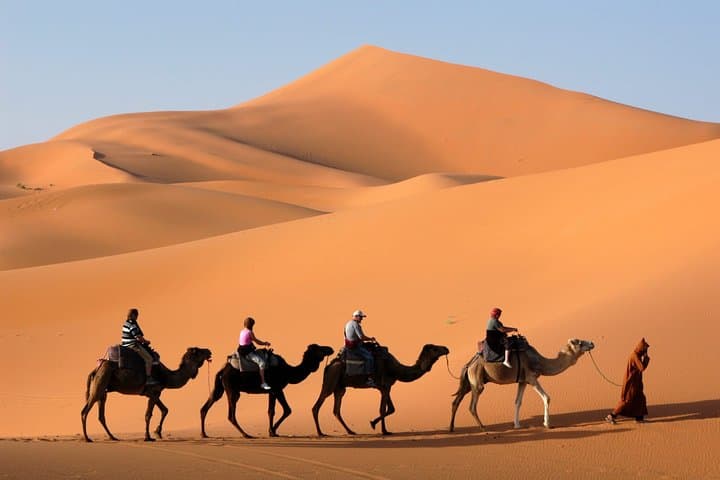
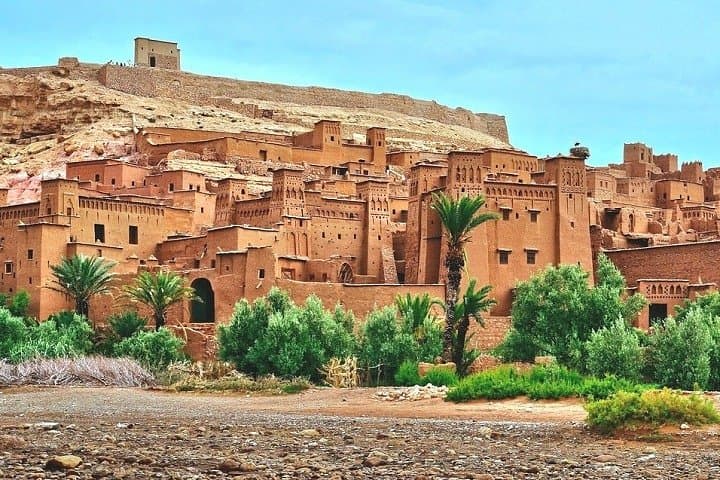
Dawn on the High Atlas looks like a slow exhale: the road climbs, light slides across terraced hills, and Marrakech shrinks behind you as the van heads east. By afternoon your shadowed silhouette pauses at the mud-brick ramparts of Aït Ben Haddou; by evening the Dades Valley’s twisted river has a voice under the kasbahs. On day two the landscape opens to raw rock and then to sand — Erg Chebbi’s dunes rise like a living ocean, their ridges changing color with every hour.
Verified experiences and guided adventures in the surrounding area.
Operated by Marrakeh City Breaks · Merzouga, Drâa-Tafilalet
Dawn on the High Atlas looks like a slow exhale: the road climbs, light slides across terraced hills, and Marrakech shrinks behind you as the van heads east. By afternoon your shadowed silhouette pauses at the mud-brick ramparts of Aït Ben Haddou; by evening the Dades Valley’s twisted river has a voice under the kasbahs. On day two the landscape opens to raw rock and then to sand — Erg Chebbi’s dunes rise like a living ocean, their ridges changing color with every hour.
This route follows old caravan arteries: ksours and kasbahs mark former trade lines between Marrakech and the Sahara. Geologically you move from fold-and-fault High Atlas ranges into arid plateaus and the wind-sculpted sand sheets of the Erg system; Todra’s limestone cliffs cut a narrow, soaring gorge that contrasts sharply with rolling dunes. Culturally, expect Berber hospitality, small-town crafts (rosewater distilleries in the Draa/Klaa Mgouna area), and the rhythm of camel caravans that once carried salt and dates across these deserts.
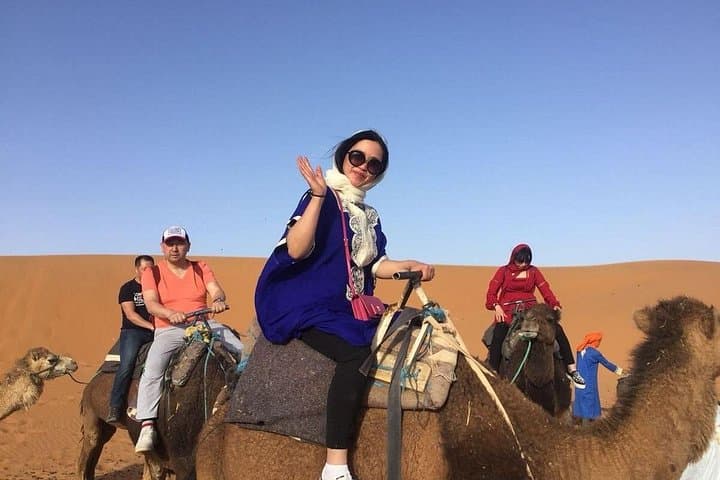
Practically: the trip is a three-day loop with multi-hour driving days (plan for 3–6 hours of transit daily), a sunset camel caravan to a nomadic bivouac and one night under desert stars, and a sunrise camel ride back to the lodge. Terrain is mixed: paved roads, gravel plains, steep sand slopes (dunes to ~100–150 m). Bring sun protection, layers for cold nights, sturdy footwear for short hikes at gorges, and reusable water. If you have spinal or serious heart issues, this itinerary is not recommended. Time your visit for cooler mornings and sunset light—the desert changes personality with temperature and shadow.
moderate.
3 days (approx. 72 hours).
Participants should have a moderate fitness level able to handle several hours of travel, short hikes, and mounting/dismounting camels.
No—handlers brief participants and guide mounting/dismounting; rides are slow and guided, though getting on/off can be awkward for those with mobility issues.
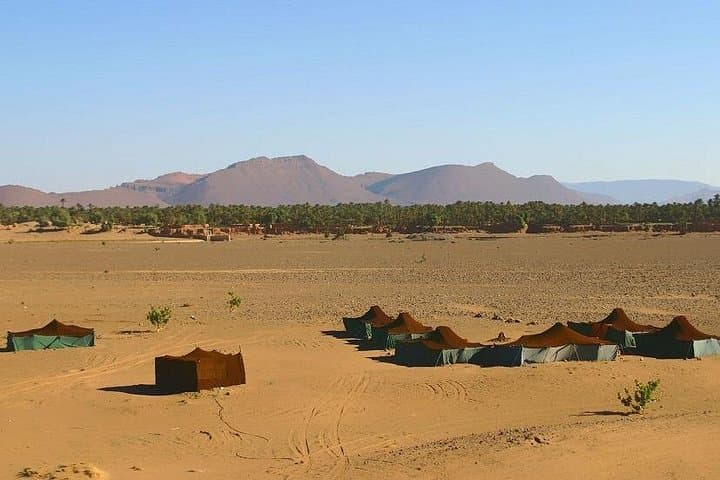
Nomadic bivouacs are basic: sleeping tents, shared latrine facilities, and sometimes a communal fire; shower access is generally available at the desert lodge before/after the camp night.
Expect several hours on day one and three (High Atlas crossings and Ouarzazate stretches) and 3–5 hours on day two with stops at gorges, villages, and the camel meet-up—total transit varies by stops and traffic.
The tour notes it’s not recommended for travelers with spinal or serious heart problems due to uneven terrain, camel rides, and long vehicle transfers.
The itinerary traces historic caravan corridors; ksours and kasbahs were defensive and commercial hubs linking Saharan trade to Marrakech.
The Erg Chebbi ecosystem is fragile—stay on established tracks, pack out waste, and minimize water use; support local guides and camps that follow low-impact practices.
Marrakeh City Breaks operates guided outdoor trips and adventures with an emphasis on safety, stewardship, and memorable experiences.
Dawn on the High Atlas looks like a slow exhale: the road climbs, light slides across terraced hills, and Marrakech shrinks behind you as the van heads east. By afternoon your shadowed silhouette pauses at the mud-brick ramparts of Aït Ben Haddou; by evening the Dades Valley’s twisted river has a voice under the kasbahs. On day two the landscape opens to raw rock and then to sand — Erg Chebbi’s dunes rise like a living ocean, their ridges changing color with every hour.
Dawn on the High Atlas looks like a slow exhale: the road climbs, light slides across terraced hills, and Marrakech shrinks behind you as the van heads east. By afternoon your shadowed silhouette pauses at the mud-brick ramparts of Aït Ben Haddou; by evening the Dades Valley’s twisted river has a voice under the kasbahs. On day two the landscape opens to raw rock and then to sand — Erg Chebbi’s dunes rise like a living ocean, their ridges changing color with every hour.
This route follows old caravan arteries: ksours and kasbahs mark former trade lines between Marrakech and the Sahara. Geologically you move from fold-and-fault High Atlas ranges into arid plateaus and the wind-sculpted sand sheets of the Erg system; Todra’s limestone cliffs cut a narrow, soaring gorge that contrasts sharply with rolling dunes. Culturally, expect Berber hospitality, small-town crafts (rosewater distilleries in the Draa/Klaa Mgouna area), and the rhythm of camel caravans that once carried salt and dates across these deserts.
Practically: the trip is a three-day loop with multi-hour driving days (plan for 3–6 hours of transit daily), a sunset camel caravan to a nomadic bivouac and one night under desert stars, and a sunrise camel ride back to the lodge. Terrain is mixed: paved roads, gravel plains, steep sand slopes (dunes to ~100–150 m). Bring sun protection, layers for cold nights, sturdy footwear for short hikes at gorges, and reusable water. If you have spinal or serious heart issues, this itinerary is not recommended. Time your visit for cooler mornings and sunset light—the desert changes personality with temperature and shadow.