THE ADVENTURE COLLECTIVE® · Independent discovery and booking for outdoor travel

Cross the High Atlas, walk Todra Gorge, and ride camels into the orange waves of Erg Chebbi. This three-day Marrakech-to-Merzouga safari balances cultural stops and desert nights under star-filled skies.
Cross the High Atlas, walk Todra Gorge, and ride camels into the orange waves of Erg Chebbi. This three-day Marrakech-to-Merzouga safari balances cultural stops and desert nights under star-filled skies.
You leave Marrakech before dawn, the medina's noise shrinking behind you as the road climbs into the High Atlas. Light slides across folded ridges and the minivan hums past kasbah ruins and terraced fields; by late afternoon the land opens into ochre plateaus and the dunes of Erg Chebbi loom on the horizon like a living wall of sand.
Verified experiences and guided adventures in the surrounding area.
Operated by Around Marrakech Tours · Merzouga, Drâa-Tafilalet
You leave Marrakech before dawn, the medina's noise shrinking behind you as the road climbs into the High Atlas. Light slides across folded ridges and the minivan hums past kasbah ruins and terraced fields; by late afternoon the land opens into ochre plateaus and the dunes of Erg Chebbi loom on the horizon like a living wall of sand.
Geology and history are visible along the route: the High Atlas rose as African and Eurasian plates collided, creating the river-cut Todra Gorges and stony passes you cross en route. The path follows old caravan corridors used by Berber traders; earthen kasbahs and small villages still keep that history in their walls and weekly markets.
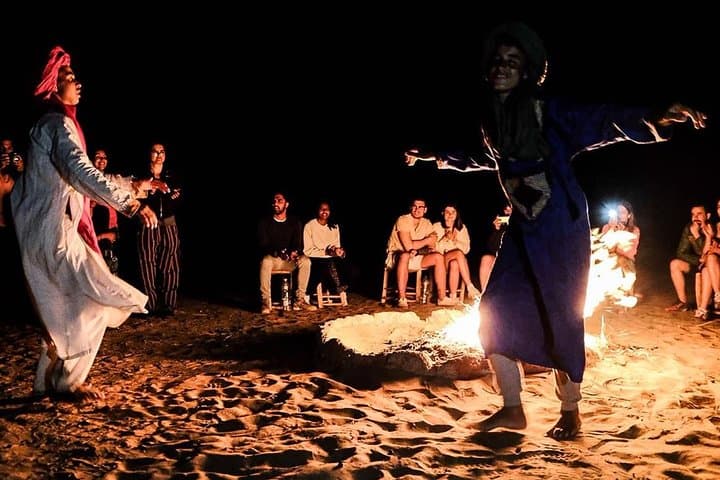
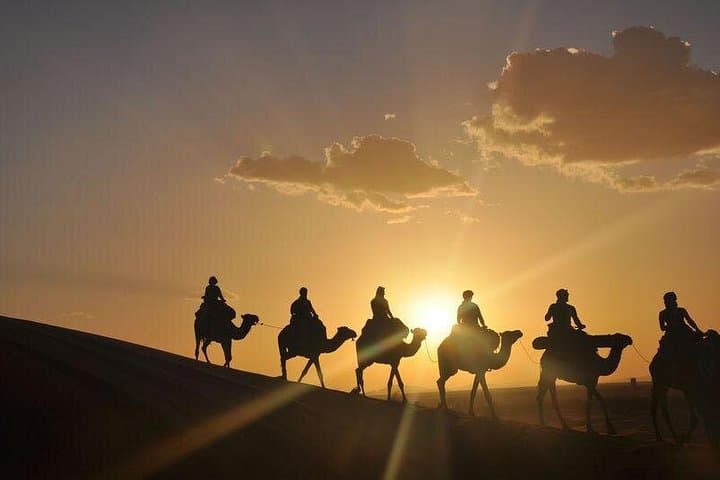
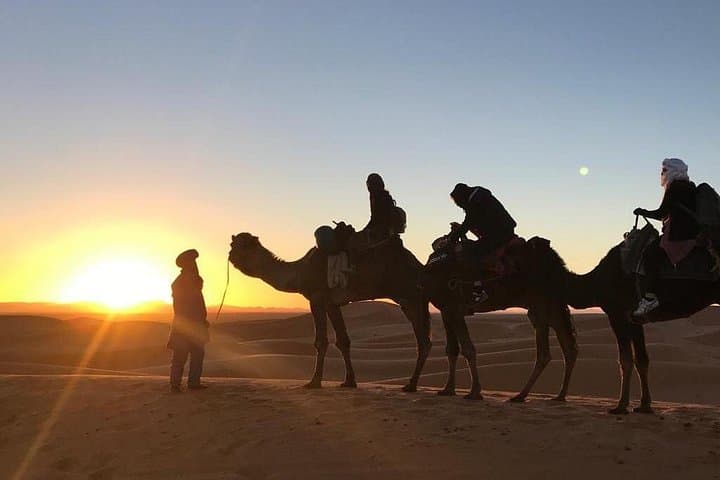
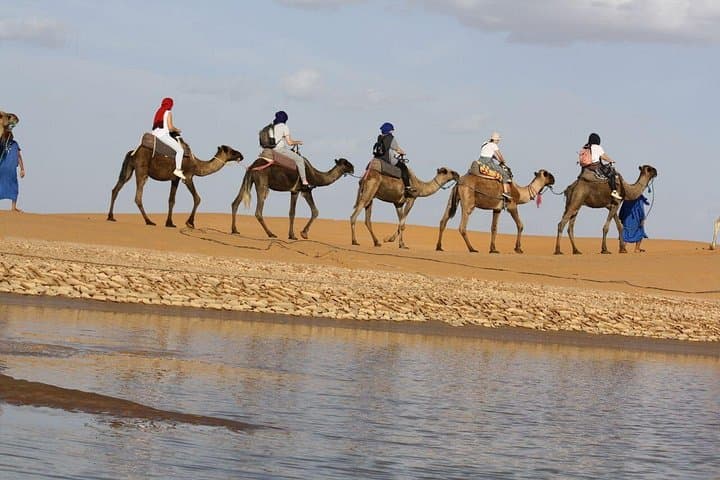
Culture here is direct — a slow rhythm around tea, storytelling and music. In Merzouga you'll transfer to camels for a sunset ride that crests into a camp of tents where musicians play under a sky thick with stars. Erg Chebbi's dunes, sculpted by Saharan winds, can reach over 100 meters and change shape daily — the landscape feels alive, moving with each breeze.
Practical guidance: plan for extreme diurnal swings — scorching days and cool nights — and travel with layered clothing, reliable sun protection and a refillable water bottle. Sunrise and sunset are essential photo windows; midday travel can be hot and dusty. Camps provide basic comforts and communal meals; expect local Berber food, shared spaces and simple sanitation. If you have limited mobility or heart issues, discuss concerns with the operator in advance. The trip is accessible for most hikers and travelers who are prepared for long drives, short camel rides and sleeping on desert-grade beds. Follow local guidance on fire, water use and waste — the desert is fragile and your small choices protect it for the next caravan.
moderate.
3 days.
Suitable for travelers in average physical condition; involves long vehicle transfers, short camel rides, and some walking on sand.
Yes — the itinerary includes dinner and breakfast in Tinghir and at the Merzouga camp as specified; lunches are typically arranged en route or at stops.
Sunset and sunrise camel transfers are typically 30–90 minutes to reach the camp and dawn viewpoints; guides will match pace to riders' comfort.
The tour is family-friendly but not recommended for travelers with serious cardiovascular conditions; infants must sit on laps and special seats may be available.
Camps are traditional-style desert camps offering private or shared tents, basic bedding, and communal facilities; amenities are rustic but comfortable with meals served family-style.
The route follows former trans-Saharan caravan tracks; kasbahs and mud-brick villages reflect centuries of Berber architecture and trade.
Water is scarce and dune ecosystems recover slowly from trampling; prioritize low-impact practices, avoid off-route driving on dunes and pack out waste.
Around Marrakech Tours operates guided outdoor trips and adventures with an emphasis on safety, stewardship, and memorable experiences.
You leave Marrakech before dawn, the medina's noise shrinking behind you as the road climbs into the High Atlas. Light slides across folded ridges and the minivan hums past kasbah ruins and terraced fields; by late afternoon the land opens into ochre plateaus and the dunes of Erg Chebbi loom on the horizon like a living wall of sand.
You leave Marrakech before dawn, the medina's noise shrinking behind you as the road climbs into the High Atlas. Light slides across folded ridges and the minivan hums past kasbah ruins and terraced fields; by late afternoon the land opens into ochre plateaus and the dunes of Erg Chebbi loom on the horizon like a living wall of sand.
Geology and history are visible along the route: the High Atlas rose as African and Eurasian plates collided, creating the river-cut Todra Gorges and stony passes you cross en route. The path follows old caravan corridors used by Berber traders; earthen kasbahs and small villages still keep that history in their walls and weekly markets.
Culture here is direct — a slow rhythm around tea, storytelling and music. In Merzouga you'll transfer to camels for a sunset ride that crests into a camp of tents where musicians play under a sky thick with stars. Erg Chebbi's dunes, sculpted by Saharan winds, can reach over 100 meters and change shape daily — the landscape feels alive, moving with each breeze.
Practical guidance: plan for extreme diurnal swings — scorching days and cool nights — and travel with layered clothing, reliable sun protection and a refillable water bottle. Sunrise and sunset are essential photo windows; midday travel can be hot and dusty. Camps provide basic comforts and communal meals; expect local Berber food, shared spaces and simple sanitation. If you have limited mobility or heart issues, discuss concerns with the operator in advance. The trip is accessible for most hikers and travelers who are prepared for long drives, short camel rides and sleeping on desert-grade beds. Follow local guidance on fire, water use and waste — the desert is fragile and your small choices protect it for the next caravan.