THE ADVENTURE COLLECTIVE® · Independent discovery and booking for outdoor travel

Cross the High Atlas, trace ancient caravan routes and sleep under Saharan stars on this three‑day journey from Marrakech to Erg Chebbi. Expect dramatic gorges, clay kasbahs and a two‑hour camel ride into a nomad bivouac.
Cross the High Atlas, trace ancient caravan routes and sleep under Saharan stars on this three‑day journey from Marrakech to Erg Chebbi. Expect dramatic gorges, clay kasbahs and a two‑hour camel ride into a nomad bivouac.
The sun thins into a copper ribbon as the convoy slides off the asphalt and onto wind-sculpted sand; camels shift, and the desert exhales a long, dry breath. Over three days this route moves from Marrakech’s atlas-streaked skyline, across the Tizi n’Tichka pass, past clay kasbahs and rose-scented valleys to Erg Chebbi’s towering dunes—then back again by way of Todra and Dades.
Verified experiences and guided adventures in the surrounding area.
Operated by Acacia Star Tours · Merzouga, Drâa-Tafilalet
The sun thins into a copper ribbon as the convoy slides off the asphalt and onto wind-sculpted sand; camels shift, and the desert exhales a long, dry breath. Over three days this route moves from Marrakech’s atlas-streaked skyline, across the Tizi n’Tichka pass, past clay kasbahs and rose-scented valleys to Erg Chebbi’s towering dunes—then back again by way of Todra and Dades.
History rides alongside the road: Aït Ben Haddou stands as a fortified waystation from the trans-Saharan caravan era and a film backdrop that frames centuries of trade in salt, gold and ivory. Geologically, the High Atlas is folded, ancient rock, while Todra’s canyon cleaves limestone into vertical walls over 200 meters high and Erg Chebbi is a living dune field, constantly reformed by Saharan winds.
Cultural touchpoints are direct—Berber guesthouses, hand-hammered silver in Tinghir, and mint tea poured with practiced patience in the auberge before a two-hour camel trek into a nomad bivouac. Nights are a study in contrast: desert chill and a vault of stars, daytime heat that demands shade and steady hydration.
Practical essentials: expect long van transfers (Marrakech to Merzouga is an all-day drive with scenic stops), a moderate walking pace at canyon sites, a 2‑hour camel ride at sunset, and an overnight in a tented bivouac with basic facilities. Pack layered clothing for large diurnal swings, sun protection for exposed dune crossings, and comfortable shoes for brief canyon hikes. Aim to catch sunset and sunrise on the dunes—the light rewards the early effort.
easy.
3 days.
Suitable for travelers in normal walking shape; mostly vehicle transfers with short canyon walks and a paced camel ride
Expect a full day of driving with stops—around 8–10 hours total depending on traffic and the number of scenic stops (including Tizi n’Tichka, Aït Ben Haddou and Ouarzazate).
Yes—camel rides are guided and paced for novices; the tour includes a roughly 2‑hour guided sunset ride to the bivouac with handlers managing the animals.
Bivouacs are basic nomad-style tents with mattresses and blankets; food is traditional and facilities minimal—expect an authentic, rather than luxury, overnight experience.
Yes—dinner and breakfast are included for two nights, with at least one traditional tagine meal and continental-style breakfasts noted in the itinerary.
This route follows old caravan corridors: Aït Ben Haddou was a trading post on routes that moved salt, gold and spices across the Sahara to Marrakech.
The dune ecosystem is fragile—avoid off-route driving, pack out all litter, and support local guides who practice low-impact camping and responsible camel care.
Acacia Star Tours operates guided outdoor trips and adventures with an emphasis on safety, stewardship, and memorable experiences.


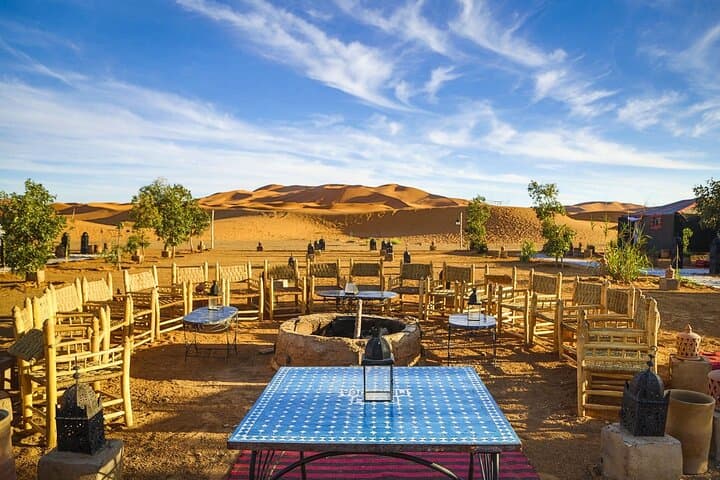
The sun thins into a copper ribbon as the convoy slides off the asphalt and onto wind-sculpted sand; camels shift, and the desert exhales a long, dry breath. Over three days this route moves from Marrakech’s atlas-streaked skyline, across the Tizi n’Tichka pass, past clay kasbahs and rose-scented valleys to Erg Chebbi’s towering dunes—then back again by way of Todra and Dades.
The sun thins into a copper ribbon as the convoy slides off the asphalt and onto wind-sculpted sand; camels shift, and the desert exhales a long, dry breath. Over three days this route moves from Marrakech’s atlas-streaked skyline, across the Tizi n’Tichka pass, past clay kasbahs and rose-scented valleys to Erg Chebbi’s towering dunes—then back again by way of Todra and Dades.
History rides alongside the road: Aït Ben Haddou stands as a fortified waystation from the trans-Saharan caravan era and a film backdrop that frames centuries of trade in salt, gold and ivory. Geologically, the High Atlas is folded, ancient rock, while Todra’s canyon cleaves limestone into vertical walls over 200 meters high and Erg Chebbi is a living dune field, constantly reformed by Saharan winds.
Cultural touchpoints are direct—Berber guesthouses, hand-hammered silver in Tinghir, and mint tea poured with practiced patience in the auberge before a two-hour camel trek into a nomad bivouac. Nights are a study in contrast: desert chill and a vault of stars, daytime heat that demands shade and steady hydration.
Practical essentials: expect long van transfers (Marrakech to Merzouga is an all-day drive with scenic stops), a moderate walking pace at canyon sites, a 2‑hour camel ride at sunset, and an overnight in a tented bivouac with basic facilities. Pack layered clothing for large diurnal swings, sun protection for exposed dune crossings, and comfortable shoes for brief canyon hikes. Aim to catch sunset and sunrise on the dunes—the light rewards the early effort.