THE ADVENTURE COLLECTIVE® · Independent discovery and booking for outdoor travel

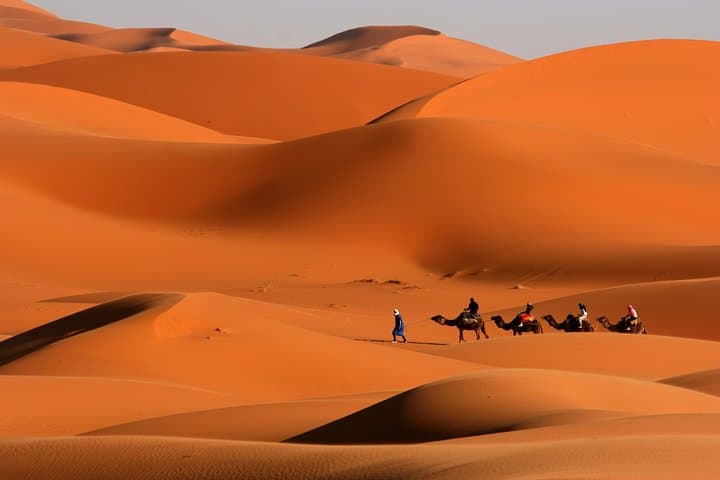
Cross the High Atlas and sleep beneath the stars on this three-day journey from Marrakech to Fez. Expect dramatic gorges, a camel ride on Erg Chebbi, film-marked kasbahs, and big desert skies.
Cross the High Atlas and sleep beneath the stars on this three-day journey from Marrakech to Fez. Expect dramatic gorges, a camel ride on Erg Chebbi, film-marked kasbahs, and big desert skies.
Dust from the roadside lifts as the minivan peels away from Marrakech and climbs toward the High Atlas, where the air thins and the landscape sharpens into stacked ridgelines.
Verified experiences and guided adventures in the surrounding area.
Operated by Argania Travel · Merzouga, Drâa-Tafilalet
Dust from the roadside lifts as the minivan peels away from Marrakech and climbs toward the High Atlas, where the air thins and the landscape sharpens into stacked ridgelines.
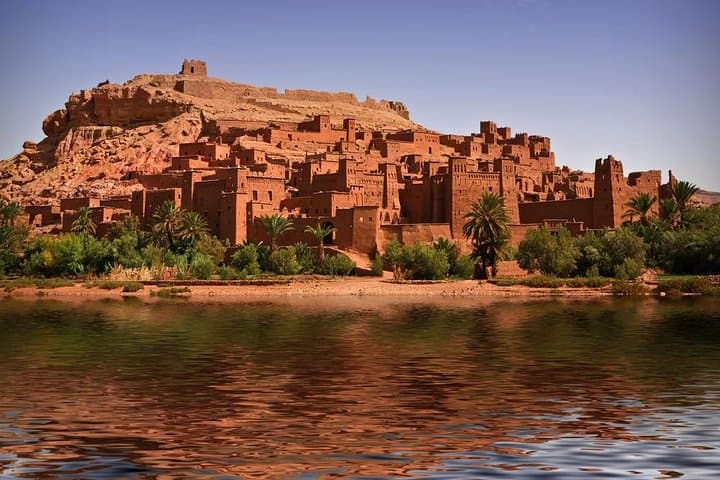
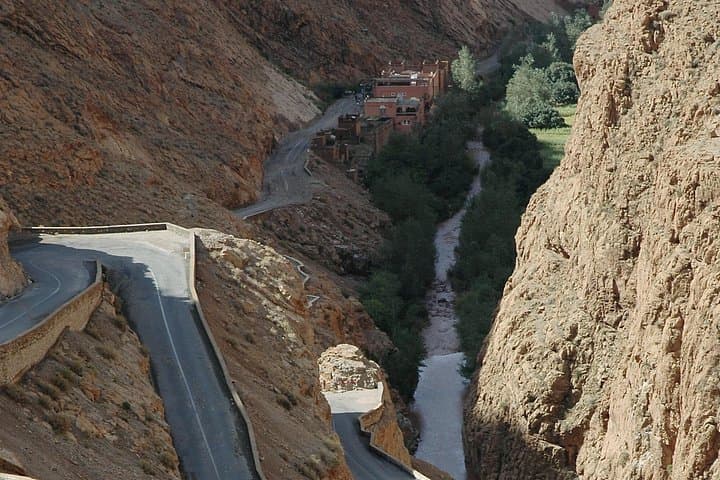
Over roughly 550–600 km of driving, the trip threads through Tizi n'Tichka (about 2,260 m), passes Aït Ben Haddou’s mud-brick kasbahs, and drops into the palm-fringed Dades and Todra gorges before the dunes of Erg Chebbi open like an ocean of sand.
Geology is on display: folded metamorphic rock at the mountain pass gives way to alluvial valleys and then wind-sculpted quartz-sand dunes that can reach 100–150 m. The route is as cultural as it is scenic—Berber villages and caravan-era kasbahs chart centuries of trade, and Aït Ben Haddou’s fortified ksar is a living film set and UNESCO site.
Expect a mix of paved mountain roads, gravel valley tracks and sand walking near the dunes. Days alternate between driving and active exploration: canyon strolls (Todra’s vertical walls rise ~300 m), a 1.5‑hour camel trek at sunset, and an overnight in a nomad-style bivouac where temperatures swing dramatically after dark.
Practical edge: pack sun protection, a warm layer for desert nights, and sturdy shoes for loose sand and canyon scrambles. Hydrate before long drives and schedule camera batteries and memory cards—photo stops are frequent. Guides handle logistics and most meals; travelers should be ready for basic bathroom facilities in rural stops and a modest desert camp experience.
For anyone who wants landscape variety—mountain altitudes, river valleys, palm oases, and a night under the stars—this compact route delivers an efficient, sensory cross-section of southeastern Morocco.
moderate.
3 days.
Suitable for travelers in general good health who can handle several hours of walking on sand and short canyon scrambles; long driving days require patience.
No—this guided tour is suitable for travelers without desert experience; guides manage navigation and campsite setup while walks are short to moderate.
The 1.5‑hour camel ride is low intensity but involves mounting and long periods sitting; travelers with back issues should consult the operator.
Accommodations are basic nomad-style tents with sleeping mats and blankets; facilities are modest—expect shared or simple toilets and no running hot water in remote camps.
The tour runs year-round, but summer brings extreme daytime heat and winter produces cold nights—seasonal timing affects comfort more than route availability.
The route follows ancient trans-Saharan corridors; Aït Ben Haddou preserves a ksar architecture linked to caravan trade and later film production.
Travelers should stick to established tracks near dunes and avoid driving on vegetated interdunes; support local guides and camps that follow leave-no-trace principles.
Argania Travel operates guided outdoor trips and adventures with an emphasis on safety, stewardship, and memorable experiences.
Dust from the roadside lifts as the minivan peels away from Marrakech and climbs toward the High Atlas, where the air thins and the landscape sharpens into stacked ridgelines.
Dust from the roadside lifts as the minivan peels away from Marrakech and climbs toward the High Atlas, where the air thins and the landscape sharpens into stacked ridgelines.
Over roughly 550–600 km of driving, the trip threads through Tizi n'Tichka (about 2,260 m), passes Aït Ben Haddou’s mud-brick kasbahs, and drops into the palm-fringed Dades and Todra gorges before the dunes of Erg Chebbi open like an ocean of sand.
Geology is on display: folded metamorphic rock at the mountain pass gives way to alluvial valleys and then wind-sculpted quartz-sand dunes that can reach 100–150 m. The route is as cultural as it is scenic—Berber villages and caravan-era kasbahs chart centuries of trade, and Aït Ben Haddou’s fortified ksar is a living film set and UNESCO site.
Expect a mix of paved mountain roads, gravel valley tracks and sand walking near the dunes. Days alternate between driving and active exploration: canyon strolls (Todra’s vertical walls rise ~300 m), a 1.5‑hour camel trek at sunset, and an overnight in a nomad-style bivouac where temperatures swing dramatically after dark.
Practical edge: pack sun protection, a warm layer for desert nights, and sturdy shoes for loose sand and canyon scrambles. Hydrate before long drives and schedule camera batteries and memory cards—photo stops are frequent. Guides handle logistics and most meals; travelers should be ready for basic bathroom facilities in rural stops and a modest desert camp experience.
For anyone who wants landscape variety—mountain altitudes, river valleys, palm oases, and a night under the stars—this compact route delivers an efficient, sensory cross-section of southeastern Morocco.