THE ADVENTURE COLLECTIVE® · Independent discovery and booking for outdoor travel

Three days of mountain passes, kasbahs, Todgha’s canyon cliffs and an overnight under the stars in Erg Chebbi. This Marrakech-to-Merzouga route pairs cultural stops with a sunset camel trek and camp breakfast at sunrise.
Three days of mountain passes, kasbahs, Todgha’s canyon cliffs and an overnight under the stars in Erg Chebbi. This Marrakech-to-Merzouga route pairs cultural stops with a sunset camel trek and camp breakfast at sunrise.
On the road out of Marrakech, the air changes tone: citrus-scented medina streets give way to hairpin bends up Tizi n’Tichka and a widening horizon of ochre and rock.
Verified experiences and guided adventures in the surrounding area.
Operated by MOROCCO TRAVEL EXPEDITION · Merzouga, Drâa-Tafilalet (Errachidia Province)
On the road out of Marrakech, the air changes tone: citrus-scented medina streets give way to hairpin bends up Tizi n’Tichka and a widening horizon of ochre and rock.
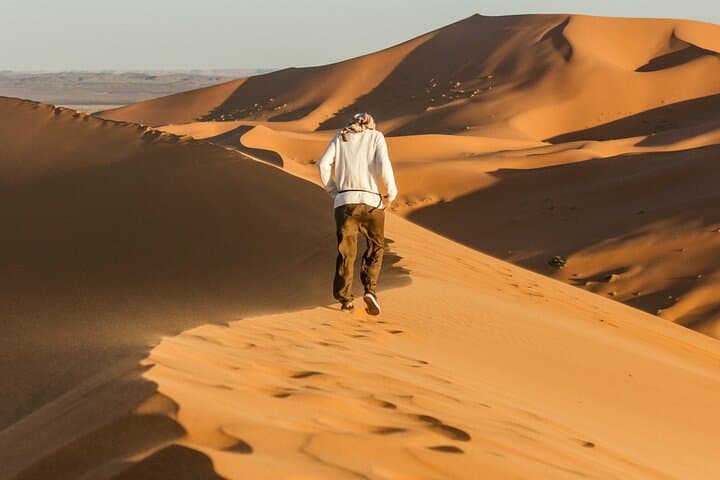
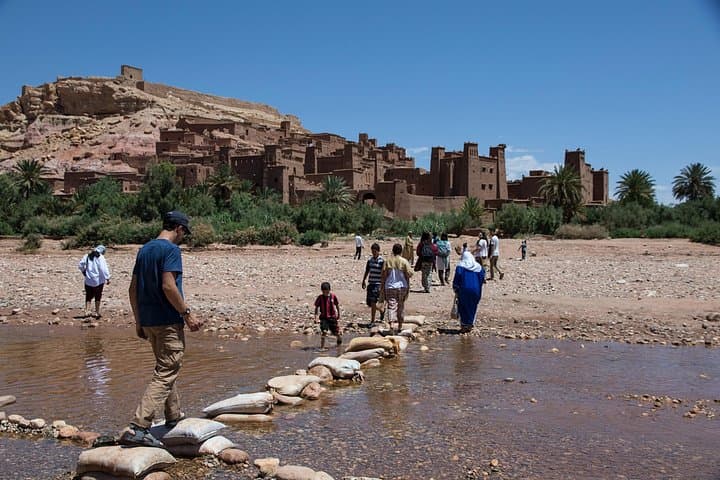
This three-day circuit threads High Atlas passes, the earthen towers of Aït Ben Haddou and the narrow limestone walls of Todgha before delivering you to the wind-sculpted ridges of Erg Chebbi. The Atlas is older than the trade routes it guarded—folded, uplifted and carved by rivers—and the dunes are a moving landscape, grains shifted daily by a Sahara that insists on motion.
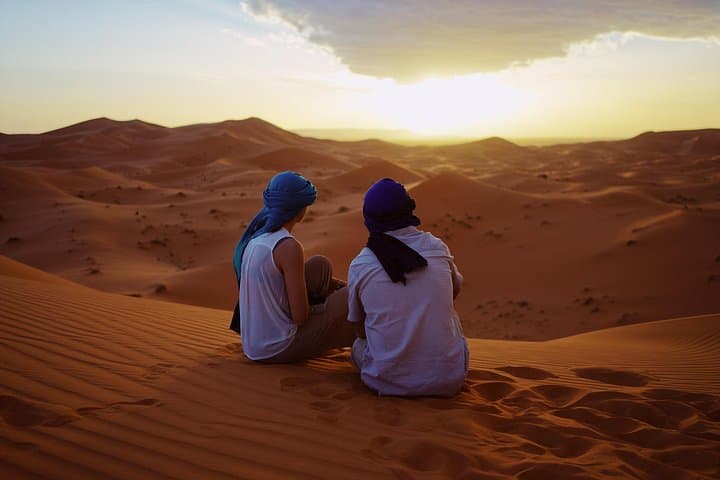
Culturally the route follows Berber and caravan histories: kasbahs that once stored grain and guarded oases, palm-lined irrigation channels that still feed date gardens, and towns like Erfoud known for fossil workshops. Evenings in the desert camp center on simple comforts—dinner, tea and Gnawa or Berber song beneath wide sky.
Practical essentials: expect long, comfortable drives in an air-conditioned vehicle, a guided two-hour walk through Aït Ben Haddou, short gorge walks and a sunset camel trek to a private or upgraded luxury tent. Bring layered clothing for hot days and cold desert nights, sturdy shoes for short hikes and a small overnight bag for camp. Sunrise and sunset are best for photos and cooler sand; follow local guidance on camel mounting and leave no trace in fragile dune landscapes. The operator provides meals, camp lodging and pickup/drop-off in Marrakech, making this a compact, logistics-light way to experience the Sahara.
moderate.
3 days (approx. 12–14 hours driving total over 3 days).
Suitable for travelers with average fitness; expect short walks, a camel ride (sitting/standing transitions) and long periods in a vehicle.
No special skill is required; camels kneel for mounting and guides assist—expect 45–90 minutes of riding with photo stops and a steady, swaying pace.
Yes—operators typically offer private or luxury tent upgrades with larger beds and private facilities; request during booking.
Desert nights can drop sharply, often to single digits Celsius outside summer months—bring insulating layers and a warm sleep layer.
Yes—this tour includes hotel pickup/drop-off in Marrakech, dinners and breakfasts specified in the itinerary, and camp accommodation for night two.
The route follows former trans-Saharan caravan corridors; Aït Ben Haddou and kasbahs were defensive and commercial hubs linking Saharan trade with Moroccan cities.
Erg Chebbi’s dune system is sensitive to off-track vehicle traffic and litter—respect guided routes and pack out waste; support local guides who practice low-impact camp operations.
MOROCCO TRAVEL EXPEDITION operates guided outdoor trips and adventures with an emphasis on safety, stewardship, and memorable experiences.
On the road out of Marrakech, the air changes tone: citrus-scented medina streets give way to hairpin bends up Tizi n’Tichka and a widening horizon of ochre and rock.
On the road out of Marrakech, the air changes tone: citrus-scented medina streets give way to hairpin bends up Tizi n’Tichka and a widening horizon of ochre and rock.
This three-day circuit threads High Atlas passes, the earthen towers of Aït Ben Haddou and the narrow limestone walls of Todgha before delivering you to the wind-sculpted ridges of Erg Chebbi. The Atlas is older than the trade routes it guarded—folded, uplifted and carved by rivers—and the dunes are a moving landscape, grains shifted daily by a Sahara that insists on motion.
Culturally the route follows Berber and caravan histories: kasbahs that once stored grain and guarded oases, palm-lined irrigation channels that still feed date gardens, and towns like Erfoud known for fossil workshops. Evenings in the desert camp center on simple comforts—dinner, tea and Gnawa or Berber song beneath wide sky.
Practical essentials: expect long, comfortable drives in an air-conditioned vehicle, a guided two-hour walk through Aït Ben Haddou, short gorge walks and a sunset camel trek to a private or upgraded luxury tent. Bring layered clothing for hot days and cold desert nights, sturdy shoes for short hikes and a small overnight bag for camp. Sunrise and sunset are best for photos and cooler sand; follow local guidance on camel mounting and leave no trace in fragile dune landscapes. The operator provides meals, camp lodging and pickup/drop-off in Marrakech, making this a compact, logistics-light way to experience the Sahara.