THE ADVENTURE COLLECTIVE® · Independent discovery and booking for outdoor travel

Travel from Marrakech over the High Atlas to Merzouga in three days of kasbahs, gorges, and luxury desert camping. This practical guide explains what to expect — long drives, short walks, camel treks, and private tents with bathrooms under a wide Saharan sky.
Travel from Marrakech over the High Atlas to Merzouga in three days of kasbahs, gorges, and luxury desert camping. This practical guide explains what to expect — long drives, short walks, camel treks, and private tents with bathrooms under a wide Saharan sky.
A thin ribbon of asphalt peels away from Marrakech and climbs into the High Atlas, the bus humming as passes and villages slip past like chapters. By the time you reach Tizi n’Tichka the air has a clean, cold bite; the pass looms at 2,260 m and the Atlas lays out its stony folds beneath you. Over three days the landscape keeps changing — ochre gorges, palm-lined oases, kasbahs of sun-baked clay — until the dunes of Merzouga rise like a living structure, wind and sand shaping the horizon.
Verified experiences and guided adventures in the surrounding area.
Operated by Morocco Official Tours · Marrakech, Marrakech-Safi
A thin ribbon of asphalt peels away from Marrakech and climbs into the High Atlas, the bus humming as passes and villages slip past like chapters. By the time you reach Tizi n’Tichka the air has a clean, cold bite; the pass looms at 2,260 m and the Atlas lays out its stony folds beneath you. Over three days the landscape keeps changing — ochre gorges, palm-lined oases, kasbahs of sun-baked clay — until the dunes of Merzouga rise like a living structure, wind and sand shaping the horizon.
This route threads colonial and caravan history: Aït Benhaddou’s fortified ksar marks the old trans-Saharan caravan roads and later became a film location; Todra Gorge reveals geological layers carved by water over millennia. Local culture is immediate — argan cooperatives, rose valley markets, Berber songs around a campfire — and guides connect those threads with practical storytelling.
Expect mostly vehicle travel punctuated by short walks and a one-hour camel trek (or optional 4x4). Nights alternate between a comfortable Dades Valley hotel and a luxury desert camp where private tents include showers. Activities include sandboarding, henna, kasbah tours and panoramic photo stops.
Practical guidance: bring sun protection and layered clothing for cold desert nights, carry a refillable water bottle, and be ready for early starts and long drives. Plan camera batteries and small cash for bazaars. The desert rewards patience — sunrise on the dunes is the payoff.
easy.
3 days.
Suitable for most travelers comfortable with long vehicle days, short walks, and a gentle camel trek.
The tour departs from Marrakech and returns there on day three; exact pickup/drop-off points are confirmed at booking.
No — the camel trek is gentle and typically about one hour, suitable for most travelers with basic mobility.
Yes — the advertised luxury camp offers private tents with individual toilets and showers for guest comfort.
Yes — quad bikes are usually available at Merzouga for an extra fee and can be arranged on site if you prefer more adrenaline.
The route follows sections of ancient caravan corridors; Aït Benhaddou is a UNESCO-listed ksar that guarded trade routes and later drew filmmakers.
The Erg Chebbi environment is fragile—stick to marked routes, avoid disturbing wildlife, and limit single-use plastics to reduce impact.
Morocco Official Tours operates guided outdoor trips and adventures with an emphasis on safety, stewardship, and memorable experiences.
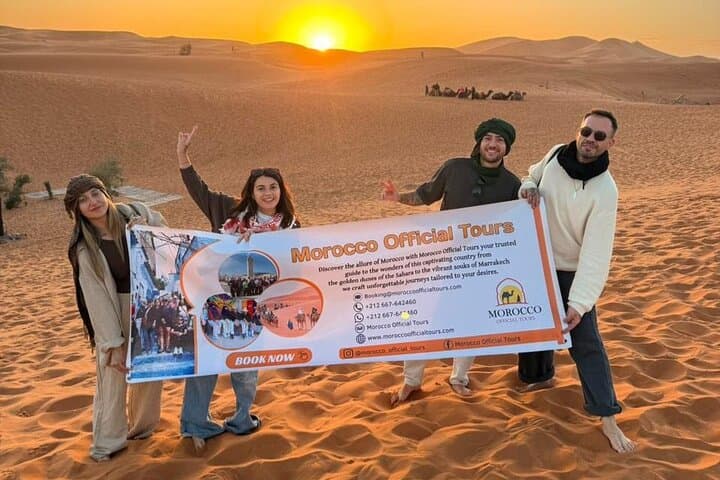


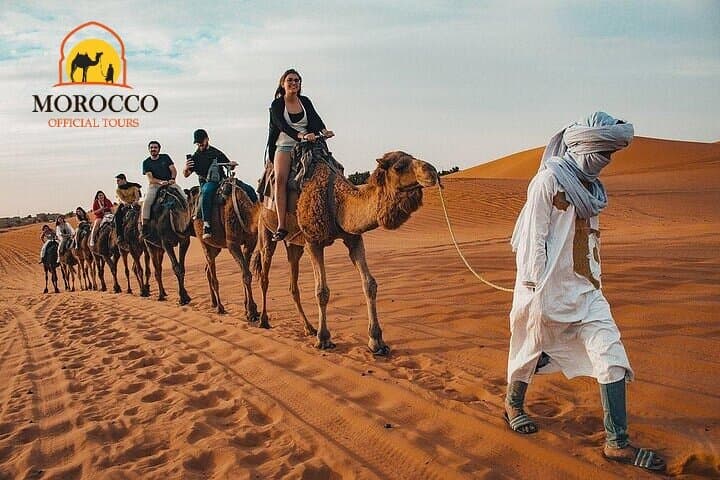
A thin ribbon of asphalt peels away from Marrakech and climbs into the High Atlas, the bus humming as passes and villages slip past like chapters. By the time you reach Tizi n’Tichka the air has a clean, cold bite; the pass looms at 2,260 m and the Atlas lays out its stony folds beneath you. Over three days the landscape keeps changing — ochre gorges, palm-lined oases, kasbahs of sun-baked clay — until the dunes of Merzouga rise like a living structure, wind and sand shaping the horizon.
A thin ribbon of asphalt peels away from Marrakech and climbs into the High Atlas, the bus humming as passes and villages slip past like chapters. By the time you reach Tizi n’Tichka the air has a clean, cold bite; the pass looms at 2,260 m and the Atlas lays out its stony folds beneath you. Over three days the landscape keeps changing — ochre gorges, palm-lined oases, kasbahs of sun-baked clay — until the dunes of Merzouga rise like a living structure, wind and sand shaping the horizon.
This route threads colonial and caravan history: Aït Benhaddou’s fortified ksar marks the old trans-Saharan caravan roads and later became a film location; Todra Gorge reveals geological layers carved by water over millennia. Local culture is immediate — argan cooperatives, rose valley markets, Berber songs around a campfire — and guides connect those threads with practical storytelling.
Expect mostly vehicle travel punctuated by short walks and a one-hour camel trek (or optional 4x4). Nights alternate between a comfortable Dades Valley hotel and a luxury desert camp where private tents include showers. Activities include sandboarding, henna, kasbah tours and panoramic photo stops.
Practical guidance: bring sun protection and layered clothing for cold desert nights, carry a refillable water bottle, and be ready for early starts and long drives. Plan camera batteries and small cash for bazaars. The desert rewards patience — sunrise on the dunes is the payoff.