THE ADVENTURE COLLECTIVE® · Independent discovery and booking for outdoor travel

A three-day private loop from Marrakech to the Erg Chebbi dunes that pairs High Atlas passes, Todra and Dades gorges, and a sunset camel trek with an overnight in a nomad tent. Expect long drives, dramatic geology, and hands-on cultural moments at kasbahs and desert camps.
A three-day private loop from Marrakech to the Erg Chebbi dunes that pairs High Atlas passes, Todra and Dades gorges, and a sunset camel trek with an overnight in a nomad tent. Expect long drives, dramatic geology, and hands-on cultural moments at kasbahs and desert camps.
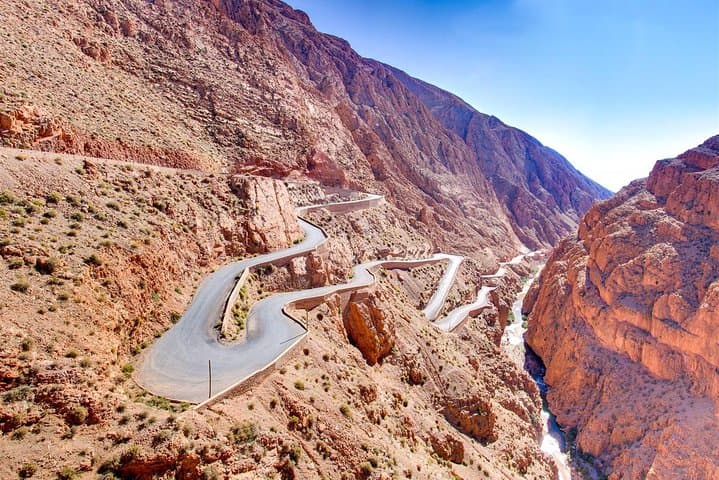
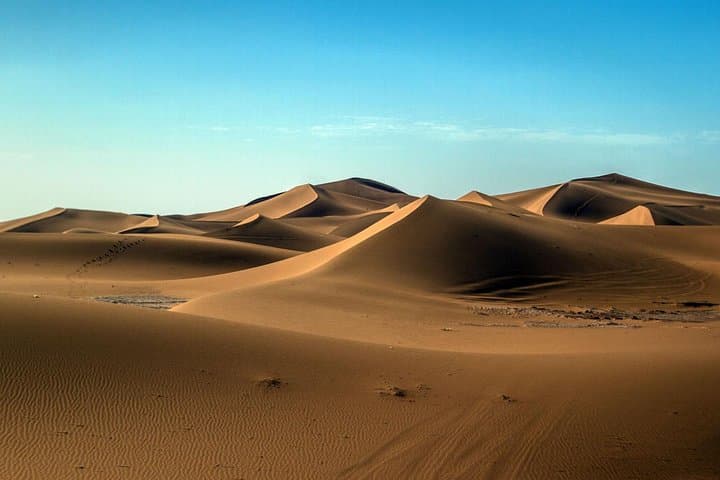
You leave Marrakech before dawn, the city’s hum shrinking as the road climbs to Tizi n'Tichka. Cold air bites at the windows, then opens into a panorama of terraced villages and the High Atlas spine; by afternoon the pavement gives way to ochre gorges and finally the rolling orange of Erg Chebbi, dunes that rise and push the horizon forward like a slow, deliberate tide.
Verified experiences and guided adventures in the surrounding area.
Operated by Caravane Du Grand Erg · Merzouga, Drâa-Tafilalet
You leave Marrakech before dawn, the city’s hum shrinking as the road climbs to Tizi n'Tichka. Cold air bites at the windows, then opens into a panorama of terraced villages and the High Atlas spine; by afternoon the pavement gives way to ochre gorges and finally the rolling orange of Erg Chebbi, dunes that rise and push the horizon forward like a slow, deliberate tide.
The route threads centuries of human movement — caravan trails, fortified kasbahs and the UNESCO-listed ksar of Ait Benhaddou — carved where rivers once ran stronger and where mud-brick architecture held out against wind and sun. Geologically, Erg Chebbi is a wind-sculpted sea of sand at the edge of the Sahara; nearby volcanic Saghrou and the limestone canyons of Todra form the dramatic contrasts that make this corridor memorable.
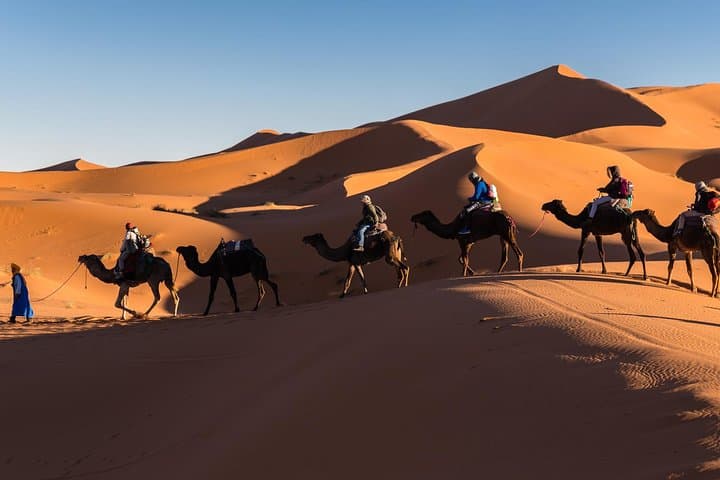
Culturally, nights are marked by Berber rhythms around a campfire in a private nomad tent; days are for short hikes beneath towering canyon walls, and an hour-long camel trek timed for sunset when the dunes turn crimson. Expect clear, dry air and wide temperatures swings — warm daytime, brisk nights.
Practical guidance: pack layered clothing, sun protection, and sturdy footwear; carry at least 2–3 liters of water per person while in the dunes. Plan early starts for mountain passes and sunrise on the dunes, and allow time at stops like Todra Gorge and the fossil workshops in Erfoud. For comfort in camp, bring earplugs and a small flashlight. This three-day loop balances long drives with on-foot exploration and overnight desert camping, delivering the Sahara’s scale without remote-experience logistics.
moderate.
3 days (approx. 72 hours).
Suitable for travelers in average fitness — long vehicle transfers with short, easy hikes and a camel trek; mobility to mount a camel and walk dunes helpful.
Typical camel treks are about 45–75 minutes each way around sunset; guides can adjust duration for comfort and photo stops.
Camps range from comfortable private nomad tents with bedding to more rustic setups; this itinerary offers private tents with dinner and breakfast included.
Children can join but must be accompanied by an adult; camel mounts and sandy terrain make it less suitable for travelers with significant mobility limitations.
The tour includes an English-speaking driver/guide and provides lunches, two dinners and two breakfasts as outlined in the itinerary.
This corridor links historic caravan routes and kasbah settlements; Ait Benhaddou is a fortified ksar that controlled trade between the Sahara and Marrakech.
Dune ecosystems are fragile and moisture-poor; stick to established paths, avoid driving on dunes, and minimize campfire impact to protect soils and native life.
Caravane Du Grand Erg operates guided outdoor trips and adventures with an emphasis on safety, stewardship, and memorable experiences.
You leave Marrakech before dawn, the city’s hum shrinking as the road climbs to Tizi n'Tichka. Cold air bites at the windows, then opens into a panorama of terraced villages and the High Atlas spine; by afternoon the pavement gives way to ochre gorges and finally the rolling orange of Erg Chebbi, dunes that rise and push the horizon forward like a slow, deliberate tide.
You leave Marrakech before dawn, the city’s hum shrinking as the road climbs to Tizi n'Tichka. Cold air bites at the windows, then opens into a panorama of terraced villages and the High Atlas spine; by afternoon the pavement gives way to ochre gorges and finally the rolling orange of Erg Chebbi, dunes that rise and push the horizon forward like a slow, deliberate tide.
The route threads centuries of human movement — caravan trails, fortified kasbahs and the UNESCO-listed ksar of Ait Benhaddou — carved where rivers once ran stronger and where mud-brick architecture held out against wind and sun. Geologically, Erg Chebbi is a wind-sculpted sea of sand at the edge of the Sahara; nearby volcanic Saghrou and the limestone canyons of Todra form the dramatic contrasts that make this corridor memorable.
Culturally, nights are marked by Berber rhythms around a campfire in a private nomad tent; days are for short hikes beneath towering canyon walls, and an hour-long camel trek timed for sunset when the dunes turn crimson. Expect clear, dry air and wide temperatures swings — warm daytime, brisk nights.
Practical guidance: pack layered clothing, sun protection, and sturdy footwear; carry at least 2–3 liters of water per person while in the dunes. Plan early starts for mountain passes and sunrise on the dunes, and allow time at stops like Todra Gorge and the fossil workshops in Erfoud. For comfort in camp, bring earplugs and a small flashlight. This three-day loop balances long drives with on-foot exploration and overnight desert camping, delivering the Sahara’s scale without remote-experience logistics.