THE ADVENTURE COLLECTIVE® · Independent discovery and booking for outdoor travel

A compact three-day circuit from Marrakech to the Erg Chebbi dunes that mixes High Atlas passes, UNESCO-listed kasbahs and nights under the stars. Perfect for travelers who want an immersive desert experience with guided logistics and moderate walking.
A compact three-day circuit from Marrakech to the Erg Chebbi dunes that mixes High Atlas passes, UNESCO-listed kasbahs and nights under the stars. Perfect for travelers who want an immersive desert experience with guided logistics and moderate walking.
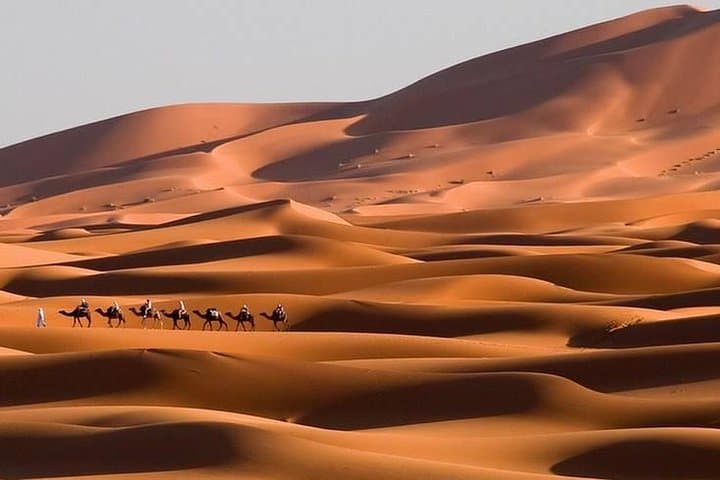
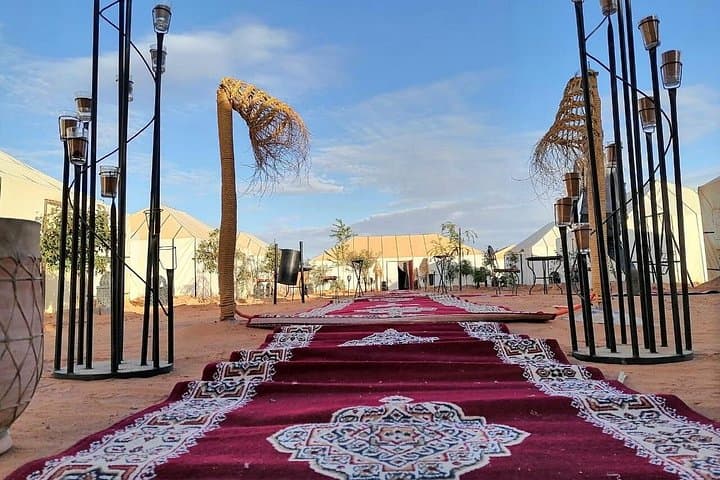
The bus eases out of Marrakech at dawn and the High Atlas unfolds like a folded map — rocky passes give way to ochre valleys and salt-streaked plateaus. By late afternoon the red dunes of Erg Chebbi loom, a moving sea that dares you to climb its wind-sculpted ridges; at night a nomad bivouac turns the desert into a small, convivial village under a vast sky.
Verified experiences and guided adventures in the surrounding area.
Operated by TRAKECH TOURS · Merzouga, Errachidia Province
The bus eases out of Marrakech at dawn and the High Atlas unfolds like a folded map — rocky passes give way to ochre valleys and salt-streaked plateaus. By late afternoon the red dunes of Erg Chebbi loom, a moving sea that dares you to climb its wind-sculpted ridges; at night a nomad bivouac turns the desert into a small, convivial village under a vast sky.
This route threads through Morocco’s layered history: caravan corridors over Tizi n’Tichka, the fortified ksar of Aït Benhaddou with its cinema-era façades, and the river-carved Todra and Dades gorges where geological compression and millennia of water carved narrow, orchid-colored canyons. Local Berber culture remains visible in kasbah architecture, palm-grove irrigation techniques and fossil workshops around Erfoud, a reminder of an ancient seabed now inland.
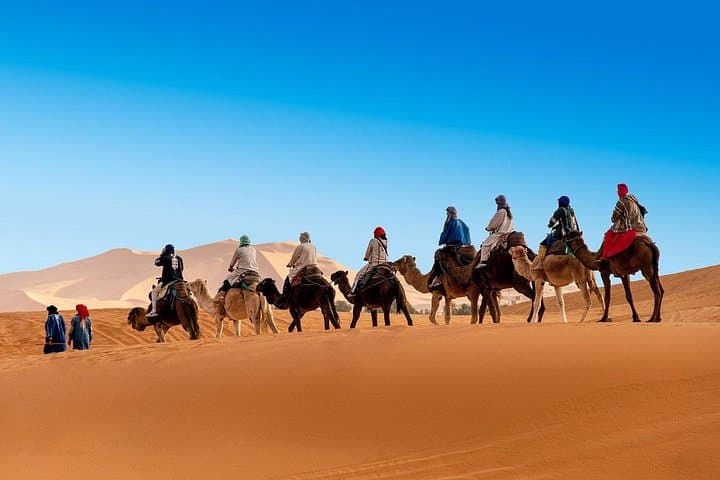
On the practical side, expect long drives interspersed with moderate walks and a one-hour camel trek onto the dunes. Nights alternate between 3–4 star hotels and a nomad tent bivouac; temperatures swing dramatically from hot afternoons to chilly nights. Carry sun protection, layered clothing, and at least 2–3 liters of water per day. Footwear should grip loose sand and rocky trails alike.
Timing matters: sunrise and sunset on the dunes deliver the clearest light and cooler temperatures. Respect local customs in villages, follow guides on dune travel to protect fragile habitats, and allow a day to stretch after the return to Marrakech — the road back gives you one last view across a changing landscape.
moderate.
3 days.
Suitable for travelers with moderate fitness who can manage short hikes, dune climbs and multi-hour vehicle transfers.
The typical camel caravan is about one hour each way for sunset or sunrise excursions, designed for photo stops and a gentle dune approach.
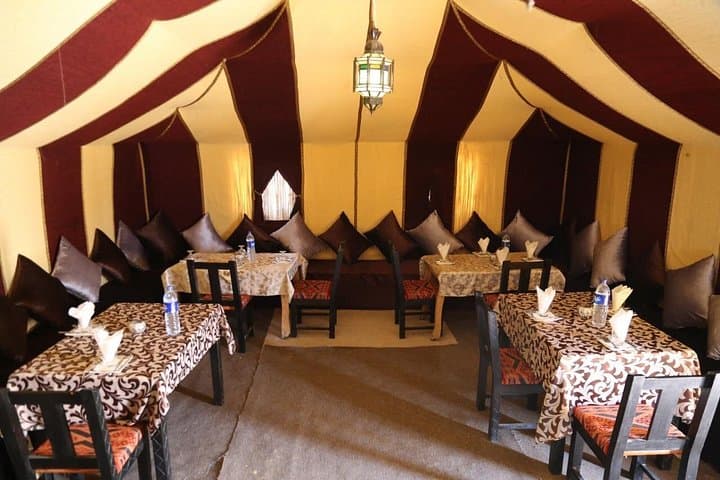
Yes — the tour includes two hotel nights (3–4 star depending on availability) and one night in a nomad tent bivouac; breakfast is included, dinners vary by day.
Children can join but limited mobility is a concern—camel rides and dune walking require balance, and long vehicle transfers may be uncomfortable for some travelers.
Spring and fall offer the most comfortable temperatures; winter is cooler (and dramatic), while summer brings high daytime heat best avoided for strenuous activity.
This corridor linked trans-Saharan trade routes; Aït Benhaddou is a fortified ksar that grew wealthy from those caravans and later became a film location for its preserved earthen architecture.
Dune ecosystems are fragile—avoid driving on unmarked sand ridges, minimize campfire impact, and dispose of waste properly to protect scarce water sources.
TRAKECH TOURS operates guided outdoor trips and adventures with an emphasis on safety, stewardship, and memorable experiences.
The bus eases out of Marrakech at dawn and the High Atlas unfolds like a folded map — rocky passes give way to ochre valleys and salt-streaked plateaus. By late afternoon the red dunes of Erg Chebbi loom, a moving sea that dares you to climb its wind-sculpted ridges; at night a nomad bivouac turns the desert into a small, convivial village under a vast sky.
The bus eases out of Marrakech at dawn and the High Atlas unfolds like a folded map — rocky passes give way to ochre valleys and salt-streaked plateaus. By late afternoon the red dunes of Erg Chebbi loom, a moving sea that dares you to climb its wind-sculpted ridges; at night a nomad bivouac turns the desert into a small, convivial village under a vast sky.
This route threads through Morocco’s layered history: caravan corridors over Tizi n’Tichka, the fortified ksar of Aït Benhaddou with its cinema-era façades, and the river-carved Todra and Dades gorges where geological compression and millennia of water carved narrow, orchid-colored canyons. Local Berber culture remains visible in kasbah architecture, palm-grove irrigation techniques and fossil workshops around Erfoud, a reminder of an ancient seabed now inland.
On the practical side, expect long drives interspersed with moderate walks and a one-hour camel trek onto the dunes. Nights alternate between 3–4 star hotels and a nomad tent bivouac; temperatures swing dramatically from hot afternoons to chilly nights. Carry sun protection, layered clothing, and at least 2–3 liters of water per day. Footwear should grip loose sand and rocky trails alike.
Timing matters: sunrise and sunset on the dunes deliver the clearest light and cooler temperatures. Respect local customs in villages, follow guides on dune travel to protect fragile habitats, and allow a day to stretch after the return to Marrakech — the road back gives you one last view across a changing landscape.