THE ADVENTURE COLLECTIVE® · Independent discovery and booking for outdoor travel

Cross the High Atlas, explore Ait Benhaddou and Dades Gorges, then sleep under the stars in Erg Chebbi. This three-day route pairs cultural sites with a classic camel-led desert camp for sunrise and sunset on the dunes.
Cross the High Atlas, explore Ait Benhaddou and Dades Gorges, then sleep under the stars in Erg Chebbi. This three-day route pairs cultural sites with a classic camel-led desert camp for sunrise and sunset on the dunes.
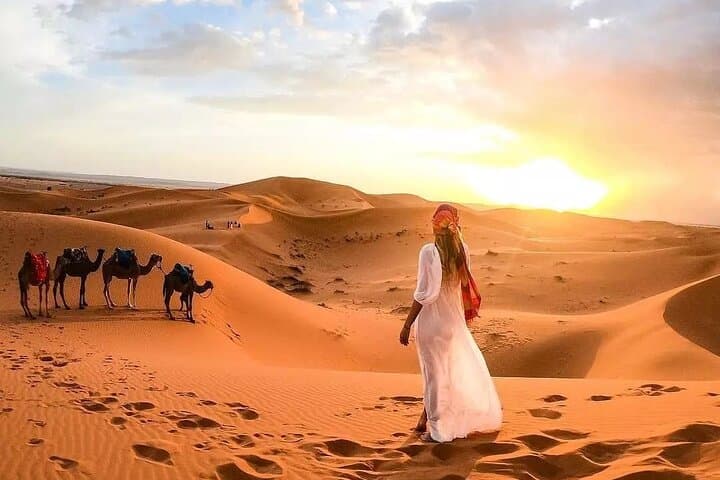
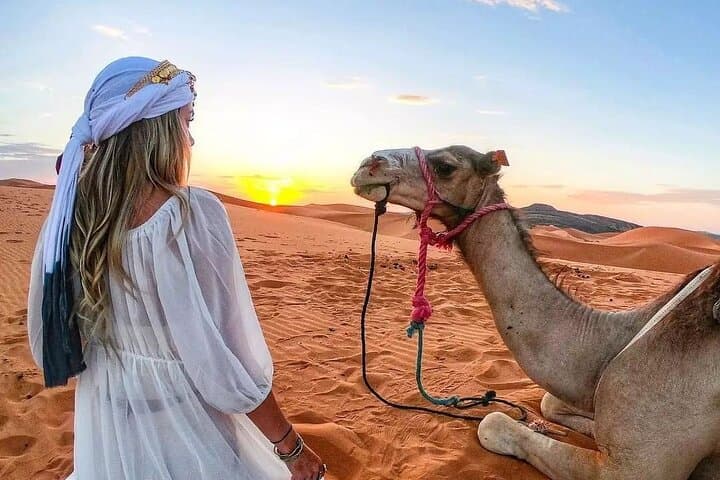
A ribbon of asphalt slides away from Marrakech and, by mid-afternoon, the High Atlas opens into wide, sun-baked valleys. You cross the Tizi-n-Tichka pass with its carved switchbacks, pause beneath the mud-brick ramparts of Ait Benhaddou, then follow river courses into the Dades and Todra gorges before the landscape finally yields to sand. In Merzouga the Erg Chebbi dunes rise like a living wall; camels stand patient at their base, ready to climb toward a high crest for sunset.
Verified experiences and guided adventures in the surrounding area.
Operated by Atlas Mountains Guided Tour · Merzouga, Drâa-Tafilalet
A ribbon of asphalt slides away from Marrakech and, by mid-afternoon, the High Atlas opens into wide, sun-baked valleys. You cross the Tizi-n-Tichka pass with its carved switchbacks, pause beneath the mud-brick ramparts of Ait Benhaddou, then follow river courses into the Dades and Todra gorges before the landscape finally yields to sand. In Merzouga the Erg Chebbi dunes rise like a living wall; camels stand patient at their base, ready to climb toward a high crest for sunset.
This route threads millennia of history: ancient caravan trails, the fortified ksour of southern Morocco, and Berber villages that still mark seasonal irrigation and oasis life. Geologically the Atlas is young and folded, while Erg Chebbi is a mobile dune field shaped by northerly Sahara winds and episodic floods that rearrange its crests.
Culturally, expect Berber hospitality — tea, drummed songs at the desert camp, and simple, sturdy tents modeled on nomad traditions. The trip balances long driving stretches with accessible walking and a short camel trek timed for light and photo opportunities.
Practical guidance: travel days are long (plan for multiple 4–8 hour driving segments); carry layered clothing for hot days and chilly desert nights, sun protection, and 2–3 liters of water per person on activity days. Camel saddles are basic — bring padded shorts or a small seat cushion and secure loose straps. Aim to reach dune vantage points 45–60 minutes before sunset and 30–45 minutes before sunrise for cooler light. Respect local rhythms — ask before photographing people, conserve water, and leave no trace on fragile dune edges.
moderate.
3 days (approx. 72 hours).
Suitable for travelers in reasonable health — requires comfort with multi-hour drives, short hikes on sand, and mounting a camel.
Pick-up and drop-off are typically in Marrakech; the central desert stop is Merzouga (Erg Chebbi) with overnights in Dades Gorges and a desert camp.
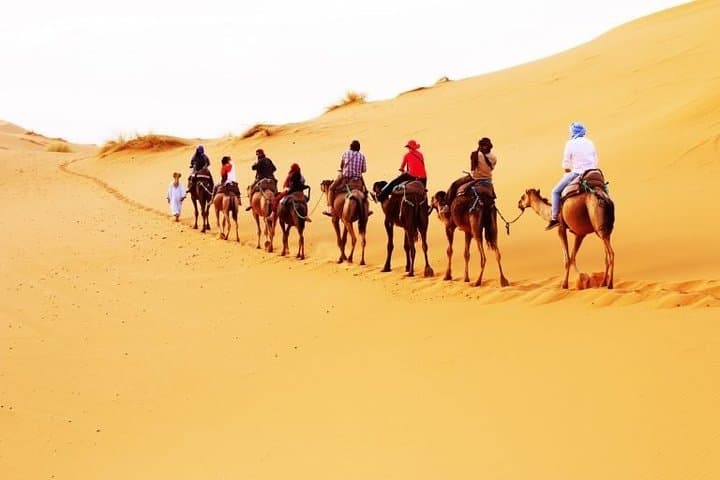
Camel rides are short (about 30–60 minutes) and suitable for most people; walking on dunes can be tiring due to loose sand but requires no technical skill.
Camp stays use nomad-style tents with basic bedding and communal dining; facilities vary from simple to mid-range depending on the operator.
The itinerary is family-friendly but involves long drives; travelers with serious cardiovascular issues are advised to consult a doctor and the operator first.
This corridor linked trans-Saharan caravan routes; ksour like Ait Benhaddou grew as fortified trade and agricultural hubs for the region.
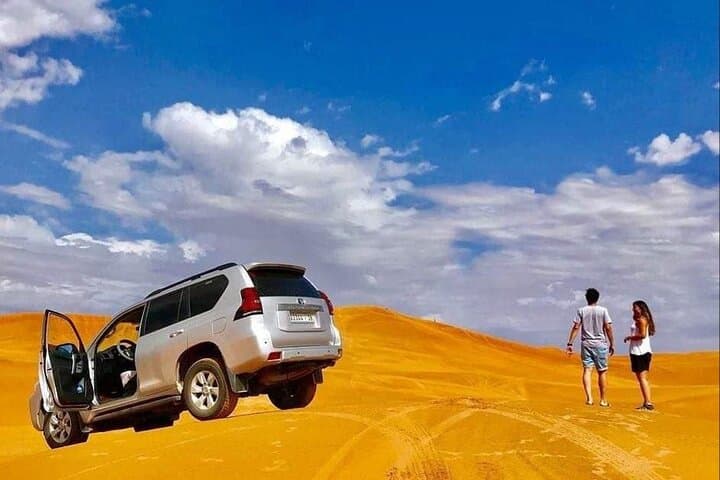
Erg Chebbi’s dune ridges are fragile—avoid driving or camping on vegetated margins, and conserve water in this arid landscape.
Atlas Mountains Guided Tour operates guided outdoor trips and adventures with an emphasis on safety, stewardship, and memorable experiences.
A ribbon of asphalt slides away from Marrakech and, by mid-afternoon, the High Atlas opens into wide, sun-baked valleys. You cross the Tizi-n-Tichka pass with its carved switchbacks, pause beneath the mud-brick ramparts of Ait Benhaddou, then follow river courses into the Dades and Todra gorges before the landscape finally yields to sand. In Merzouga the Erg Chebbi dunes rise like a living wall; camels stand patient at their base, ready to climb toward a high crest for sunset.
A ribbon of asphalt slides away from Marrakech and, by mid-afternoon, the High Atlas opens into wide, sun-baked valleys. You cross the Tizi-n-Tichka pass with its carved switchbacks, pause beneath the mud-brick ramparts of Ait Benhaddou, then follow river courses into the Dades and Todra gorges before the landscape finally yields to sand. In Merzouga the Erg Chebbi dunes rise like a living wall; camels stand patient at their base, ready to climb toward a high crest for sunset.
This route threads millennia of history: ancient caravan trails, the fortified ksour of southern Morocco, and Berber villages that still mark seasonal irrigation and oasis life. Geologically the Atlas is young and folded, while Erg Chebbi is a mobile dune field shaped by northerly Sahara winds and episodic floods that rearrange its crests.
Culturally, expect Berber hospitality — tea, drummed songs at the desert camp, and simple, sturdy tents modeled on nomad traditions. The trip balances long driving stretches with accessible walking and a short camel trek timed for light and photo opportunities.
Practical guidance: travel days are long (plan for multiple 4–8 hour driving segments); carry layered clothing for hot days and chilly desert nights, sun protection, and 2–3 liters of water per person on activity days. Camel saddles are basic — bring padded shorts or a small seat cushion and secure loose straps. Aim to reach dune vantage points 45–60 minutes before sunset and 30–45 minutes before sunrise for cooler light. Respect local rhythms — ask before photographing people, conserve water, and leave no trace on fragile dune edges.