THE ADVENTURE COLLECTIVE® · Independent discovery and booking for outdoor travel

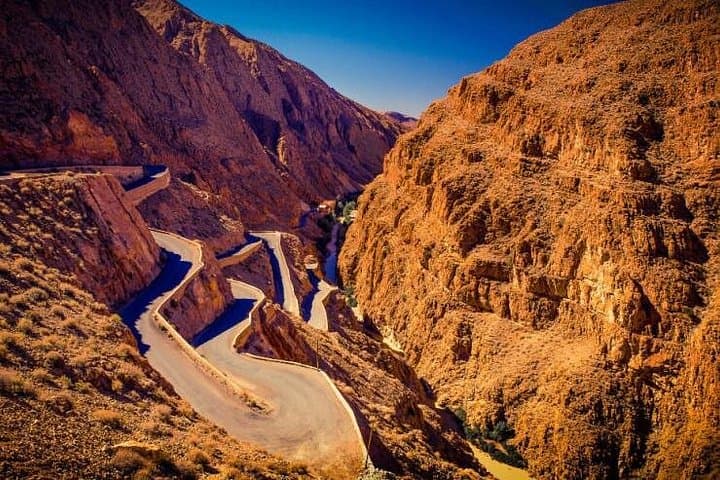
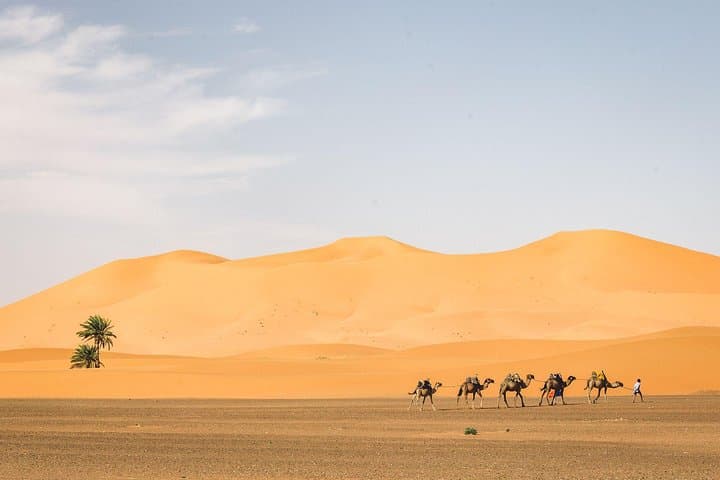
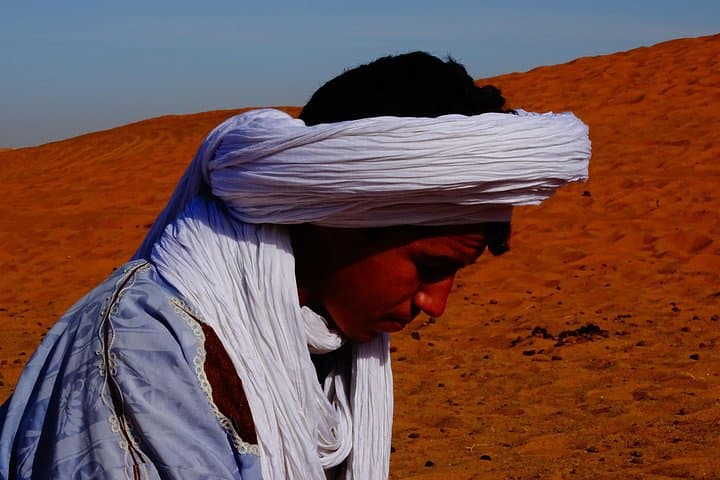
Drive the High Atlas to Aït Ben Haddou, trace the Dades and Todra gorges, then ride camels into the orange waves of Erg Chebbi for a night under the stars. Expect long drives, dramatic scenery, and a hands-on encounter with Berber desert life.
Drive the High Atlas to Aït Ben Haddou, trace the Dades and Todra gorges, then ride camels into the orange waves of Erg Chebbi for a night under the stars. Expect long drives, dramatic scenery, and a hands-on encounter with Berber desert life.
The road peels away from Marrakech at dawn, folding up into the High Atlas. By mid-morning you crest Tizi n’Tichka (2,260 m), the pass that throws sweeping granite ridges and Berber villages into sharp relief.
Verified experiences and guided adventures in the surrounding area.
Operated by Marrakech Camel Trips - Day Trips · Merzouga, Drâa-Tafilalet
The road peels away from Marrakech at dawn, folding up into the High Atlas. By mid-morning you crest Tizi n’Tichka (2,260 m), the pass that throws sweeping granite ridges and Berber villages into sharp relief.
History rides with you: the mud-brick towers of Aït Ben Haddou keep the memory of trans-Saharan caravans and film crews alike, while kasbahs along the Draa and Dades valleys map a living architecture of adobe and palm. Geology is direct—the High Atlas shows uplifted layers of ancient seabed, and later the landscape softens into the orange ribs of the Erg Chebbi dunes where wind sculpts sand into crests that can reach 100–150 m.
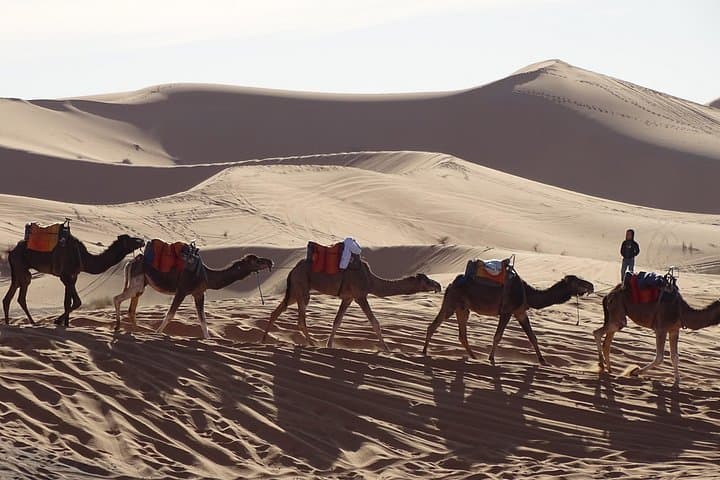
Culture arrives in small moments: a cup of mint tea in a roadside ksar, the rose-scented fields of the Valley of Roses in spring, Berber drumbeats under a desert sky. Practicalities follow: this is a 3-day, 72-hour tour with long driving segments (expect 8–10 hours on road split over two days), a late-afternoon camel trek into Merzouga’s dunes, and an overnight in a desert camp under minimal light pollution.
Pack layers—mornings and nights can be cold even after hot days—carry sun protection and at least 2–3 L of water for daytime excursions, and be ready for uneven sandy terrain when moving between camp and camel. Mobile signal is intermittent; bring cash for small purchases and tips. The route rewards patience: dramatic gorges, palm oases, cinematic kasbahs, and desert silence that insists you slow down and listen.
moderate.
3 days.
Suitable for travelers in average shape; requires ability to mount camels, walk on sand, and tolerate multi-hour road transfers
Typical camel treks to the camp are 45–90 minutes each way; guide timing targets sunset and sunrise viewpoints.
Yes—two dinners and three breakfasts plus a desert camp or similar overnight stays are included on this private tour.
The itinerary is rated easy physically, but long vehicle transfers and camel rides may be uncomfortable for those with mobility or serious health issues.
Signal is intermittent around Merzouga and absent on dune ridges; carry cash for tips and small purchases as ATMs can be distant.
The route follows parts of historic trans-Saharan corridors; Aït Ben Haddou served as a fortified caravan stop and later as a film location that preserved its mud-brick architecture.
The desert is an active ecosystem—stay on established tracks, avoid driving on dune surfaces, and minimize waste; support local guides who use low-impact camp practices.
Marrakech Camel Trips - Day Trips operates guided outdoor trips and adventures with an emphasis on safety, stewardship, and memorable experiences.
The road peels away from Marrakech at dawn, folding up into the High Atlas. By mid-morning you crest Tizi n’Tichka (2,260 m), the pass that throws sweeping granite ridges and Berber villages into sharp relief.
The road peels away from Marrakech at dawn, folding up into the High Atlas. By mid-morning you crest Tizi n’Tichka (2,260 m), the pass that throws sweeping granite ridges and Berber villages into sharp relief.
History rides with you: the mud-brick towers of Aït Ben Haddou keep the memory of trans-Saharan caravans and film crews alike, while kasbahs along the Draa and Dades valleys map a living architecture of adobe and palm. Geology is direct—the High Atlas shows uplifted layers of ancient seabed, and later the landscape softens into the orange ribs of the Erg Chebbi dunes where wind sculpts sand into crests that can reach 100–150 m.
Culture arrives in small moments: a cup of mint tea in a roadside ksar, the rose-scented fields of the Valley of Roses in spring, Berber drumbeats under a desert sky. Practicalities follow: this is a 3-day, 72-hour tour with long driving segments (expect 8–10 hours on road split over two days), a late-afternoon camel trek into Merzouga’s dunes, and an overnight in a desert camp under minimal light pollution.
Pack layers—mornings and nights can be cold even after hot days—carry sun protection and at least 2–3 L of water for daytime excursions, and be ready for uneven sandy terrain when moving between camp and camel. Mobile signal is intermittent; bring cash for small purchases and tips. The route rewards patience: dramatic gorges, palm oases, cinematic kasbahs, and desert silence that insists you slow down and listen.