THE ADVENTURE COLLECTIVE® · Independent discovery and booking for outdoor travel

Cross the High Atlas and arrive at the gold dunes of Merzouga on a compact three-day circuit from Marrakech. Expect camel treks, a night in a traditional Berber camp and dramatic stops at kasbahs, gorges and palm oases.
Cross the High Atlas and arrive at the gold dunes of Merzouga on a compact three-day circuit from Marrakech. Expect camel treks, a night in a traditional Berber camp and dramatic stops at kasbahs, gorges and palm oases.
You crest the High Atlas at Tizi n'Tichka at first light and the road opens into ochre valleys that lead you east toward Erg Chebbi. By day two the dunes of Merzouga rise like a living wall; wind sculpts the ridgelines and the camels, patient as the horizon, begin their slow procession into the sand.
Verified experiences and guided adventures in the surrounding area.
Operated by Marrakech Sahara Tour · Merzouga, Drâa-Tafilalet
You crest the High Atlas at Tizi n'Tichka at first light and the road opens into ochre valleys that lead you east toward Erg Chebbi. By day two the dunes of Merzouga rise like a living wall; wind sculpts the ridgelines and the camels, patient as the horizon, begin their slow procession into the sand.
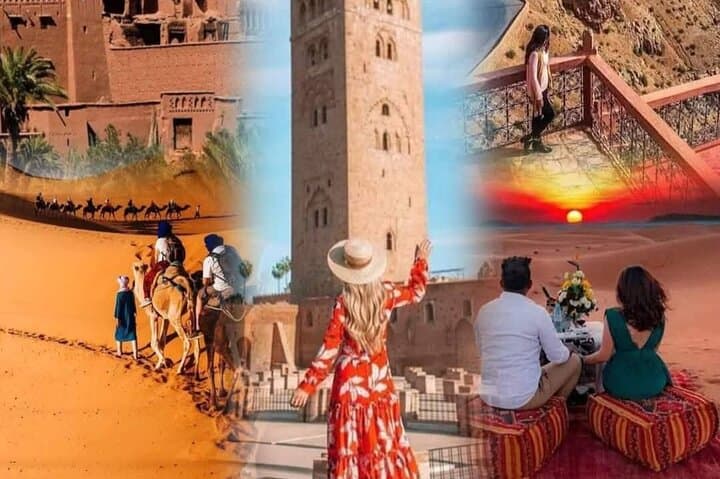
This three-day route threads history and geology: kasbahs of mud-brick and the fortified village Ait Ben Haddou recall caravan routes and film sets, while the Todra Gorge exposes layered limestone cliffs carved by meltwater over millennia. The Sahara here is not featureless — palm oases, fossil-rich plateaus near Erfoud and the long Dra Valley record ancient rivers and human settlement patterns stretching back centuries.
Culturally, evenings in a Berber camp are music-forward and communal: stories, drums and tajine dinners under an immense sky. Expect basic but comfortable desert camps, a night listening to the wind and waking to a hard, gold sunrise.
Practical guidance: pack layered clothing for hot days and cold nights, carry at least 2 liters of water per person while on dune walks and camel rides, and wear closed shoes for walking between camp and camel mounting areas. Allow for long driving stretches; choose your pickup point carefully in Marrakech. Bring a headlamp, cash for small purchases in villages and modest clothing respectful of local customs. The route is accessible to most travelers but includes uneven surfaces and extended vehicle time—plan rest, hydrate early, and keep camera batteries warm for the desert cold.
moderate.
72 hours (3 days).
Light to moderate fitness: able to handle short hikes, a camel ride, and multiple hours in a vehicle each day.
Camel rides are gentle and seated; dune walks are short and on soft sand—moderate effort but manageable for most people with basic mobility.
Camps typically offer sleeping mats or simple beds, shared toilets, dinner and breakfast, and a campfire; facilities vary by provider so check specifics if you require private facilities.
Yes—this tour is marketed as suitable for families; however consider long drives and basic camp conditions when traveling with very young children or those with limited mobility.
Visa requirements depend on nationality—check official Moroccan government guidance; routine vaccinations are recommended and consult your healthcare provider for travel-specific advice.
The route follows historic caravan corridors; Ait Ben Haddou is an ancient ksar on trans-Saharan trade routes and later served as a film location.
Tour operators are encouraged to minimize camp footprints—use established campsites, avoid open fires outside designated areas and support local guides to benefit communities.
Marrakech Sahara Tour operates guided outdoor trips and adventures with an emphasis on safety, stewardship, and memorable experiences.
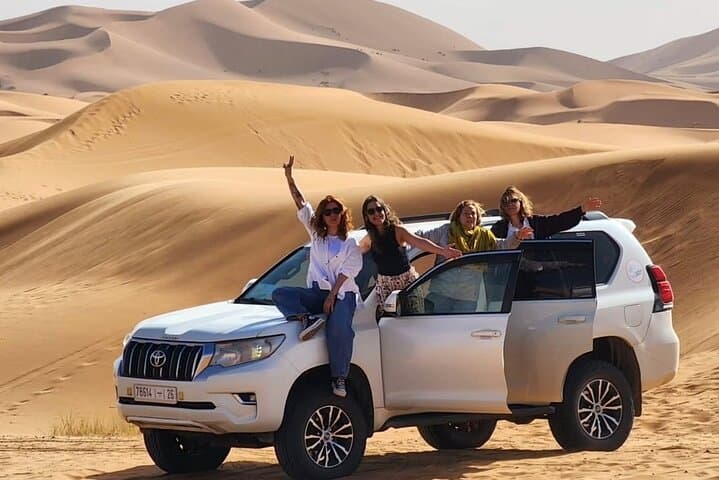
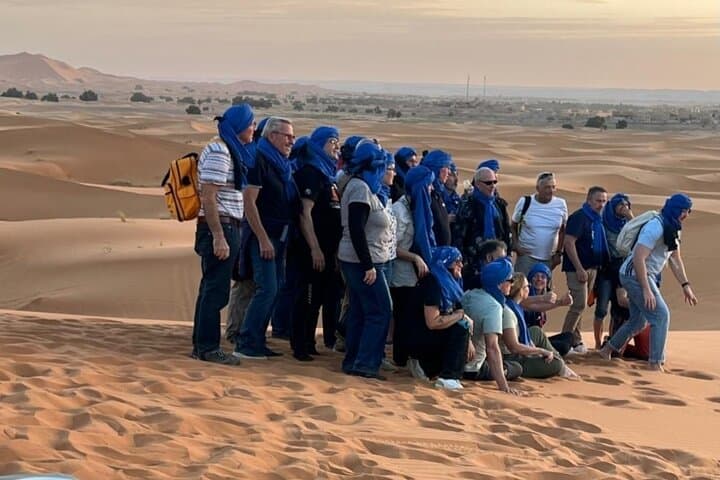
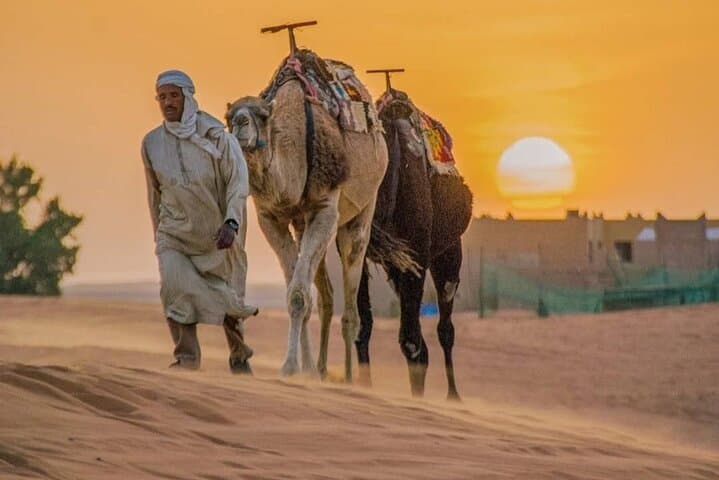
You crest the High Atlas at Tizi n'Tichka at first light and the road opens into ochre valleys that lead you east toward Erg Chebbi. By day two the dunes of Merzouga rise like a living wall; wind sculpts the ridgelines and the camels, patient as the horizon, begin their slow procession into the sand.
You crest the High Atlas at Tizi n'Tichka at first light and the road opens into ochre valleys that lead you east toward Erg Chebbi. By day two the dunes of Merzouga rise like a living wall; wind sculpts the ridgelines and the camels, patient as the horizon, begin their slow procession into the sand.
This three-day route threads history and geology: kasbahs of mud-brick and the fortified village Ait Ben Haddou recall caravan routes and film sets, while the Todra Gorge exposes layered limestone cliffs carved by meltwater over millennia. The Sahara here is not featureless — palm oases, fossil-rich plateaus near Erfoud and the long Dra Valley record ancient rivers and human settlement patterns stretching back centuries.
Culturally, evenings in a Berber camp are music-forward and communal: stories, drums and tajine dinners under an immense sky. Expect basic but comfortable desert camps, a night listening to the wind and waking to a hard, gold sunrise.
Practical guidance: pack layered clothing for hot days and cold nights, carry at least 2 liters of water per person while on dune walks and camel rides, and wear closed shoes for walking between camp and camel mounting areas. Allow for long driving stretches; choose your pickup point carefully in Marrakech. Bring a headlamp, cash for small purchases in villages and modest clothing respectful of local customs. The route is accessible to most travelers but includes uneven surfaces and extended vehicle time—plan rest, hydrate early, and keep camera batteries warm for the desert cold.