THE ADVENTURE COLLECTIVE® · Independent discovery and booking for outdoor travel

A compact three-day circuit from Marrakech to Merzouga that pairs High Atlas passes and UNESCO kasbahs with a camel trek into Erg Chebbi. Expect long drives, a night under the stars in a Berber camp, and sunrise on rolling dunes.
A compact three-day circuit from Marrakech to Merzouga that pairs High Atlas passes and UNESCO kasbahs with a camel trek into Erg Chebbi. Expect long drives, a night under the stars in a Berber camp, and sunrise on rolling dunes.
You climb into the minibus at dawn and the Atlas Mountains push themselves into the windshield—craggy ridgelines, scrubby oaks, and a scattering of flat-roofed villages. The road over Tizi-n-Tichka narrows, the air thins and the view opens; by evening the sand sings underfoot as Erg Chebbi’s dunes bloom orange at sunset.
Verified experiences and guided adventures in the surrounding area.
Operated by Merzouga Adventure · Merzouga, Drâa-Tafilalet
You climb into the minibus at dawn and the Atlas Mountains push themselves into the windshield—craggy ridgelines, scrubby oaks, and a scattering of flat-roofed villages. The road over Tizi-n-Tichka narrows, the air thins and the view opens; by evening the sand sings underfoot as Erg Chebbi’s dunes bloom orange at sunset.
This three-day loop links Morocco’s layered history and geology: the High Atlas, folded by continental collision, gives way to the fortified mud-brick ksars like Ait Ben Haddou—a UNESCO site that marks old caravan routes. Todgha Gorge cuts vertical limestone walls where seasonal rivers once carved shadowed canyons, and the Sahara’s Erg Chebbi is a living dune system of wind-blown quartz and gypsum that shifts with each hot wind.
Cultural threads run close: Berber hosts play drums in the desert camp, tagines arrive with communal warmth, and local guides explain kasbah construction and trans-Saharan trade. Small-group logistics keep the pace steady—hotel nights in Dades, a stop in Rose Valley, a short sandboard session, and two camel rides timed for sunset and sunrise.
Practical edge: expect long drives (total ~10–12 hours of transit across three days), short hikes and a 1-hour camel trek into the dunes, and simple desert camps with mattresses and blankets. Carry layered clothing for large diurnal swings, at least 2 liters of daytime water, sun protection, and cash for tips and small purchases. Plan travel days conservatively—photo stops add time—and arrive in Marrakech rested to start early.
moderate.
3 days.
Suitable for travelers with general fitness—able to manage short walks, a one-hour camel ride, and multi-hour vehicle transfers without assistance.
The camel rides are gentle and short (about 1 hour each way across dunes); most travelers find them easy though mounting requires basic mobility.
Two dinners and two breakfasts plus overnight stays (hotel in Dades/Tinghir and desert camp in Merzouga) are typically included; lunches are usually at your expense.
The tour lists stroller and wheelchair accessibility for transport, but camel mounts and desert sand may be difficult—contact the operator to discuss needs and alternatives.
Spring and fall offer pleasant days and cool nights; summer can be extremely hot in the dunes and winter nights may be sharply cold.
The route follows old trans-Saharan corridors; kasbahs like Ait Ben Haddou grew where trade caravans rested and local Berber communities controlled mountain passes.
The Sahara’s dune systems are fragile—avoid disturbing dune windrows and stick to established camel paths; support local guides and camps that practice low-impact tourism.
Merzouga Adventure operates guided outdoor trips and adventures with an emphasis on safety, stewardship, and memorable experiences.


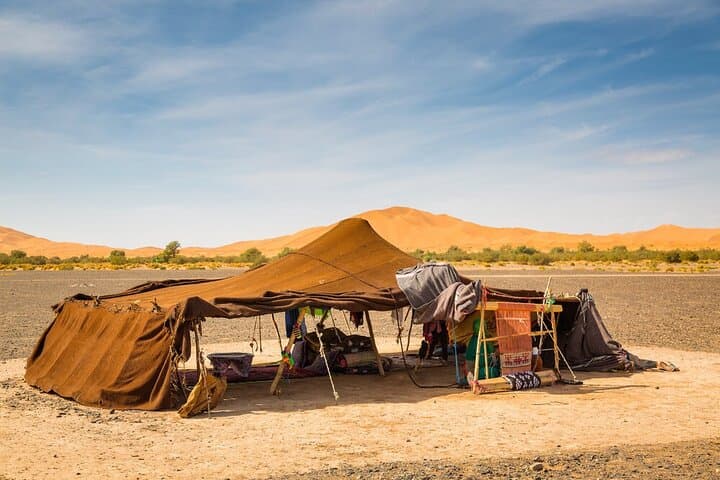

You climb into the minibus at dawn and the Atlas Mountains push themselves into the windshield—craggy ridgelines, scrubby oaks, and a scattering of flat-roofed villages. The road over Tizi-n-Tichka narrows, the air thins and the view opens; by evening the sand sings underfoot as Erg Chebbi’s dunes bloom orange at sunset.
You climb into the minibus at dawn and the Atlas Mountains push themselves into the windshield—craggy ridgelines, scrubby oaks, and a scattering of flat-roofed villages. The road over Tizi-n-Tichka narrows, the air thins and the view opens; by evening the sand sings underfoot as Erg Chebbi’s dunes bloom orange at sunset.
This three-day loop links Morocco’s layered history and geology: the High Atlas, folded by continental collision, gives way to the fortified mud-brick ksars like Ait Ben Haddou—a UNESCO site that marks old caravan routes. Todgha Gorge cuts vertical limestone walls where seasonal rivers once carved shadowed canyons, and the Sahara’s Erg Chebbi is a living dune system of wind-blown quartz and gypsum that shifts with each hot wind.
Cultural threads run close: Berber hosts play drums in the desert camp, tagines arrive with communal warmth, and local guides explain kasbah construction and trans-Saharan trade. Small-group logistics keep the pace steady—hotel nights in Dades, a stop in Rose Valley, a short sandboard session, and two camel rides timed for sunset and sunrise.
Practical edge: expect long drives (total ~10–12 hours of transit across three days), short hikes and a 1-hour camel trek into the dunes, and simple desert camps with mattresses and blankets. Carry layered clothing for large diurnal swings, at least 2 liters of daytime water, sun protection, and cash for tips and small purchases. Plan travel days conservatively—photo stops add time—and arrive in Marrakech rested to start early.