THE ADVENTURE COLLECTIVE® · Independent discovery and booking for outdoor travel

A compact 3-day overland route from Marrakech to the remote Erg Chegaga dunes via the High Atlas and Draa Valley. Expect kasbah stays, a desert camp night, a short camel ride and sweeping dune vistas.
A compact 3-day overland route from Marrakech to the remote Erg Chegaga dunes via the High Atlas and Draa Valley. Expect kasbah stays, a desert camp night, a short camel ride and sweeping dune vistas.
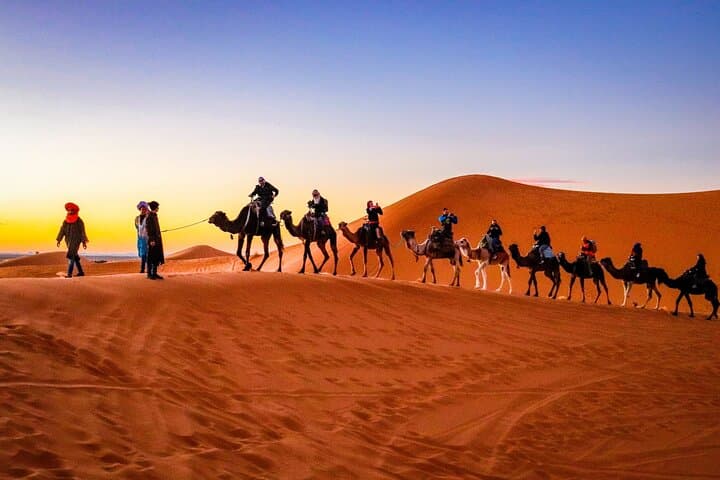
The sun drops low and the dunes of Erg Chegaga flatten into bands of gold and shadow; a 4x4 hums in the distance, carrying small groups from the tarmac out into sand that seems to move with every gust.
Verified experiences and guided adventures in the surrounding area.
Operated by Wild Sahara Tours · M'Hamid El Ghizlane, Drâa-Tafilalet
The sun drops low and the dunes of Erg Chegaga flatten into bands of gold and shadow; a 4x4 hums in the distance, carrying small groups from the tarmac out into sand that seems to move with every gust.
This three-day loop leaves Marrakech, climbs the High Atlas at 2,260m and threads the palm-lined Draa Valley before reaching the wind-sculpted seas of Chegaga beyond M’Hamid. Along the way you pass Ait Ben Haddou’s earthen ksar—an adobe stage used in international films—then descend into broad oases where kasbahs and date palms mark old caravan routes that once linked Saharan trading posts with the Atlas.
Geologically, Erg Chegaga is a large sand sea formed by millennia of wind-driven transport from ancient dry lakes and riverbeds; the dunes can reach tens of meters and their slopes change daily. Culturally the region is Berber country; stops include Tamgrout’s coranic library and Taznakht’s carpet workshops where local craft traditions persist.
Practical guide: travel is by road and 4x4 with one overnight in a restored kasbah and one in a desert camp. Expect loose sand underfoot, strong daytime sun and cold desert nights—pack breathable layers, sun protection and 3 liters of water per person per day. Camel rides to sunset are short and optional; bring steady footwear for climbs on soft sand and rise early for the clearest light. Vehicles traverse unpaved tracks; motion sensitivity and basics like closed bags for sand will improve comfort. The trip suits travelers looking for a compact Sahara immersion with manageable logistics and memorable dune time.
moderate.
3 days.
Basic to moderate fitness—able to walk on soft sand and climb dunes for short periods; can handle long vehicle transfers.
Most tours include transfers from Marrakech hotels; you’ll be collected early on day one and returned to Marrakech by late day three per the itinerary.
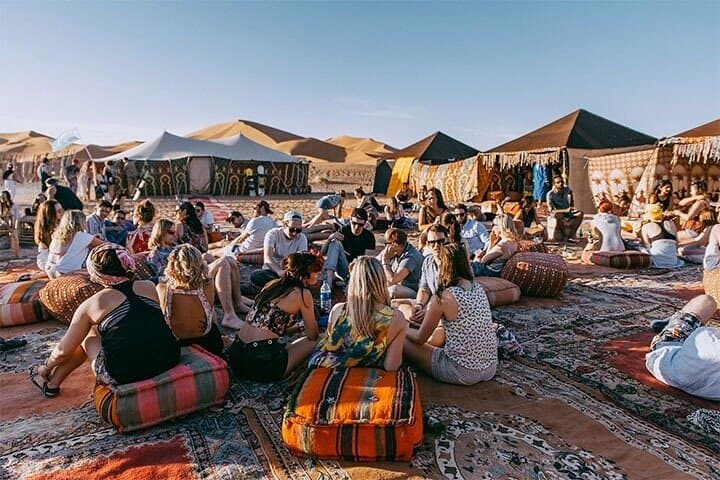
One night is in a traditional restored kasbah guest-house and one in a desert bivouac camp in simple but comfortable tents with shared facilities; check with the operator for private tent options.
Camel rides here are typically short—enough for a sunset or sunrise experience—and not technically strenuous, though mounting and long rides can be uncomfortable for those with back issues.
The itinerary notes accessibility for many travelers, but dunes and camels require mobility; discuss individual needs with the operator before booking.
The route follows old caravan corridors through the Draa Valley; ksars and kasbahs reflect centuries of trade and local Berber architecture adapted to arid conditions.
The desert ecosystem is fragile—stay on established tracks, avoid disturbing dune surfaces and pack out all waste; use local guides who practice low-impact camping.
Wild Sahara Tours operates guided outdoor trips and adventures with an emphasis on safety, stewardship, and memorable experiences.
The sun drops low and the dunes of Erg Chegaga flatten into bands of gold and shadow; a 4x4 hums in the distance, carrying small groups from the tarmac out into sand that seems to move with every gust.
The sun drops low and the dunes of Erg Chegaga flatten into bands of gold and shadow; a 4x4 hums in the distance, carrying small groups from the tarmac out into sand that seems to move with every gust.
This three-day loop leaves Marrakech, climbs the High Atlas at 2,260m and threads the palm-lined Draa Valley before reaching the wind-sculpted seas of Chegaga beyond M’Hamid. Along the way you pass Ait Ben Haddou’s earthen ksar—an adobe stage used in international films—then descend into broad oases where kasbahs and date palms mark old caravan routes that once linked Saharan trading posts with the Atlas.
Geologically, Erg Chegaga is a large sand sea formed by millennia of wind-driven transport from ancient dry lakes and riverbeds; the dunes can reach tens of meters and their slopes change daily. Culturally the region is Berber country; stops include Tamgrout’s coranic library and Taznakht’s carpet workshops where local craft traditions persist.
Practical guide: travel is by road and 4x4 with one overnight in a restored kasbah and one in a desert camp. Expect loose sand underfoot, strong daytime sun and cold desert nights—pack breathable layers, sun protection and 3 liters of water per person per day. Camel rides to sunset are short and optional; bring steady footwear for climbs on soft sand and rise early for the clearest light. Vehicles traverse unpaved tracks; motion sensitivity and basics like closed bags for sand will improve comfort. The trip suits travelers looking for a compact Sahara immersion with manageable logistics and memorable dune time.