THE ADVENTURE COLLECTIVE® · Independent discovery and booking for outdoor travel

Three days from Cusco to Manu National Park mix high Andean viewpoints and lowland rainforest. Expect dawn departures, boat rides on the Alto Madre de Dios, guided rainforest walks and an unforgettable macaw clay-lick viewing.
Three days from Cusco to Manu National Park mix high Andean viewpoints and lowland rainforest. Expect dawn departures, boat rides on the Alto Madre de Dios, guided rainforest walks and an unforgettable macaw clay-lick viewing.
A narrow Andean road opens like a page turned: dawn departures from Cusco climb past Ninamarca’s pre-Incan chullpas, crest Acjanaco at 3,550 m and drop through elfin woodland into a humid cloud forest. The air changes from thin and bracing to humid and green; rivers begin to murmur and then dare you forward as timbered banks close around the Alto Madre de Dios.
Verified experiences and guided adventures in the surrounding area.
Operated by Manu Jungle Trips · Pilcopata, Cusco Region
A narrow Andean road opens like a page turned: dawn departures from Cusco climb past Ninamarca’s pre-Incan chullpas, crest Acjanaco at 3,550 m and drop through elfin woodland into a humid cloud forest. The air changes from thin and bracing to humid and green; rivers begin to murmur and then dare you forward as timbered banks close around the Alto Madre de Dios.
Manu’s corridor protects steep geological transitions—Andean ridgelines feeding the Amazon basin—where colonial Paucartambo marks a cultural hinge of mestizo and Quechua traditions. Lower down, Pilcopata and Port Atalaya sit within primary forest dominated by towering emergent trees, orchids, palms and dense lianas. Local guides point out the clay-licks where parrots and macaws ingest mineral-rich soil, a behavior tied to detoxification and social displays.
The itinerary balances boat time on the Madre de Dios, daytime rainforest walks for monkeys, hummingbirds and a possible cock-of-the-rock sighting, and nocturnal forays that reveal frogs, insects and sleepier mammals. Lodges are basic but comfortable—private rooms with mosquito nets, hot showers in some sites—and meals are included across the three days.
Practicalities are straightforward: Yellow fever vaccination is required for many parts of the Amazon and malaria prophylaxis is recommended; pack lightweight, quick-dry layers for hot, humid days and cooler mountain mornings. Plan for wet trails, insect protection and early starts to catch wildlife activity. The route rewards patience: close-range bird flocks, riverbank sunning turtles and the thunderous arrival of macaws at a clay sink make the travel long but unmistakably worth it.
moderate.
3 days.
Suitable for travelers with basic aerobic fitness; expect multi-hour boat transfers, short rainforest hikes and altitude change on Day 1.
Yellow fever vaccination is commonly required for Amazon trips; malaria prophylaxis is recommended—check health advice well before travel.
Accommodation is lodge-based with private rooms, mosquito nets and basic hot-water facilities; expect rustic comfort rather than luxury.
Hikes are generally short to moderate on uneven, sometimes muddy terrain; good mobility and basic fitness are sufficient.
Wildlife sightings can’t be guaranteed, but clay-lick visits and guided walks significantly increase chances of seeing macaws, parrots, monkeys and many bird species.
The corridor between Cusco and Manu has long been a cultural divide—pre-Incan tombs near Ninamarca and colonial Paucartambo show layers of Andean history feeding into Amazonian lifeways.
Manu is one of Peru’s most protected biospheres; visitors should follow leave-no-trace rules, reduce single-use plastics and respect wildlife viewing distances to minimize disturbance.
Manu Jungle Trips operates guided outdoor trips and adventures with an emphasis on safety, stewardship, and memorable experiences.


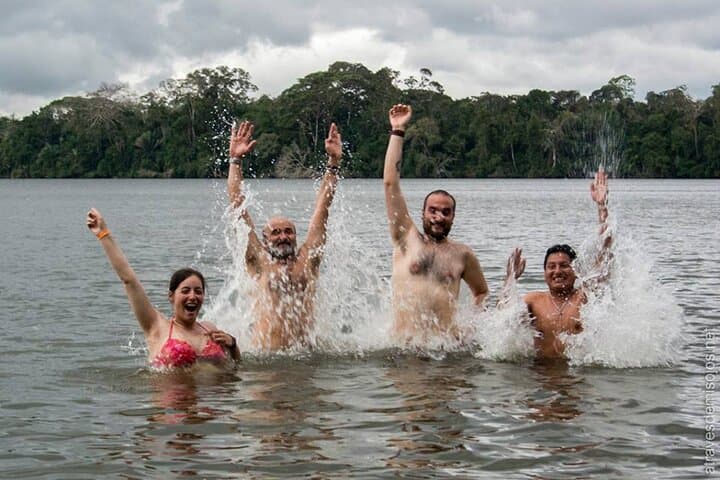

A narrow Andean road opens like a page turned: dawn departures from Cusco climb past Ninamarca’s pre-Incan chullpas, crest Acjanaco at 3,550 m and drop through elfin woodland into a humid cloud forest. The air changes from thin and bracing to humid and green; rivers begin to murmur and then dare you forward as timbered banks close around the Alto Madre de Dios.
A narrow Andean road opens like a page turned: dawn departures from Cusco climb past Ninamarca’s pre-Incan chullpas, crest Acjanaco at 3,550 m and drop through elfin woodland into a humid cloud forest. The air changes from thin and bracing to humid and green; rivers begin to murmur and then dare you forward as timbered banks close around the Alto Madre de Dios.
Manu’s corridor protects steep geological transitions—Andean ridgelines feeding the Amazon basin—where colonial Paucartambo marks a cultural hinge of mestizo and Quechua traditions. Lower down, Pilcopata and Port Atalaya sit within primary forest dominated by towering emergent trees, orchids, palms and dense lianas. Local guides point out the clay-licks where parrots and macaws ingest mineral-rich soil, a behavior tied to detoxification and social displays.
The itinerary balances boat time on the Madre de Dios, daytime rainforest walks for monkeys, hummingbirds and a possible cock-of-the-rock sighting, and nocturnal forays that reveal frogs, insects and sleepier mammals. Lodges are basic but comfortable—private rooms with mosquito nets, hot showers in some sites—and meals are included across the three days.
Practicalities are straightforward: Yellow fever vaccination is required for many parts of the Amazon and malaria prophylaxis is recommended; pack lightweight, quick-dry layers for hot, humid days and cooler mountain mornings. Plan for wet trails, insect protection and early starts to catch wildlife activity. The route rewards patience: close-range bird flocks, riverbank sunning turtles and the thunderous arrival of macaws at a clay sink make the travel long but unmistakably worth it.