THE ADVENTURE COLLECTIVE® · Independent discovery and booking for outdoor travel

Three days of tracked, small-group game drives through the Maasai Mara in a 4x4—guided in multiple foreign languages—offer close wildlife encounters, early-morning light, and lodge-based comfort. Read on for what to expect, when to go, and practical packing tips.
Three days of tracked, small-group game drives through the Maasai Mara in a 4x4—guided in multiple foreign languages—offer close wildlife encounters, early-morning light, and lodge-based comfort. Read on for what to expect, when to go, and practical packing tips.
The Land Cruiser bumps onto a red-dust track and the grasslands open like a page turning: acacia crowns cut the horizon, and a distant river glints where the Mara pushes westward. Dawn arrives in thin gold lines; drivers ease the rigs closer and the plain holds its breath as a tower of giraffe crosses with deliberate, unreadable patience.
Verified experiences and guided adventures in the surrounding area.
The Land Cruiser bumps onto a red-dust track and the grasslands open like a page turning: acacia crowns cut the horizon, and a distant river glints where the Mara pushes westward. Dawn arrives in thin gold lines; drivers ease the rigs closer and the plain holds its breath as a tower of giraffe crosses with deliberate, unreadable patience.
The Maasai Mara sits on the southern edge of the Kenyan Rift—its rolling plains carved by rivers that feed a seasonal migration that has shaped predator-prey rhythms for millennia. Maasai families maintain a living cultural presence here; many conservancies operate as community partnerships that balance grazing, tourism, and wildlife protection. Geologically the Mara plain is a spillway of Rift Valley sediment, low and open, with islands of kopjes where granite resists erosion.
On a three-day 4x4 safari you’ll move with purpose: pre-dawn departures, mid-morning game drives, and late-afternoon glassing from elevated tracks. Guides interpret tracks, radio for sightings, and tailor routes to the group’s pace; multilingual guiding ensures detail lands clearly for international travelers. Accommodation in modest lodges gives basic comforts after long drives—hot showers, hearty meals, and mosquito screens.
Practical edge: expect bumpy roads, early wakeups and variable cell coverage. Pack neutral clothing, layers for cold mornings, binoculars, sun protection and a camera with extra batteries. Follow your guide’s instructions on distances from predators, carry water, and bring small Kenyan shillings for local tipping. With patience and a watchful eye, the Mara rewards you with close-up wildlife theatre that is equal parts wild and carefully stewarded.
easy.
3 days.
Light physical fitness—able to tolerate long vehicle drives and short walks on uneven ground.
Typical inclusions are game drives in a 4x4, lodge accommodation, some meals and multilingual guiding—confirm exact inclusions and pick-up/drop-off points when booking.
June–October is the dry season and prime time for Mara sightings and river crossings; migration timing can shift year to year so check current reports.
Travel health needs vary; many travelers take malaria prophylaxis and ensure routine vaccinations are up to date—consult a travel clinic before departure.
Guides strive to bring vehicles near sightings but maintain safe distances; you should remain in the vehicle unless a guide explicitly says otherwise.
The Maasai Mara takes its name from the Maasai people and the Mara River; pastoral Maasai culture has coexisted with wildlife and shaped local land-use for generations.
Many areas operate as community conservancies that channel tourism revenue into grazing management and anti-poaching; stay on marked tracks and support locally run enterprises.
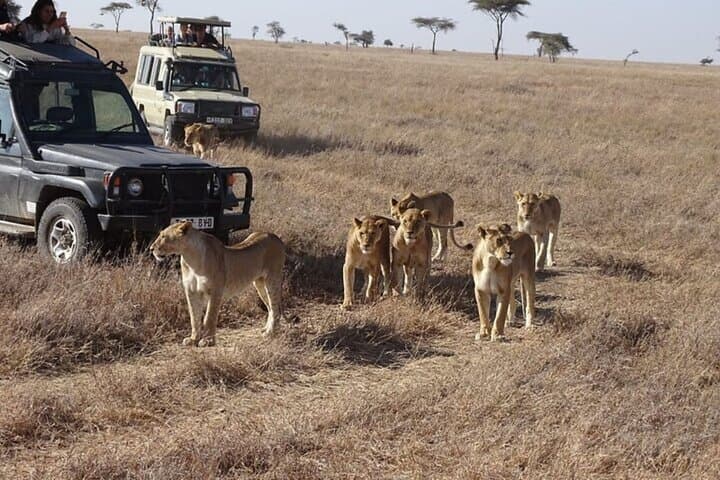
The Land Cruiser bumps onto a red-dust track and the grasslands open like a page turning: acacia crowns cut the horizon, and a distant river glints where the Mara pushes westward. Dawn arrives in thin gold lines; drivers ease the rigs closer and the plain holds its breath as a tower of giraffe crosses with deliberate, unreadable patience.
The Land Cruiser bumps onto a red-dust track and the grasslands open like a page turning: acacia crowns cut the horizon, and a distant river glints where the Mara pushes westward. Dawn arrives in thin gold lines; drivers ease the rigs closer and the plain holds its breath as a tower of giraffe crosses with deliberate, unreadable patience.
The Maasai Mara sits on the southern edge of the Kenyan Rift—its rolling plains carved by rivers that feed a seasonal migration that has shaped predator-prey rhythms for millennia. Maasai families maintain a living cultural presence here; many conservancies operate as community partnerships that balance grazing, tourism, and wildlife protection. Geologically the Mara plain is a spillway of Rift Valley sediment, low and open, with islands of kopjes where granite resists erosion.
On a three-day 4x4 safari you’ll move with purpose: pre-dawn departures, mid-morning game drives, and late-afternoon glassing from elevated tracks. Guides interpret tracks, radio for sightings, and tailor routes to the group’s pace; multilingual guiding ensures detail lands clearly for international travelers. Accommodation in modest lodges gives basic comforts after long drives—hot showers, hearty meals, and mosquito screens.
Practical edge: expect bumpy roads, early wakeups and variable cell coverage. Pack neutral clothing, layers for cold mornings, binoculars, sun protection and a camera with extra batteries. Follow your guide’s instructions on distances from predators, carry water, and bring small Kenyan shillings for local tipping. With patience and a watchful eye, the Mara rewards you with close-up wildlife theatre that is equal parts wild and carefully stewarded.