THE ADVENTURE COLLECTIVE® · Independent discovery and booking for outdoor travel

Three days of Atlas passes, UNESCO kasbahs and a camel-led crossing into Erg Chebbi, ending with a luxury camp night beneath the stars. Expect scenic drives, short gorge walks and an unforgettable dune sunrise.
Three days of Atlas passes, UNESCO kasbahs and a camel-led crossing into Erg Chebbi, ending with a luxury camp night beneath the stars. Expect scenic drives, short gorge walks and an unforgettable dune sunrise.
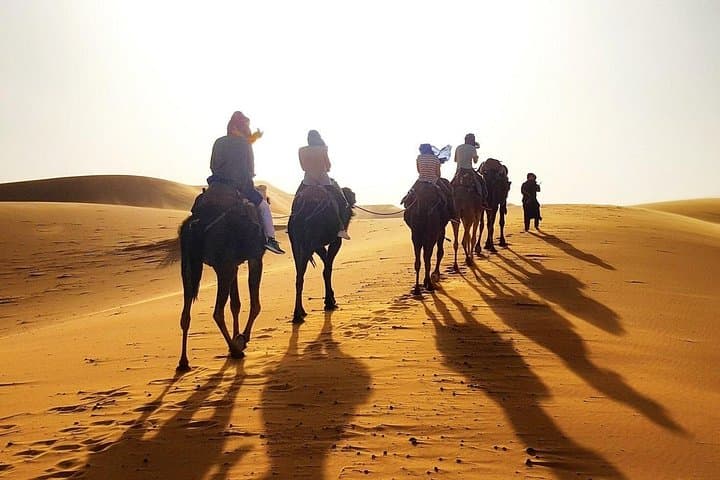
Dawn slips over the High Atlas as an air-conditioned minivan leaves Marrakech, and the road unfurls through mountain passes toward ochre plateaus and the tall, wind-sculpted dunes of Erg Chebbi. By late afternoon the caravan of camels waits at the dune’s lip; the sand pushes and reshapes itself under each hoof as the sun lowers into an open, copper sky.
Verified experiences and guided adventures in the surrounding area.
Operated by Trendy Travel · Merzouga, Drâa‑Tafilalet
Dawn slips over the High Atlas as an air-conditioned minivan leaves Marrakech, and the road unfurls through mountain passes toward ochre plateaus and the tall, wind-sculpted dunes of Erg Chebbi. By late afternoon the caravan of camels waits at the dune’s lip; the sand pushes and reshapes itself under each hoof as the sun lowers into an open, copper sky.
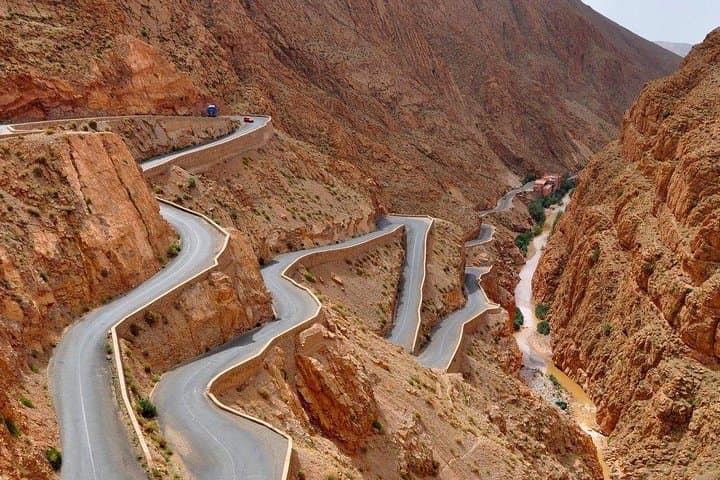
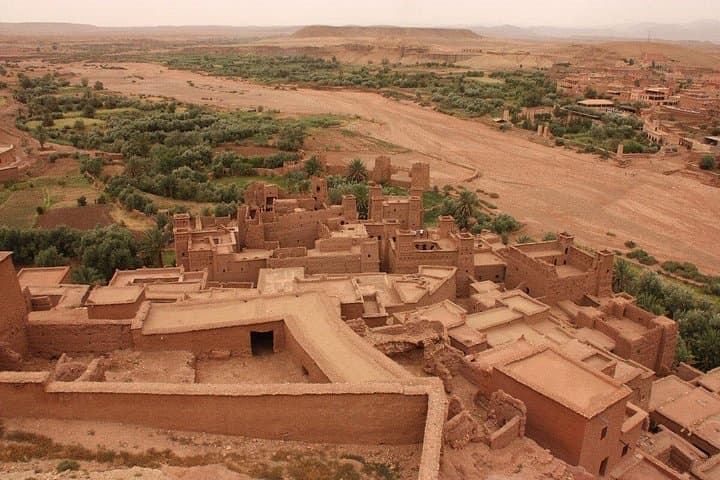
The route threads history and geology: Aït Ben Haddou’s earthen kasbahs recall caravan-era trade and movie sets, while the Todra and Dades gorges cut deep into limestone and red sandstone carved by seasonal streams. Berber villages and palm-lined oases along the Draa Valley reveal a cultural landscape shaped by irrigation, saffron and rose co‑operatives, and centuries of trans-Saharan travel.
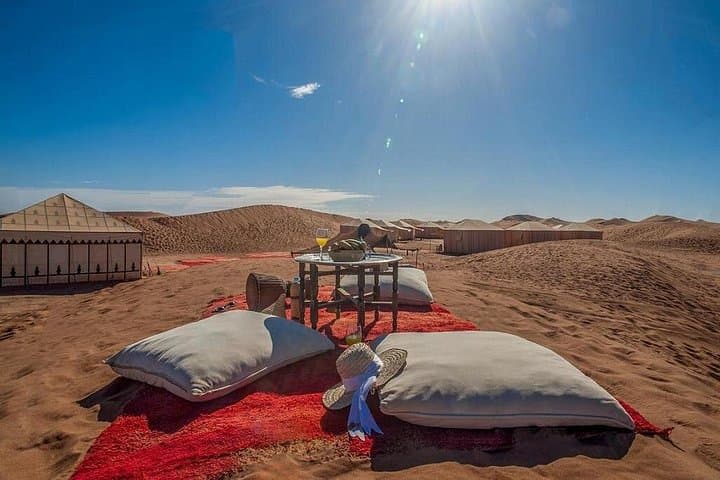
Travelers can expect easy paced days: scenic drives, short guided walks through gorges, a 90–120 minute camel trek to a private luxury camp, and a starlit night with local music. Camps typically offer private or ensuite facilities, dinner and breakfast, and a chance to watch sunrise from the dune ridge.
Practical notes: bring sun protection, layers for cool desert nights, and a reusable water bottle; expect several hours in a vehicle each day and uneven sand and rocky trails on short walks. Best timing avoids the peak summer heat; spring and fall offer temperate days and clear skies.
This itinerary balances comfort and remote desert time—ideal for travelers who want immersive desert scenery with curated amenities and knowledgeable local guides.
easy.
3 days (approx. 72 hours).
Suitable for travelers with basic mobility; involves long vehicle transfers, short walks and a camel trek of about 1–2 hours.
The camel trek is gentle and paced for comfort—expect 90–120 minutes of riding with frequent rests; riders should be able to mount and dismount with basic mobility.
The tour includes two dinners and two breakfasts, and one night in a luxury desert camp with private or ensuite bathroom options depending on the camp.
Yes—operators commonly accommodate families; infant seats and stroller access are noted, but check pickup logistics and camel comfort for very young children.
Spring (March–May) and autumn (September–November) offer the most comfortable daytime temperatures and clearer nights for stargazing; summer can be very hot.
Aït Ben Haddou sits on ancient trans-Saharan trade routes and later became a cinematic backdrop; kasbah architecture reflects mud-brick techniques adapted to arid conditions.
The Sahara’s fragile dunes and oases are sensitive to off-trail travel and water scarcity—use refill options, minimize waste and support locally run camps and cooperatives.
Trendy Travel operates guided outdoor trips and adventures with an emphasis on safety, stewardship, and memorable experiences.
Dawn slips over the High Atlas as an air-conditioned minivan leaves Marrakech, and the road unfurls through mountain passes toward ochre plateaus and the tall, wind-sculpted dunes of Erg Chebbi. By late afternoon the caravan of camels waits at the dune’s lip; the sand pushes and reshapes itself under each hoof as the sun lowers into an open, copper sky.
Dawn slips over the High Atlas as an air-conditioned minivan leaves Marrakech, and the road unfurls through mountain passes toward ochre plateaus and the tall, wind-sculpted dunes of Erg Chebbi. By late afternoon the caravan of camels waits at the dune’s lip; the sand pushes and reshapes itself under each hoof as the sun lowers into an open, copper sky.
The route threads history and geology: Aït Ben Haddou’s earthen kasbahs recall caravan-era trade and movie sets, while the Todra and Dades gorges cut deep into limestone and red sandstone carved by seasonal streams. Berber villages and palm-lined oases along the Draa Valley reveal a cultural landscape shaped by irrigation, saffron and rose co‑operatives, and centuries of trans-Saharan travel.
Travelers can expect easy paced days: scenic drives, short guided walks through gorges, a 90–120 minute camel trek to a private luxury camp, and a starlit night with local music. Camps typically offer private or ensuite facilities, dinner and breakfast, and a chance to watch sunrise from the dune ridge.
Practical notes: bring sun protection, layers for cool desert nights, and a reusable water bottle; expect several hours in a vehicle each day and uneven sand and rocky trails on short walks. Best timing avoids the peak summer heat; spring and fall offer temperate days and clear skies.
This itinerary balances comfort and remote desert time—ideal for travelers who want immersive desert scenery with curated amenities and knowledgeable local guides.