THE ADVENTURE COLLECTIVE® · Independent discovery and booking for outdoor travel

A compact, private three-day circuit from Cairo that pairs the monumental drama of Abu Simbel with Aswan's island temples and Luxor's Karnak and Valley of the Kings. Ideal for travelers short on time who want concentrated ancient-Egypt highlights.
A compact, private three-day circuit from Cairo that pairs the monumental drama of Abu Simbel with Aswan's island temples and Luxor's Karnak and Valley of the Kings. Ideal for travelers short on time who want concentrated ancient-Egypt highlights.
You step out before dawn into Cairo's cool edge, guided toward a short domestic flight that slices the Nile's bend and drops you into the ochre light of Upper Egypt.
Verified experiences and guided adventures in the surrounding area.
Operated by Travel To Egypt - Aswan · Cairo, Cairo Governorate
You step out before dawn into Cairo's cool edge, guided toward a short domestic flight that slices the Nile's bend and drops you into the ochre light of Upper Egypt.
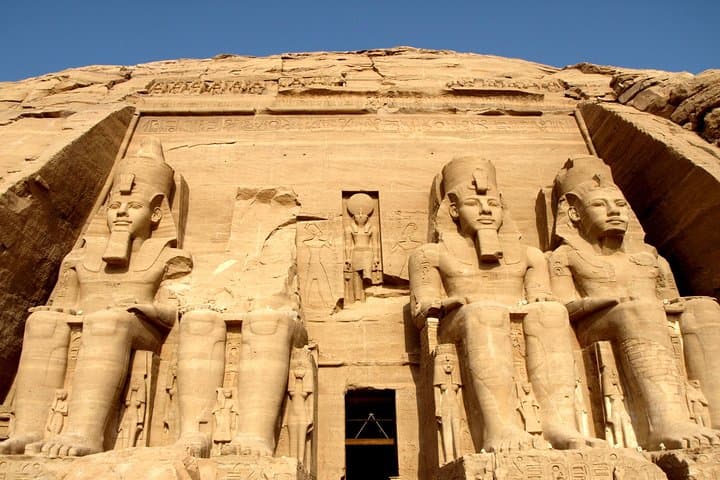
By midmorning the sun chisels Abu Simbel's rock-cut colossi into sharp relief; later the boat to Philae threads a green island in the reservoir, reeds whispering as feluccas drift by. In Aswan, the High Dam looms — a modern engineering ridge that reshaped the Nile and the region's hydrology — while Nubian villages offer colorful doorways and a different pace of life.
Luxor reverses the storybook: towering pylons at Karnak, the hypostyle hall's forest of stone columns, and the hush of the Valley of the Kings where tomb corridors keep the New Kingdom's secrets. Geologically these monuments sit on Paleozoic and Mesozoic sandstones and limestone cliffs sculpted by Nile floods across millennia.
Practical guidance: this private, three-day loop is low on strenuous activity but high on sun and walking on uneven ancient stone. Carry cash for entry tickets and tips, wear sun-protective clothing and closed shoes with grip, and plan early starts to avoid midday heat. Abu Simbel is best seen with morning light; Philae is calm in late afternoon. Expect guided transfers, one internal flight, an overnight in Aswan and Luxor at mid-range 4-star hotels, and a train transfer between Aswan and Luxor. Reservations are essential during high seasons and religious holidays. Respect local customs at religious sites and follow guides instructions inside fragile tombs to help preserve fragile wall paintings.
easy.
3 days.
Suitable for all fitness levels; involves repeated short walks, steps, and standing during site visits
Most public entrance fees are not included; check your booking inclusions and bring cash for tickets not covered by the tour.
Yes, Abu Simbel is open year-round but visits are best early morning to avoid heat and crowds; check for temporary closures before travel.
The itinerary notes wheelchair accessibility for transport, but some ancient sites have steps and uneven surfaces; contact the operator for site-specific accommodations.
Private Egyptologist guides often speak English and other major languages; confirm language needs when booking.
This route traces Upper Egypt's New Kingdom heartland and the 19th/20th century engineering shift marked by the Aswan High Dam and the UNESCO rescue of Abu Simbel in the 1960s.
Visitor impact is managed at major sites through controlled access and signage; avoid flash photography in tombs and follow guide rules to protect fragile pigment and reliefs.
Travel To Egypt - Aswan operates guided outdoor trips and adventures with an emphasis on safety, stewardship, and memorable experiences.


You step out before dawn into Cairo's cool edge, guided toward a short domestic flight that slices the Nile's bend and drops you into the ochre light of Upper Egypt.
You step out before dawn into Cairo's cool edge, guided toward a short domestic flight that slices the Nile's bend and drops you into the ochre light of Upper Egypt.
By midmorning the sun chisels Abu Simbel's rock-cut colossi into sharp relief; later the boat to Philae threads a green island in the reservoir, reeds whispering as feluccas drift by. In Aswan, the High Dam looms — a modern engineering ridge that reshaped the Nile and the region's hydrology — while Nubian villages offer colorful doorways and a different pace of life.
Luxor reverses the storybook: towering pylons at Karnak, the hypostyle hall's forest of stone columns, and the hush of the Valley of the Kings where tomb corridors keep the New Kingdom's secrets. Geologically these monuments sit on Paleozoic and Mesozoic sandstones and limestone cliffs sculpted by Nile floods across millennia.
Practical guidance: this private, three-day loop is low on strenuous activity but high on sun and walking on uneven ancient stone. Carry cash for entry tickets and tips, wear sun-protective clothing and closed shoes with grip, and plan early starts to avoid midday heat. Abu Simbel is best seen with morning light; Philae is calm in late afternoon. Expect guided transfers, one internal flight, an overnight in Aswan and Luxor at mid-range 4-star hotels, and a train transfer between Aswan and Luxor. Reservations are essential during high seasons and religious holidays. Respect local customs at religious sites and follow guides instructions inside fragile tombs to help preserve fragile wall paintings.