THE ADVENTURE COLLECTIVE® · Independent discovery and booking for outdoor travel

Trace a 1,000-year-old pilgrimage across the Nakahechi route on this guided 3-day walk from Osaka. Expect steep forest trails, waystations, and the spiritual arrival at Kumano Hongu Taisha.
Trace a 1,000-year-old pilgrimage across the Nakahechi route on this guided 3-day walk from Osaka. Expect steep forest trails, waystations, and the spiritual arrival at Kumano Hongu Taisha.
Morning fog lifts off cedar trunks as you step onto the old stones of the Nakahechi route, the trail that once carried pilgrims between shrines and mountain passes. Over three days the path winds from Kii-Tanabe through mossed oji (waystations), up narrow ridgelines and down toward the broad valley that cradles Kumano Hongu Taisha.
Verified experiences and guided adventures in the surrounding area.
Operated by H.I.S.Co., Ltd. · Tanabe, Wakayama
Morning fog lifts off cedar trunks as you step onto the old stones of the Nakahechi route, the trail that once carried pilgrims between shrines and mountain passes. Over three days the path winds from Kii-Tanabe through mossed oji (waystations), up narrow ridgelines and down toward the broad valley that cradles Kumano Hongu Taisha.
The Kumano Kodo network has guided travelers for more than a millennium; its routes are threaded with Shinto and Buddhist markers where syncretic worship honored mountains, rivers and ancestral spirits. Geologically, the Kii Peninsula is a fold of ancient granite and schist—steep slopes and river-carved valleys create sudden views and sheltered forest sections where sugi (Japanese cedar) and beech stand like patient guardians.
Culturally the walk moves at the pace of local life: teahouse remains, small inns (minshuku and shukubo) with communal facilities, and centuries-old torii gates that mark transitions from worldly road to sacred approach.
Practically, expect sustained daily mileage with uneven, sometimes steep and rocky terrain; the tour uses local buses and a limited express train on arrival and departure. Luggage delivery and guided support simplify logistics, but bring sturdy trekking shoes, rain protection and layered clothing for cool mornings and warm afternoons. Hydrate often—streams appear, then disappear—and allow time at Kumano Hongu Taisha to absorb the scale of the grand torii and spring-fed wells. This is a walk of place and pace: keep to sensible footwear, a light daypack, and leave time to listen—the forest has its own steady rhythm that will push you forward.
moderate.
3 days.
Expect sustained walking each day; good cardiovascular fitness and sturdy legs recommended for ascending/descending uneven terrain.
Each day involves multiple hours of walking on uneven, sometimes steep terrain—plan for moderate sustained effort and regular short breaks.
Accommodations are typically minshuku or small inns; expect modest rooms and shared bathrooms at some stops, reflecting local lodging traditions.
No; basic hiking experience and moderate fitness are sufficient. The tour provides a guide and luggage delivery to simplify logistics.
The operator may cancel or adjust sections for safety; note that some cancellations may not be refundable depending on terms, but full cancellations for major natural disasters can be refunded.
The Nakahechi route served imperial and common pilgrims for centuries; its shrines and oji reflect a long history of syncretic Shinto-Buddhist worship centered on nature.
The Kumano Kodo is protected as a UNESCO World Heritage site and managed to balance access with forest regeneration; stay on marked trails and minimize waste to protect fragile understory.
H.I.S.Co., Ltd. operates guided outdoor trips and adventures with an emphasis on safety, stewardship, and memorable experiences.
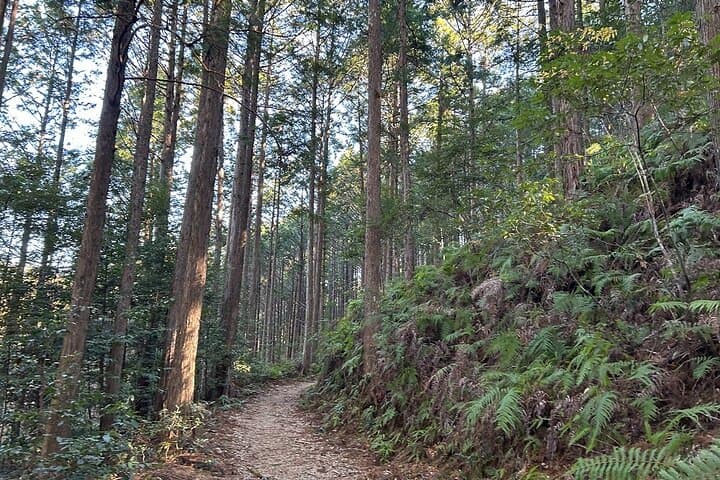
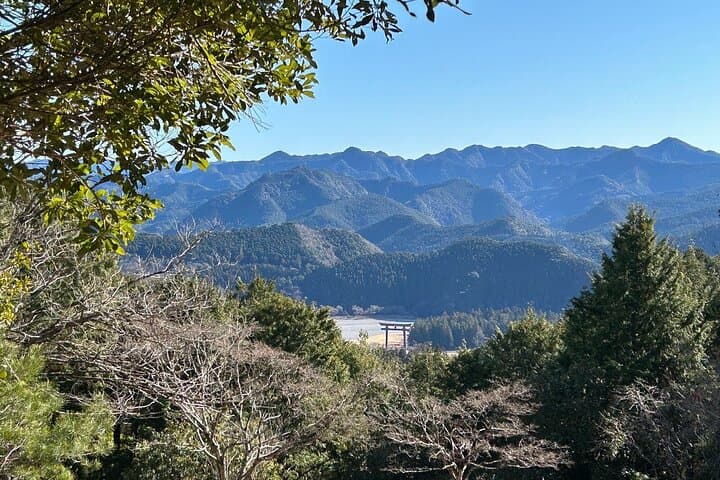
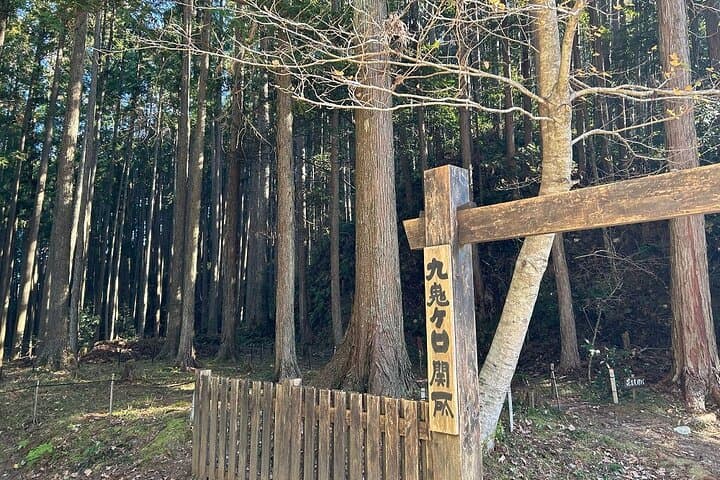
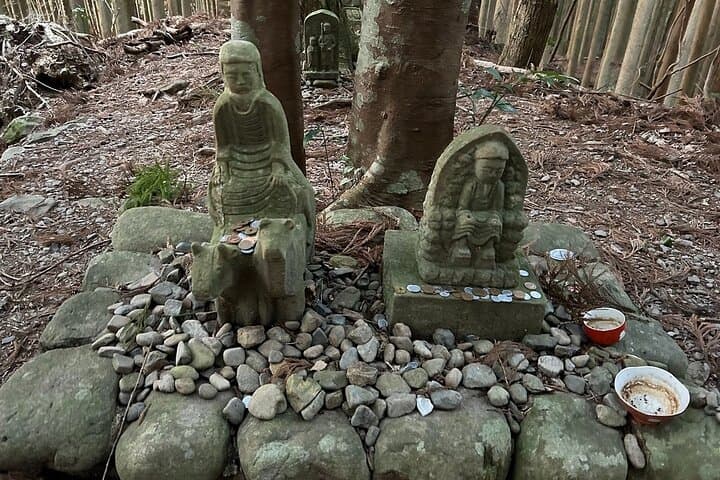
Morning fog lifts off cedar trunks as you step onto the old stones of the Nakahechi route, the trail that once carried pilgrims between shrines and mountain passes. Over three days the path winds from Kii-Tanabe through mossed oji (waystations), up narrow ridgelines and down toward the broad valley that cradles Kumano Hongu Taisha.
Morning fog lifts off cedar trunks as you step onto the old stones of the Nakahechi route, the trail that once carried pilgrims between shrines and mountain passes. Over three days the path winds from Kii-Tanabe through mossed oji (waystations), up narrow ridgelines and down toward the broad valley that cradles Kumano Hongu Taisha.
The Kumano Kodo network has guided travelers for more than a millennium; its routes are threaded with Shinto and Buddhist markers where syncretic worship honored mountains, rivers and ancestral spirits. Geologically, the Kii Peninsula is a fold of ancient granite and schist—steep slopes and river-carved valleys create sudden views and sheltered forest sections where sugi (Japanese cedar) and beech stand like patient guardians.
Culturally the walk moves at the pace of local life: teahouse remains, small inns (minshuku and shukubo) with communal facilities, and centuries-old torii gates that mark transitions from worldly road to sacred approach.
Practically, expect sustained daily mileage with uneven, sometimes steep and rocky terrain; the tour uses local buses and a limited express train on arrival and departure. Luggage delivery and guided support simplify logistics, but bring sturdy trekking shoes, rain protection and layered clothing for cool mornings and warm afternoons. Hydrate often—streams appear, then disappear—and allow time at Kumano Hongu Taisha to absorb the scale of the grand torii and spring-fed wells. This is a walk of place and pace: keep to sensible footwear, a light daypack, and leave time to listen—the forest has its own steady rhythm that will push you forward.