THE ADVENTURE COLLECTIVE® · Independent discovery and booking for outdoor travel

A concise, active three-day circuit through Jordan’s highlights: the carved city of Petra, the red deserts of Wadi Rum, floating on the Dead Sea, and the Roman streets of Jerash. Expect sandstone canyons, desert drives, and moderate hiking with rich cultural context.
A concise, active three-day circuit through Jordan’s highlights: the carved city of Petra, the red deserts of Wadi Rum, floating on the Dead Sea, and the Roman streets of Jerash. Expect sandstone canyons, desert drives, and moderate hiking with rich cultural context.
A first light in Petra narrows the world to honey-colored rock and the hush of the Siq. You step through a shadowed gorge and the Treasury suddenly opens — a carved façade that feels like a city revealing a secret. Over three days this tour moves from the carved Nabatean capital to Wadi Rum’s red dunes, to the buoyant stillness of the Dead Sea and the colonnaded avenues of Jerash.
Verified experiences and guided adventures in the surrounding area.
Operated by JordanMarvelsTravel · Amman, Amman Governorate
A first light in Petra narrows the world to honey-colored rock and the hush of the Siq. You step through a shadowed gorge and the Treasury suddenly opens — a carved façade that feels like a city revealing a secret. Over three days this tour moves from the carved Nabatean capital to Wadi Rum’s red dunes, to the buoyant stillness of the Dead Sea and the colonnaded avenues of Jerash.
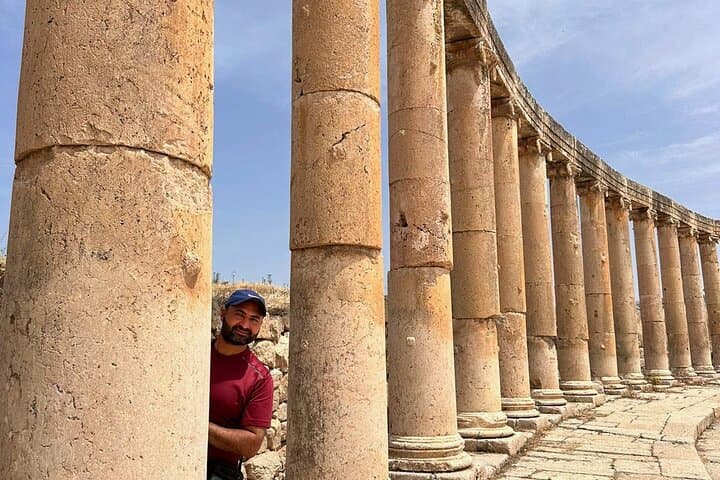
Petra’s architecture dates to the Nabateans with human traces back millennia; nearby Wadi Rum records millennia of desert habitation and the Bedouin presence. Geology here is bold: sandstone and volcanic intrusions sculpt towers, natural arches and labyrinthine canyons. Jerash preserves a Greco-Roman urban plan — oval plazas, a forum, temples and a theatre that recall Roman civic life. Madaba’s 6th-century mosaic map ties the route to early Christian pilgrimage.
Expect varied terrain: paved and uneven stone steps in Petra (including a 900-step climb to the Monastery), sandy tracks and 4x4 cross-country in Wadi Rum, calm saltwater at Dead Sea shores, and flat, walkable ruins in Jerash. Practicalities matter: carry sun protection, hydrate often (Jordan is dry), and allow time for heat during summer. The trip blends moderate hiking, cultural touring, short drives, and an overnight in a desert camp — ideal for travelers wanting active sightseeing with cultural depth.
Plan logistics around sunrise in Petra and late-afternoon light in Wadi Rum for the best photos and cooler conditions.
moderate.
3 days.
Suitable for travelers with regular walking ability and the capacity to climb several hundred stone steps; some overnight transfers require stamina.
Entrance and site-specific fees are typically not included unless specified; confirm with the operator and budget for Petra and Dead Sea access fees.
The itinerary includes dinner at the Wadi Rum desert camp and breakfast; other meals may be on your own—check the operator for exact inclusions.
The tour allows infants but requires moderate fitness; older travelers should be comfortable with extended walking and stair climbs and consult the operator about mobility needs.
Jordan is generally safe for tourists, but summers are hot—plan early starts, stay hydrated, and follow guides’ instructions in desert terrain and at archaeological sites.
Petra was the Nabatean trading hub from the 4th century BCE; Jerash preserves a remarkably complete Roman cityscape, and Madaba holds a 6th-century mosaic map of the Holy Land.
Sites are fragile—avoid touching ancient masonry and use local guides to minimize impact. Water is scarce in Jordan; conserve water and follow local guidance at the Dead Sea about not washing off minerals into freshwater systems.
JordanMarvelsTravel operates guided outdoor trips and adventures with an emphasis on safety, stewardship, and memorable experiences.
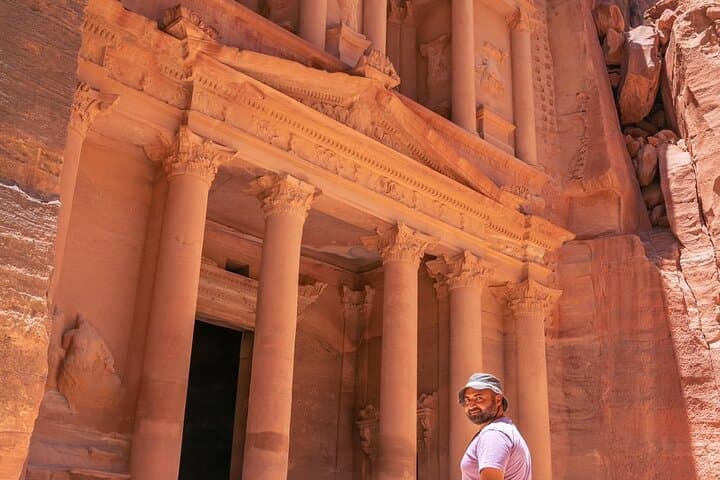

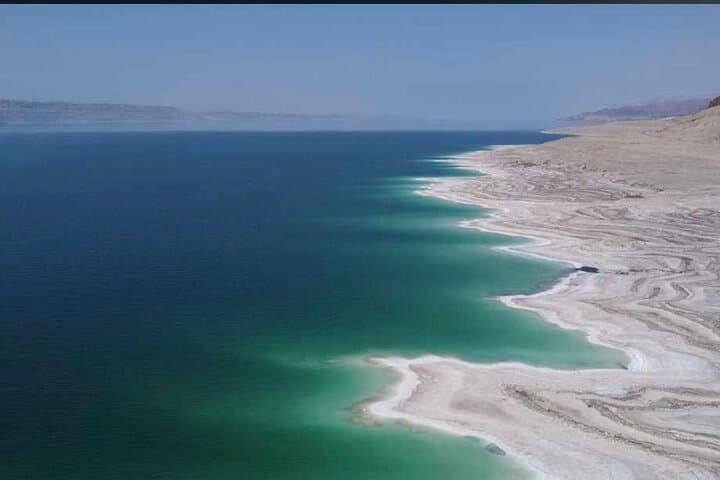
A first light in Petra narrows the world to honey-colored rock and the hush of the Siq. You step through a shadowed gorge and the Treasury suddenly opens — a carved façade that feels like a city revealing a secret. Over three days this tour moves from the carved Nabatean capital to Wadi Rum’s red dunes, to the buoyant stillness of the Dead Sea and the colonnaded avenues of Jerash.
A first light in Petra narrows the world to honey-colored rock and the hush of the Siq. You step through a shadowed gorge and the Treasury suddenly opens — a carved façade that feels like a city revealing a secret. Over three days this tour moves from the carved Nabatean capital to Wadi Rum’s red dunes, to the buoyant stillness of the Dead Sea and the colonnaded avenues of Jerash.
Petra’s architecture dates to the Nabateans with human traces back millennia; nearby Wadi Rum records millennia of desert habitation and the Bedouin presence. Geology here is bold: sandstone and volcanic intrusions sculpt towers, natural arches and labyrinthine canyons. Jerash preserves a Greco-Roman urban plan — oval plazas, a forum, temples and a theatre that recall Roman civic life. Madaba’s 6th-century mosaic map ties the route to early Christian pilgrimage.
Expect varied terrain: paved and uneven stone steps in Petra (including a 900-step climb to the Monastery), sandy tracks and 4x4 cross-country in Wadi Rum, calm saltwater at Dead Sea shores, and flat, walkable ruins in Jerash. Practicalities matter: carry sun protection, hydrate often (Jordan is dry), and allow time for heat during summer. The trip blends moderate hiking, cultural touring, short drives, and an overnight in a desert camp — ideal for travelers wanting active sightseeing with cultural depth.
Plan logistics around sunrise in Petra and late-afternoon light in Wadi Rum for the best photos and cooler conditions.