THE ADVENTURE COLLECTIVE® · Independent discovery and booking for outdoor travel

Three days across Jordan compress centuries of history into one route: Roman ruins at Jerash, the carved city of Petra, a Jeep safari under Wadi Rum’s cliffs, and a float on the Dead Sea. Expect long drives, dramatic geology, and a Bedouin camp night under clear desert skies.
Three days across Jordan compress centuries of history into one route: Roman ruins at Jerash, the carved city of Petra, a Jeep safari under Wadi Rum’s cliffs, and a float on the Dead Sea. Expect long drives, dramatic geology, and a Bedouin camp night under clear desert skies.
The tour begins before dawn in Amman, where the city's layered light slides off concrete rooftops and the driver steers south toward hills that were once trade routes. By midmorning you stand in Jerash, the ghost of a Roman city with colonnades that lean into the wind as if testing the desert. Stones underfoot still remember chariots; the forum's circular openness allows the air to move through the past.
Verified experiences and guided adventures in the surrounding area.
Operated by Jordan Private Tours and Travel · Amman, Amman
The tour begins before dawn in Amman, where the city's layered light slides off concrete rooftops and the driver steers south toward hills that were once trade routes. By midmorning you stand in Jerash, the ghost of a Roman city with colonnades that lean into the wind as if testing the desert. Stones underfoot still remember chariots; the forum's circular openness allows the air to move through the past.
From Jerash the route climbs to Ajloun Castle, a 12th-century Muslim stronghold sited to watch the valleys that slice toward the Jordan River. Its limestone walls are older than many modern borders; standing on the ramparts you can imagine patrols tracing lines of camel caravans below.
Day two is the long, cinematic approach to Petra. The drive south crosses the high, dry plateau into Wadi Musa; the rock changes from brown to the rose-red hue that gives Petra its nickname. Walking the siq—the narrow fissure that serves as Petra's eastern throat—microscopic sand lifts and the Khazneh appears like a façade recalled from a dream. This is architecture shaped by water engineering: Nabatean dams and channels rewrote the desert's hydrology and allowed a city to bloom where none should.
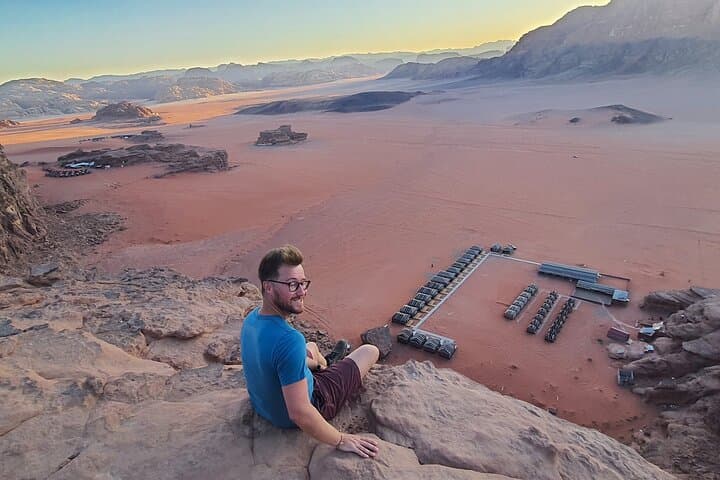
After Petra the mood shifts to a different kind of wilderness. Wadi Rum's sandstone and granite towers loom from a sea of red sand; the landscape has the blunt, slow geometry of a planet. The Bedouin camp sits eight kilometers from any road, powered by solar and quiet at night—stars lay low enough to touch. A two-hour Jeep tour here is not sightseeing so much as translation: drivers point out prehistoric rock art, deep canyons, and the gullies Lawrence of Arabia rode through.
On the final morning the itinerary drops to the Dead Sea. Sitting 400 meters below sea level, the basin holds a mineral-heavy water that refuses to let you sink. The buoyancy is theatrical; the mud is sold as a remedy, but it’s also a moment to reflect on a region shaped by tectonics and human history.
Practicalities: plan for long drives—Amman to Petra is roughly three hours each way—bring sturdy shoes for Petra's uneven paths, sun protection for Wadi Rum, and a swimsuit for the Dead Sea. Carry cash for small purchases and a printed or mobile Jordan Pass to streamline entry fees. The tour mixes guided driving, short hikes, and a relaxed Jeep safari—expect moderate physical demand and variable temperatures between sites.
moderate.
3 days.
Moderate fitness—able to walk 2–4 hours with stops, tolerate long vehicle rides and uneven surfaces
Many nationalities can buy a visa on arrival, but if you plan to visit multiple sites buy the Jordan Pass beforehand to cover entry fees and waive the visa cost.
Petra involves several kilometers of walking over uneven surfaces; visitors typically spend 2–4 hours for main highlights like the Treasury and the Monastery.
The two-hour Jeep tour uses local 4x4s over sandy and rocky terrain; expect short bumpy sections but no technical driving required from guests.
Bring a change of clothes, personal toiletries, any medication, and a warm layer for night; camps provide basic beds, blankets, solar power and toilets.
Yes—floating is safe, but avoid getting water in your eyes or mouth due to extreme salinity and rinse off with freshwater afterward if possible.
Families with young children should choose the private tour option; pregnant travelers and those with serious back or heart conditions are advised not to participate.
The route links Roman provincial life (Jerash) with Nabatean hydraulic engineering in Petra and Ottoman-era Bedouin tracks in Wadi Rum—each site shows different adaptations to arid landscapes.
Wadi Rum is a protected reserve with rules to limit camp density and vehicle impact; visitors should stick to marked paths and avoid removing artifacts or rock markings.
Jordan Private Tours and Travel operates guided outdoor trips and adventures with an emphasis on safety, stewardship, and memorable experiences.



The tour begins before dawn in Amman, where the city's layered light slides off concrete rooftops and the driver steers south toward hills that were once trade routes. By midmorning you stand in Jerash, the ghost of a Roman city with colonnades that lean into the wind as if testing the desert. Stones underfoot still remember chariots; the forum's circular openness allows the air to move through the past.
The tour begins before dawn in Amman, where the city's layered light slides off concrete rooftops and the driver steers south toward hills that were once trade routes. By midmorning you stand in Jerash, the ghost of a Roman city with colonnades that lean into the wind as if testing the desert. Stones underfoot still remember chariots; the forum's circular openness allows the air to move through the past.
From Jerash the route climbs to Ajloun Castle, a 12th-century Muslim stronghold sited to watch the valleys that slice toward the Jordan River. Its limestone walls are older than many modern borders; standing on the ramparts you can imagine patrols tracing lines of camel caravans below.
Day two is the long, cinematic approach to Petra. The drive south crosses the high, dry plateau into Wadi Musa; the rock changes from brown to the rose-red hue that gives Petra its nickname. Walking the siq—the narrow fissure that serves as Petra's eastern throat—microscopic sand lifts and the Khazneh appears like a façade recalled from a dream. This is architecture shaped by water engineering: Nabatean dams and channels rewrote the desert's hydrology and allowed a city to bloom where none should.
After Petra the mood shifts to a different kind of wilderness. Wadi Rum's sandstone and granite towers loom from a sea of red sand; the landscape has the blunt, slow geometry of a planet. The Bedouin camp sits eight kilometers from any road, powered by solar and quiet at night—stars lay low enough to touch. A two-hour Jeep tour here is not sightseeing so much as translation: drivers point out prehistoric rock art, deep canyons, and the gullies Lawrence of Arabia rode through.
On the final morning the itinerary drops to the Dead Sea. Sitting 400 meters below sea level, the basin holds a mineral-heavy water that refuses to let you sink. The buoyancy is theatrical; the mud is sold as a remedy, but it’s also a moment to reflect on a region shaped by tectonics and human history.
Practicalities: plan for long drives—Amman to Petra is roughly three hours each way—bring sturdy shoes for Petra's uneven paths, sun protection for Wadi Rum, and a swimsuit for the Dead Sea. Carry cash for small purchases and a printed or mobile Jordan Pass to streamline entry fees. The tour mixes guided driving, short hikes, and a relaxed Jeep safari—expect moderate physical demand and variable temperatures between sites.