THE ADVENTURE COLLECTIVE® · Independent discovery and booking for outdoor travel

From the carved façade of Petra to the silent reaches of Wadi Rum and the buoyant salt of the Dead Sea, this three-day private loop from Amman packs geology, crusader history, and Bedouin hospitality into a compact, unforgettable route.
From the carved façade of Petra to the silent reaches of Wadi Rum and the buoyant salt of the Dead Sea, this three-day private loop from Amman packs geology, crusader history, and Bedouin hospitality into a compact, unforgettable route.
The minivan eases out of Amman before dawn and the Jordanian highlands unfold: terraced olive groves, low limestone ridges, and a string of towns that have traded the modern and the ancient for millennia. By midmorning you stand at Mount Nebo with wind on your face and a patchwork valley falling away toward the Jordan River — a quiet, elevated moment before the journey bends south into red rock and desert light.
Verified experiences and guided adventures in the surrounding area.
The minivan eases out of Amman before dawn and the Jordanian highlands unfold: terraced olive groves, low limestone ridges, and a string of towns that have traded the modern and the ancient for millennia. By midmorning you stand at Mount Nebo with wind on your face and a patchwork valley falling away toward the Jordan River — a quiet, elevated moment before the journey bends south into red rock and desert light.
This three-day circuit stitches together Jordan’s most compelling landscapes and histories. Start with Madaba’s St. George Church, where a sixth-century mosaic map pins early pilgrimage routes in tesserae; then lean into the Crusader stonework at Kerak Castle, whose thick walls guard views across Wadi Mujib’s deep gorge. The route drops and climbs again into Dana Nature Reserve, a geological page-turner of limestone terraces and sandstone canyons that bridge Mediterranean and desert ecologies.
Petra is the apex: a 1.2-kilometre walk through the Siq — the narrow slot that funnels you between polished rock walls — opens onto the Treasury, a façade carved into rose sandstone that catches late-afternoon light. Expect another hour of walking to the Royal Tombs, and a steeper 800-step climb (roughly 200–300 metres in gain) if you opt for the Monastery. The next day, Wadi Rum swallows the horizon; its sandstone and granite towers have been carved by wind into alien shapes, and a two-hour Jeep tour traverses dry riverbeds, sand sheets, and dunes before you sleep under a Bedouin ceiling of stars.
On the final day, the itinerary softens: a dip in the Red Sea in Aqaba (shore snorkeling opportunites) and a stop at the Dead Sea where buoyant, mineral-dense water lets you float with minimal effort. Waters here chart the full altitudinal arc of the trip — from Petra’s ~800 m above sea level down to the Dead Sea’s dramatic low.
Practical edge: driving times are the backbone of this trip — Amman to Petra is about 3.5–4 hours by road, Petra to Wadi Rum roughly 1.5 hours, and Wadi Rum to Aqaba about 1 hour. Trail surfaces vary from paved archaeological paths and packed desert tracks to loose stone and stairways in Petra; bring sturdy footwear with good traction and expect uneven ground.
Timing and comfort matter: mornings and late afternoons are the best windows for both light and lower temperatures; desert nights can be cold. Hydrate constantly, carry cash for small purchases at markets and camp tips, and allow at least one full morning in Petra to move beyond the main gate and into quieter tombs and vantage points. With straightforward logistics, this three-day loop delivers history, geology, desert spectacle, and a salty, unforgettable finish at the Dead Sea.
moderate.
3 days (approx. 72 hours).
Moderate fitness recommended: comfortable walking for 3–6 hours on uneven ground and some stair climbs; not technical but stamina helps.
Yes—families with older children can enjoy it, but expect long vehicle days and walking over uneven ground; toddlers may find some sections difficult.
Visa requirements depend on nationality; many travelers can obtain a visa on arrival at major entry points, but check current embassy guidance before travel.
Meals vary by operator—typical packages include breakfast and some lunches or dinners, especially at the Bedouin camp; confirm specifics when booking.
Yes—Aqaba provides shore entry for the Red Sea; at the Dead Sea avoid submerging your head and rinse off promptly after floating due to high salinity.
Parts of Petra, like the Treasury viewpoint by the main entrance, are reachable with assistance, but much of the site includes stairs and uneven paths that limit access to the Monastery and some tombs.
Expect several hours of road travel between sites: Amman to Petra ~3.5–4 hours, Petra to Wadi Rum ~1.5 hours, and Wadi Rum to Aqaba ~1 hour; the itinerary balances driving with long site visits.
This route follows ancient trade and pilgrimage arteries—Madaba’s mosaic map and Kerak’s crusader masonry point to centuries of movement across the King’s Highway.
Visits to Dana and Wadi Rum support local conservation and Bedouin communities; stick to marked tracks, avoid collecting artifacts, and minimize single-use plastics.
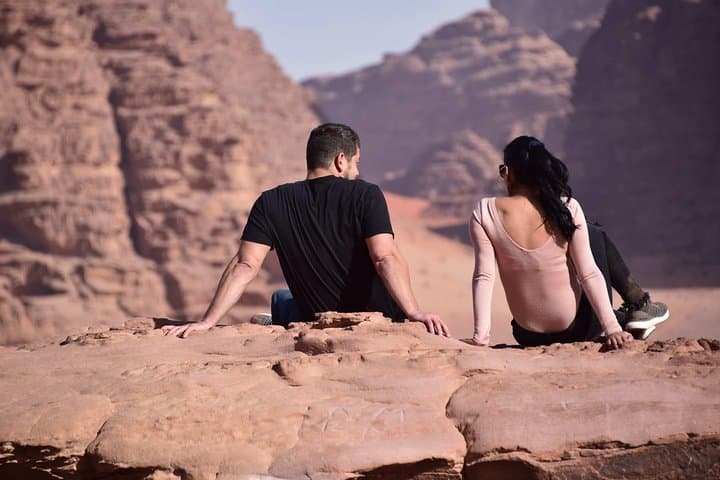
The minivan eases out of Amman before dawn and the Jordanian highlands unfold: terraced olive groves, low limestone ridges, and a string of towns that have traded the modern and the ancient for millennia. By midmorning you stand at Mount Nebo with wind on your face and a patchwork valley falling away toward the Jordan River — a quiet, elevated moment before the journey bends south into red rock and desert light.
The minivan eases out of Amman before dawn and the Jordanian highlands unfold: terraced olive groves, low limestone ridges, and a string of towns that have traded the modern and the ancient for millennia. By midmorning you stand at Mount Nebo with wind on your face and a patchwork valley falling away toward the Jordan River — a quiet, elevated moment before the journey bends south into red rock and desert light.
This three-day circuit stitches together Jordan’s most compelling landscapes and histories. Start with Madaba’s St. George Church, where a sixth-century mosaic map pins early pilgrimage routes in tesserae; then lean into the Crusader stonework at Kerak Castle, whose thick walls guard views across Wadi Mujib’s deep gorge. The route drops and climbs again into Dana Nature Reserve, a geological page-turner of limestone terraces and sandstone canyons that bridge Mediterranean and desert ecologies.
Petra is the apex: a 1.2-kilometre walk through the Siq — the narrow slot that funnels you between polished rock walls — opens onto the Treasury, a façade carved into rose sandstone that catches late-afternoon light. Expect another hour of walking to the Royal Tombs, and a steeper 800-step climb (roughly 200–300 metres in gain) if you opt for the Monastery. The next day, Wadi Rum swallows the horizon; its sandstone and granite towers have been carved by wind into alien shapes, and a two-hour Jeep tour traverses dry riverbeds, sand sheets, and dunes before you sleep under a Bedouin ceiling of stars.
On the final day, the itinerary softens: a dip in the Red Sea in Aqaba (shore snorkeling opportunites) and a stop at the Dead Sea where buoyant, mineral-dense water lets you float with minimal effort. Waters here chart the full altitudinal arc of the trip — from Petra’s ~800 m above sea level down to the Dead Sea’s dramatic low.
Practical edge: driving times are the backbone of this trip — Amman to Petra is about 3.5–4 hours by road, Petra to Wadi Rum roughly 1.5 hours, and Wadi Rum to Aqaba about 1 hour. Trail surfaces vary from paved archaeological paths and packed desert tracks to loose stone and stairways in Petra; bring sturdy footwear with good traction and expect uneven ground.
Timing and comfort matter: mornings and late afternoons are the best windows for both light and lower temperatures; desert nights can be cold. Hydrate constantly, carry cash for small purchases at markets and camp tips, and allow at least one full morning in Petra to move beyond the main gate and into quieter tombs and vantage points. With straightforward logistics, this three-day loop delivers history, geology, desert spectacle, and a salty, unforgettable finish at the Dead Sea.