THE ADVENTURE COLLECTIVE® · Independent discovery and booking for outdoor travel

Ride China's high-speed rails from Xi’an to Sichuan's highlands and spend three concentrated days exploring Huanglong’s terraced travertine pools and Jiuzhaigou’s mirror-like lakes. This private itinerary pairs efficient travel with immersive mountain scenery.
Ride China's high-speed rails from Xi’an to Sichuan's highlands and spend three concentrated days exploring Huanglong’s terraced travertine pools and Jiuzhaigou’s mirror-like lakes. This private itinerary pairs efficient travel with immersive mountain scenery.
The first light on a high-speed platform blurs into mountain ridges as you cross the Sichuan basin toward alpine lakes. By day one you arrive at Huanglong: terraces of mineral-rich pools spill down slopes like a stepped river of color, the pools reflecting a thin sky and the slow drift of clouds. The water seems to dare you to find a single perfect hue.
Verified experiences and guided adventures in the surrounding area.
Operated by Samtour of Chengdu OTC Travel · Jiuzhaigou, Sichuan
The first light on a high-speed platform blurs into mountain ridges as you cross the Sichuan basin toward alpine lakes. By day one you arrive at Huanglong: terraces of mineral-rich pools spill down slopes like a stepped river of color, the pools reflecting a thin sky and the slow drift of clouds. The water seems to dare you to find a single perfect hue.
Both Huanglong and Jiuzhaigou are UNESCO-listed sites shaped by calcium-carbonate deposition and glacial sculpting; you’ll notice travertine terraces, travertine dams and clear multi-hued lakes carved into limestone basins. The region sits on the eastern edge of the Tibetan Plateau and carries Tibetan and Qiang cultural threads—temple ruins, prayer flags and Songpan’s stone walls are living elements of that history.
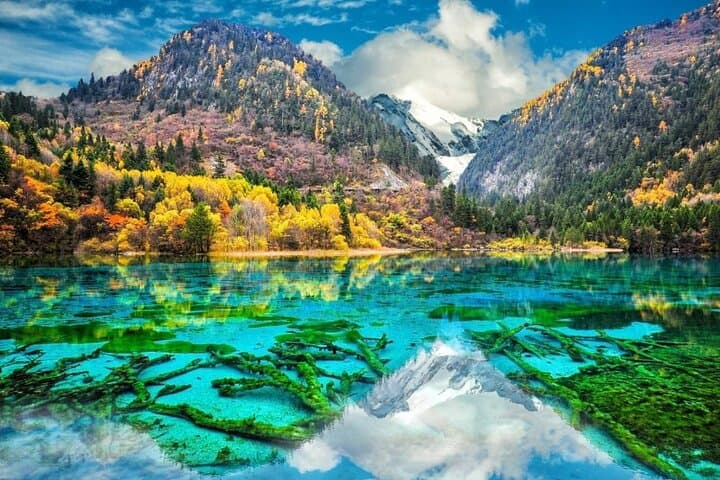
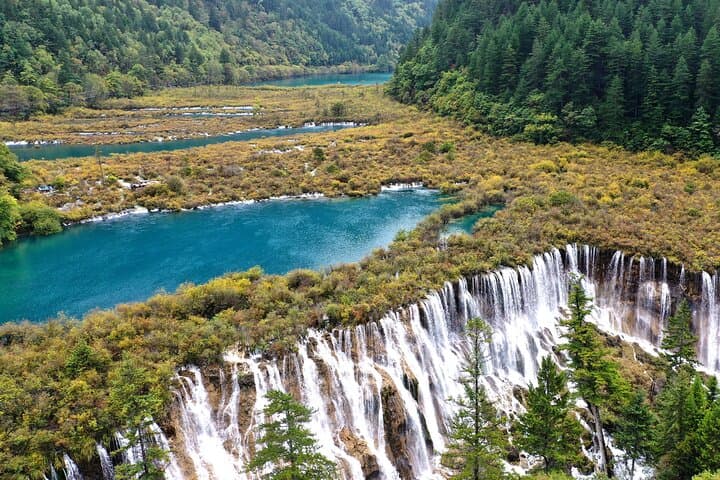
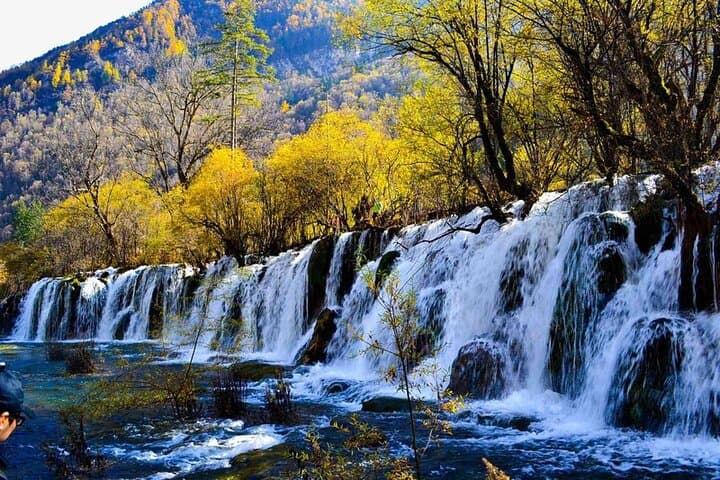
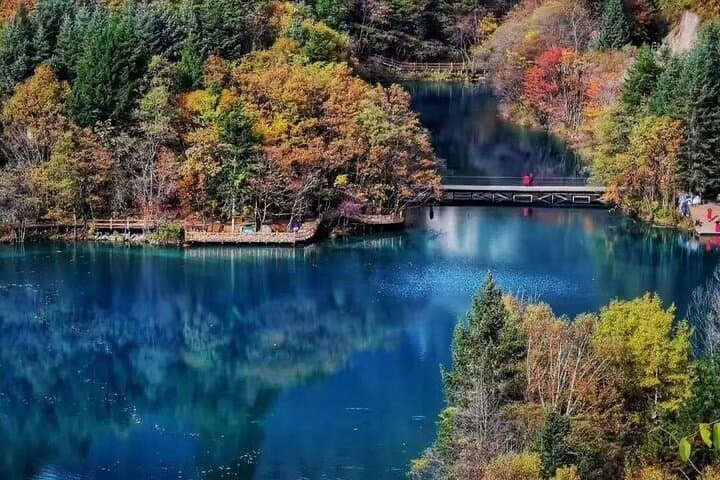
Jiuzhaigou’s boardwalks thread through cascades and glassy lakes—Long Lake’s deep blue stretches, Mirror Lake’s glassy reflections and the thunder of Nuorilang waterfall anchor the valley. Expect shuttle buses inside Jiuzhaigou and a one-way cable car in Huanglong that reduces steep walking.
Practical guidance: this itinerary compresses long rail legs and high-altitude walking into three days—plan for 2–4 hours on trains between cities, bring layered clothing for 2,500–3,500 m elevations, and allow time to acclimatize. Carry cash for small vendors, keep to trails and avoid touching travertine to protect the pools.
Timings are tight but efficient: early starts reward you with clearer light and fewer crowds; daylight and hydration are your best allies at altitude.
moderate.
3 days.
Moderate fitness—able to walk 2–6 hours across uneven boardwalks and short steep sections at high elevation
Typical high-speed segments take roughly 3–4 hours Xi’an–Chengdu and an additional 2–3 hours Chengdu–Jiuzhai Huanglong depending on connections; the itinerary bundles these legs into full travel days.
The tour involves elevations between ~2,500–3,500 m; people with cardiovascular issues or pregnancy should avoid it—allow slow pacing, hydrate, and consult a physician if concerned.
Yes—admission to Jiuzhaigou and Huanglong and a one-way Huanglong cable car are included per the itinerary details, though optional activities like the panda center may be extra depending on route chosen.
There’s an optional Chengdu panda center visit on the second or third day; the pandas are in a conservation facility near Chengdu, not in the mountain parks.
Huanglong and Jiuzhaigou are protected UNESCO sites; their travertine pools formed over millennia from carbonate-rich water, and Songpan was historically a trading and military post linking Tibetan regions to the plains.
Parks enforce boardwalk-only access and ticket limits to protect fragile travertine and aquatic habitats—avoid touching pools, pack out waste, and support local guides.
Samtour of Chengdu OTC Travel operates guided outdoor trips and adventures with an emphasis on safety, stewardship, and memorable experiences.
The first light on a high-speed platform blurs into mountain ridges as you cross the Sichuan basin toward alpine lakes. By day one you arrive at Huanglong: terraces of mineral-rich pools spill down slopes like a stepped river of color, the pools reflecting a thin sky and the slow drift of clouds. The water seems to dare you to find a single perfect hue.
The first light on a high-speed platform blurs into mountain ridges as you cross the Sichuan basin toward alpine lakes. By day one you arrive at Huanglong: terraces of mineral-rich pools spill down slopes like a stepped river of color, the pools reflecting a thin sky and the slow drift of clouds. The water seems to dare you to find a single perfect hue.
Both Huanglong and Jiuzhaigou are UNESCO-listed sites shaped by calcium-carbonate deposition and glacial sculpting; you’ll notice travertine terraces, travertine dams and clear multi-hued lakes carved into limestone basins. The region sits on the eastern edge of the Tibetan Plateau and carries Tibetan and Qiang cultural threads—temple ruins, prayer flags and Songpan’s stone walls are living elements of that history.
Jiuzhaigou’s boardwalks thread through cascades and glassy lakes—Long Lake’s deep blue stretches, Mirror Lake’s glassy reflections and the thunder of Nuorilang waterfall anchor the valley. Expect shuttle buses inside Jiuzhaigou and a one-way cable car in Huanglong that reduces steep walking.
Practical guidance: this itinerary compresses long rail legs and high-altitude walking into three days—plan for 2–4 hours on trains between cities, bring layered clothing for 2,500–3,500 m elevations, and allow time to acclimatize. Carry cash for small vendors, keep to trails and avoid touching travertine to protect the pools.
Timings are tight but efficient: early starts reward you with clearer light and fewer crowds; daylight and hydration are your best allies at altitude.