THE ADVENTURE COLLECTIVE® · Independent discovery and booking for outdoor travel

Three days circling Issyk-Kul take you from Silk Road ruins to alpine gorges. Expect cultural museums, red-sand formations at Jety-Oguz, and short mountain treks with practical, on-the-ground logistics.
Three days circling Issyk-Kul take you from Silk Road ruins to alpine gorges. Expect cultural museums, red-sand formations at Jety-Oguz, and short mountain treks with practical, on-the-ground logistics.
A cold wind from the Tien Shan lifts the surface of Issyk-Kul and the lake answers with a silver glare that dares you to keep watching. On this three-day loop you move from steppe to mountains: the roadside widens into salt-flat shoreline, then tightens into gorges where red rock leans in as if listening.
Verified experiences and guided adventures in the surrounding area.
Operated by New Way Service · Cholpon-Ata, Issyk-Kul Region
A cold wind from the Tien Shan lifts the surface of Issyk-Kul and the lake answers with a silver glare that dares you to keep watching. On this three-day loop you move from steppe to mountains: the roadside widens into salt-flat shoreline, then tightens into gorges where red rock leans in as if listening.
The route threads historic sites and geological drama. Start at Burana Tower — the Karakhanid-era minaret that once rose about 45 m and now stands near 25 m after centuries of earthquakes — a reminder that this corridor was an active Silk Road artery. Cholpon-Ata’s open-air petroglyphs and the Issyk-Kul museum speak to prehistoric and nomadic cultures that shaped the lake’s human story.
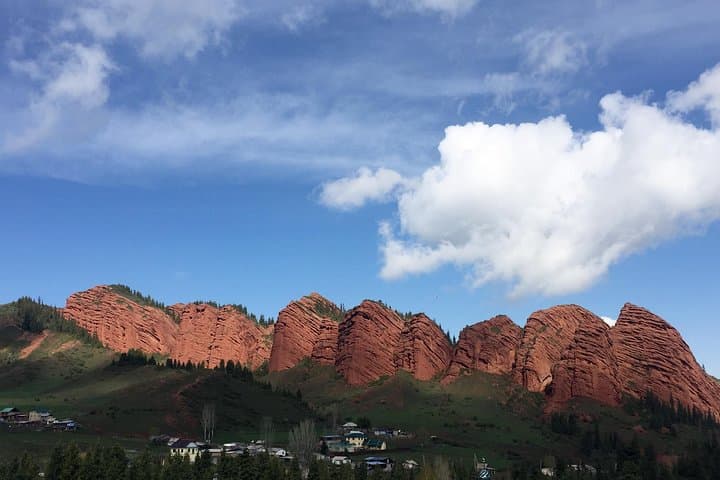
Eastward, Karakol offers contrasting architecture: a wooden Russian Orthodox cathedral and the ornamented Dungan mosque reflecting the region’s ethnic layers. The Tien Shan’s foothills open into Jety-Oguz’s red buttresses and Barskoon’s waterfall, places where geology still rearranges the skyline.
Practical guidance: expect long driving days (roughly 3–4 hours between major points), elevations around 1,600 m at the lake, and short optional treks of 2–4 hours near Karakol. Bring sturdy walking shoes, layered clothing for strong sun and sudden winds, cash in Kyrgyz som for small purchases, and a refillable water bottle. Start early to avoid midday heat, confirm entrance fees and guide arrangements in advance, and leave extra time for roadside stops — hot springs, local workshops, and eagle-viewing hides reward the curious.
moderate.
3 days.
Moderate fitness for several short hikes (2–4 hours) and long vehicle transfers; comfortable walking for uneven terrain.
No special permits are typically required; most entrances are public and the tour includes standard museum/site fees as noted in the itinerary.
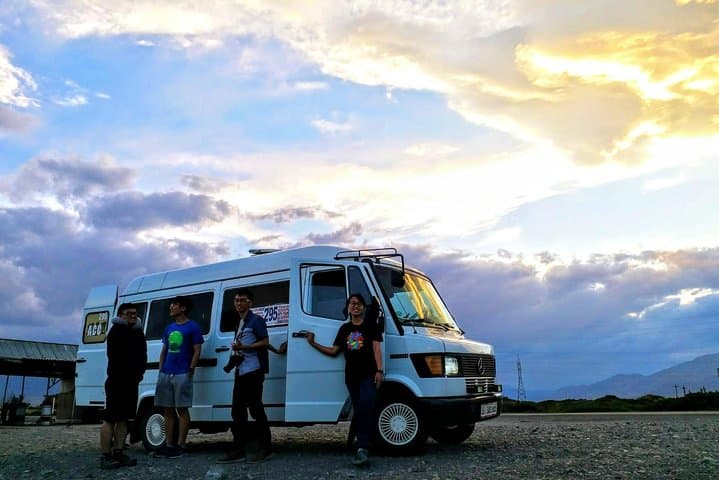
Expect multi-hour transfers: roughly 1–2 hours from Bishkek to Burana, 3–4 hours along the north shore to Karakol, and similar drives returning via south-shore gorges—plan for full travel days with short stops.
Late spring through early fall (June–September) offers milder weather and open mountain tracks; winter brings snow and limited road access in higher passes.
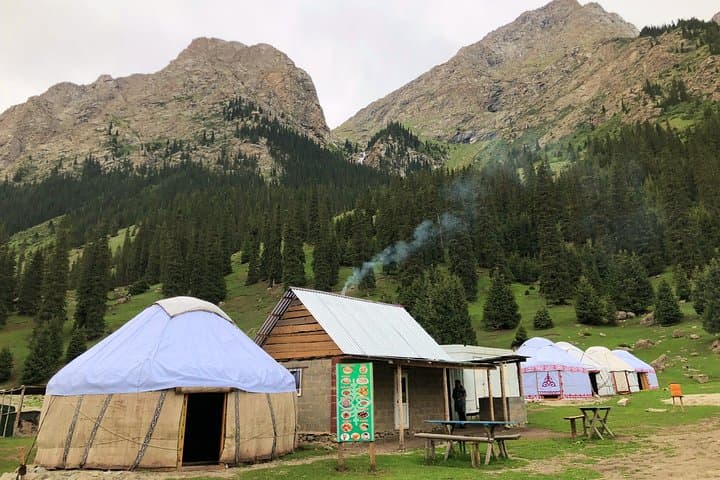
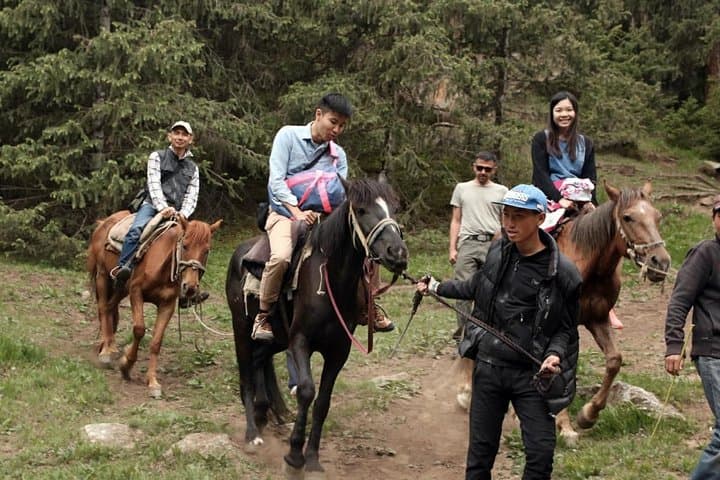
Yes—Karakol is a hiking and skiing base and the provider can arrange half-day treks, village visits, hot springs, or yurt stays based on group preferences.
The Burana site marks Balasagun, a Karakhanid town on a Silk Road branch; the area preserves layers of nomadic, Russian imperial and Chinese-influenced settlement.
Issyk-Kul’s shoreline and mountain meadows are ecologically sensitive—stick to trails, avoid littering, and use local guides to minimize impact.
New Way Service operates guided outdoor trips and adventures with an emphasis on safety, stewardship, and memorable experiences.
A cold wind from the Tien Shan lifts the surface of Issyk-Kul and the lake answers with a silver glare that dares you to keep watching. On this three-day loop you move from steppe to mountains: the roadside widens into salt-flat shoreline, then tightens into gorges where red rock leans in as if listening.
A cold wind from the Tien Shan lifts the surface of Issyk-Kul and the lake answers with a silver glare that dares you to keep watching. On this three-day loop you move from steppe to mountains: the roadside widens into salt-flat shoreline, then tightens into gorges where red rock leans in as if listening.
The route threads historic sites and geological drama. Start at Burana Tower — the Karakhanid-era minaret that once rose about 45 m and now stands near 25 m after centuries of earthquakes — a reminder that this corridor was an active Silk Road artery. Cholpon-Ata’s open-air petroglyphs and the Issyk-Kul museum speak to prehistoric and nomadic cultures that shaped the lake’s human story.
Eastward, Karakol offers contrasting architecture: a wooden Russian Orthodox cathedral and the ornamented Dungan mosque reflecting the region’s ethnic layers. The Tien Shan’s foothills open into Jety-Oguz’s red buttresses and Barskoon’s waterfall, places where geology still rearranges the skyline.
Practical guidance: expect long driving days (roughly 3–4 hours between major points), elevations around 1,600 m at the lake, and short optional treks of 2–4 hours near Karakol. Bring sturdy walking shoes, layered clothing for strong sun and sudden winds, cash in Kyrgyz som for small purchases, and a refillable water bottle. Start early to avoid midday heat, confirm entrance fees and guide arrangements in advance, and leave extra time for roadside stops — hot springs, local workshops, and eagle-viewing hides reward the curious.