THE ADVENTURE COLLECTIVE® · Independent discovery and booking for outdoor travel

Escape Addis for three days of shaded forest walks, cliffside monastery visits and a volcanic lake tucked into the highlands. This loop pairs short hikes with cultural stops — perfect for travelers who want variety without long overland routes.
Escape Addis for three days of shaded forest walks, cliffside monastery visits and a volcanic lake tucked into the highlands. This loop pairs short hikes with cultural stops — perfect for travelers who want variety without long overland routes.
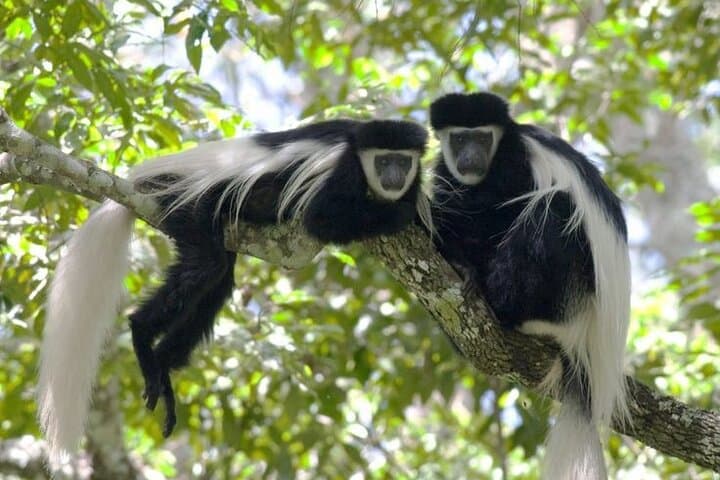
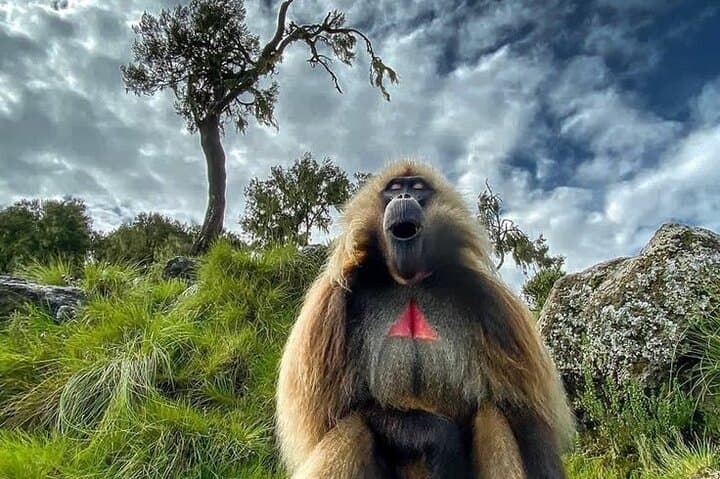
On the first morning the bus doors open to a cool, dark-green pocket of forest less than an hour from the city. Menagesha Suba’s trunks loom like old sentries; a troop of gelada — often called Ethiopia’s bleeding-heart baboons for the red chest patch — moves through the undergrowth with casual authority, daring you to keep up.
Verified experiences and guided adventures in the surrounding area.
Operated by Bale Trek Ethiopia Tours · Addis Ababa, Addis Ababa
On the first morning the bus doors open to a cool, dark-green pocket of forest less than an hour from the city. Menagesha Suba’s trunks loom like old sentries; a troop of gelada — often called Ethiopia’s bleeding-heart baboons for the red chest patch — moves through the undergrowth with casual authority, daring you to keep up.
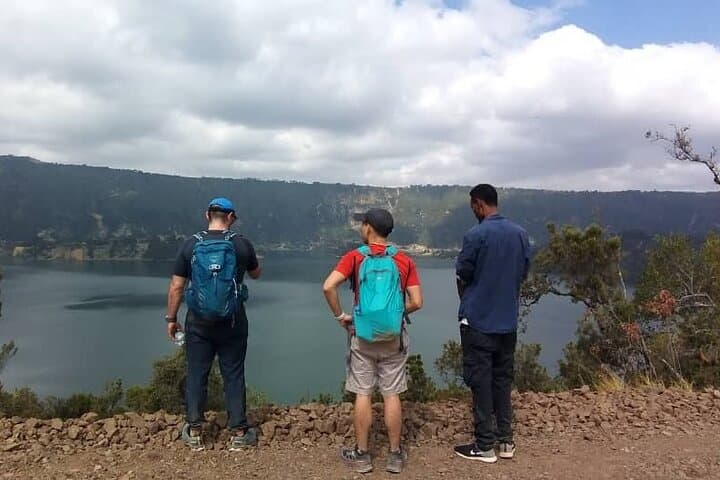
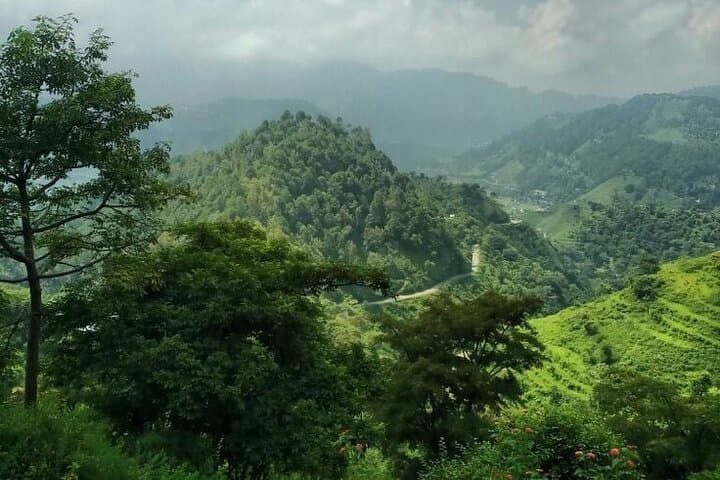
Over three days the tour unspools as a study in altitude, history and quiet contrast: a shaded canopy walk that ends at a narrow waterfall, a cliffside monastery perched over the vast Blue Nile Gorge, and a volcanic basin where the crater’s rim frames a glassy lake. Each landscape has its own cadence. Menagesha’s trails are compact and root-strewn. Debre Libanos sits on an escarpment that invites wide, shutter-ready panoramas and introspective visits to centuries-old chapels. Wenchi Crater Lake, 155 km west of Addis between Ambo and Weliso, is quieter — a bowl of water, an island church, hot springs and farmland where locals still work by hand.
History and geology are braided here. Debre Libanos was founded in the 13th century by Saint Tekle Haymanot and has long been a spiritual anchor for northern Shoa. The Blue Nile carves a gorge that illustrates Ethiopia’s highland uplift; Wenchi is an extinct volcano whose rim reaches about 3,380 meters above sea level and whose lake occupies the caldera.
Local culture threads through the trip: coffee breaks with hosts who will teach you the local ritual, a museum at Debre Libanos with illuminated manuscripts, and the chance to meet shepherds and farmers who shape the crater slopes. Guides are often local and double as conservation advocates — Menagesha is one of the last remaining patches of indigenous highland forest near Addis and depends on sustainable visitation.
Practical guidance: this is a moderately paced tour for travelers comfortable walking 2–6 km at a time and spending several hours on dirt trails and uneven steps. Expect a short 2 km waterfall trek in Menagesha, extended scenic stops at Debre Libanos including a hike to the Portuguese bridge, and an uphill approach then a 4 km descent to Wenchi’s lakeshore (or a horse option for descending). Dress in layers for altitude shifts, bring sturdy shoes with good tread, and carry cash for small entrance fees and local purchases.
Timing matters: early starts maximize wildlife sightings and soften the heat at Wenchi. If you want photography, arrive at the crater rim near sunrise; the Blue Nile Gorge glows in late afternoon. This loop combines easy forest walking, cultural visits, and the slow, restorative rhythms of a crater lake — a compact, varied three-day escape from the city.
moderate.
3 days.
Moderate fitness — comfortable walking 2–6 km on uneven terrain and managing short climbs and descents
Wenchi is about 155 km west of Addis Ababa; the drive typically takes 3–4 hours depending on road conditions.
Options for horse descent and boat trips are usually available locally but may incur an additional fee; ask the guide on arrival.
Yes; visitors can enter parts of the compound and museum, but follow local rules — modest dress and quiet behavior are expected.
You may see gelada and occasionally warthogs or jackals; sightings depend on timing and noise levels along trails.
The tour involves uneven walking and some steps; it’s generally not recommended for pregnant travelers or those with serious back/heart issues. Children should be supervised near cliffs and water.
Guides typically speak English and Amharic; specific language requests can be arranged in advance when possible.
Debre Libanos was founded in the 13th century by Saint Tekle Haymanot and has served as a major religious center for northern Shoa for centuries.
Menagesha’s forest is a fragile remnant of Ethiopia’s highland woodlands; choose local guides and avoid off-trail walking to reduce erosion and disturbance.
Bale Trek Ethiopia Tours operates guided outdoor trips and adventures with an emphasis on safety, stewardship, and memorable experiences.
On the first morning the bus doors open to a cool, dark-green pocket of forest less than an hour from the city. Menagesha Suba’s trunks loom like old sentries; a troop of gelada — often called Ethiopia’s bleeding-heart baboons for the red chest patch — moves through the undergrowth with casual authority, daring you to keep up.
On the first morning the bus doors open to a cool, dark-green pocket of forest less than an hour from the city. Menagesha Suba’s trunks loom like old sentries; a troop of gelada — often called Ethiopia’s bleeding-heart baboons for the red chest patch — moves through the undergrowth with casual authority, daring you to keep up.
Over three days the tour unspools as a study in altitude, history and quiet contrast: a shaded canopy walk that ends at a narrow waterfall, a cliffside monastery perched over the vast Blue Nile Gorge, and a volcanic basin where the crater’s rim frames a glassy lake. Each landscape has its own cadence. Menagesha’s trails are compact and root-strewn. Debre Libanos sits on an escarpment that invites wide, shutter-ready panoramas and introspective visits to centuries-old chapels. Wenchi Crater Lake, 155 km west of Addis between Ambo and Weliso, is quieter — a bowl of water, an island church, hot springs and farmland where locals still work by hand.
History and geology are braided here. Debre Libanos was founded in the 13th century by Saint Tekle Haymanot and has long been a spiritual anchor for northern Shoa. The Blue Nile carves a gorge that illustrates Ethiopia’s highland uplift; Wenchi is an extinct volcano whose rim reaches about 3,380 meters above sea level and whose lake occupies the caldera.
Local culture threads through the trip: coffee breaks with hosts who will teach you the local ritual, a museum at Debre Libanos with illuminated manuscripts, and the chance to meet shepherds and farmers who shape the crater slopes. Guides are often local and double as conservation advocates — Menagesha is one of the last remaining patches of indigenous highland forest near Addis and depends on sustainable visitation.
Practical guidance: this is a moderately paced tour for travelers comfortable walking 2–6 km at a time and spending several hours on dirt trails and uneven steps. Expect a short 2 km waterfall trek in Menagesha, extended scenic stops at Debre Libanos including a hike to the Portuguese bridge, and an uphill approach then a 4 km descent to Wenchi’s lakeshore (or a horse option for descending). Dress in layers for altitude shifts, bring sturdy shoes with good tread, and carry cash for small entrance fees and local purchases.
Timing matters: early starts maximize wildlife sightings and soften the heat at Wenchi. If you want photography, arrive at the crater rim near sunrise; the Blue Nile Gorge glows in late afternoon. This loop combines easy forest walking, cultural visits, and the slow, restorative rhythms of a crater lake — a compact, varied three-day escape from the city.