THE ADVENTURE COLLECTIVE® · Independent discovery and booking for outdoor travel

A compact three-day trek from Marrakech that climbs to the Yagour plateau, crosses millennia-old rock art and pastoral plateaus, and camps under clear mountain skies — ideal for travelers with moderate fitness seeking culture and geology in one trip.
A compact three-day trek from Marrakech that climbs to the Yagour plateau, crosses millennia-old rock art and pastoral plateaus, and camps under clear mountain skies — ideal for travelers with moderate fitness seeking culture and geology in one trip.
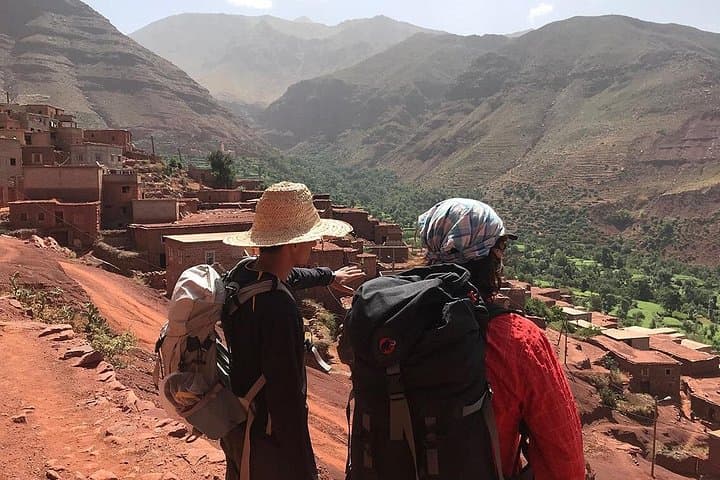
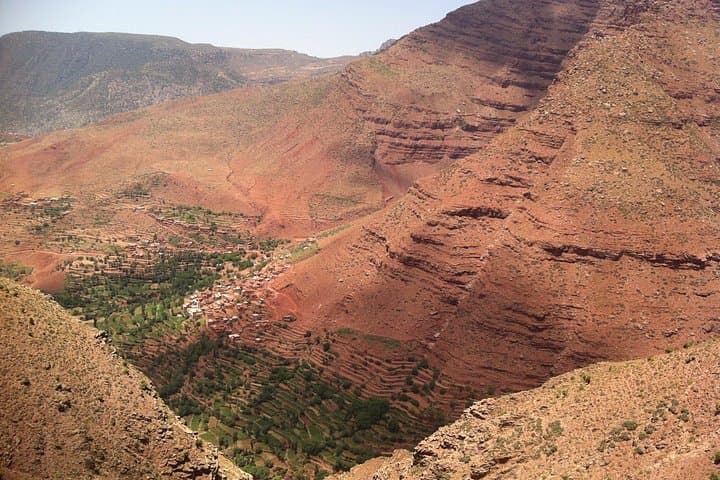
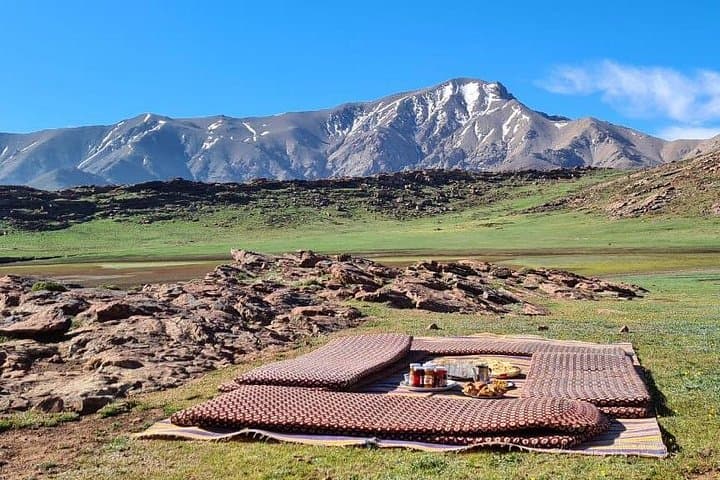
You step out of the van into thin, cold air and the High Atlas answers — wind skimming the grass, a distant river daring you down-valley. The trail climbs steadily from the Ourika foothills through terraced fields, passes Ait Oucheg’s stacked mud-brick houses, and finally spills onto the Yagour plateau, a wide stony table at about 2,600–2,700 m where karst slabs and wind-carved ridges give texture to the skyline.
Verified experiences and guided adventures in the surrounding area.
Operated by Morocco Atlas Activities · Marrakech, Marrakesh-Safi
You step out of the van into thin, cold air and the High Atlas answers — wind skimming the grass, a distant river daring you down-valley. The trail climbs steadily from the Ourika foothills through terraced fields, passes Ait Oucheg’s stacked mud-brick houses, and finally spills onto the Yagour plateau, a wide stony table at about 2,600–2,700 m where karst slabs and wind-carved ridges give texture to the skyline.
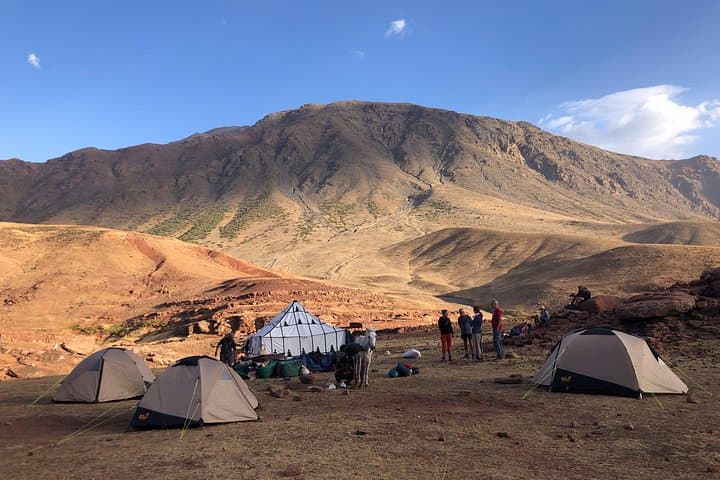
This three-day route blends living culture and deep time: irrigated barley terraces and seasonal goat azibs reflect centuries of Berber pastoral life, while petroglyphs on the plateau date back millennia. Geologically the area is folded sedimentary rock punctuated by chemical weathering; expect aeolian and fluviatile erosional shapes and pockets of karst corrosion where lichens etch pale patterns into stone. Nights are spent in a simple bivouac under open sky; muleteers and local cooks are part of the rhythm.
Practical guidance: days average 4–6 hours on mixed terrain — mule tracks, steep scree descent and rocky plateau walking — with a highest point around 2,700 m and cumulative elevation change of several hundred meters per day. Bring sturdy hiking boots, warm layers for plateau nights, a 3-season sleeping bag (provided if requested in some packages), sun protection and at least 2–3 liters of water per day. Start early to use stable morning weather, and allow a day in Marrakech before or after for acclimatization. Guides handle navigation and logistics, but moderate fitness and good ankle stability will make the trek far more enjoyable.
moderate.
3 days (approx. 12–14 hours hiking total).
Suitable for hikers who do regular hill walking and can manage 4–6 hours of mixed-terrain hiking per day.
Expect 4–6 hours of walking per day on mule tracks, rocky plateaus and some steep sections; the itinerary suits those with moderate fitness.
Overnight stays are in a traditional bivouac under the stars; tents are provided and some operators supply sleeping bags on request.
The highest point is around 2,700 m; most travelers tolerate this with basic acclimatization, but anyone with severe altitude sensitivity should consult a physician first.
The tour typically provides full board (breakfast, lunch, dinner) and local tea; bring a water reservoir or purification tablets for topping up between provided supplies.
The High Atlas has been home to Amazigh (Berber) communities for millennia; terraces and seasonal azibs reflect longstanding pastoral and agricultural practices.
Stick to established tracks to protect fragile lichen-covered rock and erosive soils; local guides work with communities to limit campsite impact and support sustainable grazing patterns.
Morocco Atlas Activities operates guided outdoor trips and adventures with an emphasis on safety, stewardship, and memorable experiences.
You step out of the van into thin, cold air and the High Atlas answers — wind skimming the grass, a distant river daring you down-valley. The trail climbs steadily from the Ourika foothills through terraced fields, passes Ait Oucheg’s stacked mud-brick houses, and finally spills onto the Yagour plateau, a wide stony table at about 2,600–2,700 m where karst slabs and wind-carved ridges give texture to the skyline.
You step out of the van into thin, cold air and the High Atlas answers — wind skimming the grass, a distant river daring you down-valley. The trail climbs steadily from the Ourika foothills through terraced fields, passes Ait Oucheg’s stacked mud-brick houses, and finally spills onto the Yagour plateau, a wide stony table at about 2,600–2,700 m where karst slabs and wind-carved ridges give texture to the skyline.
This three-day route blends living culture and deep time: irrigated barley terraces and seasonal goat azibs reflect centuries of Berber pastoral life, while petroglyphs on the plateau date back millennia. Geologically the area is folded sedimentary rock punctuated by chemical weathering; expect aeolian and fluviatile erosional shapes and pockets of karst corrosion where lichens etch pale patterns into stone. Nights are spent in a simple bivouac under open sky; muleteers and local cooks are part of the rhythm.
Practical guidance: days average 4–6 hours on mixed terrain — mule tracks, steep scree descent and rocky plateau walking — with a highest point around 2,700 m and cumulative elevation change of several hundred meters per day. Bring sturdy hiking boots, warm layers for plateau nights, a 3-season sleeping bag (provided if requested in some packages), sun protection and at least 2–3 liters of water per day. Start early to use stable morning weather, and allow a day in Marrakech before or after for acclimatization. Guides handle navigation and logistics, but moderate fitness and good ankle stability will make the trek far more enjoyable.