THE ADVENTURE COLLECTIVE® · Independent discovery and booking for outdoor travel

A focused three-day trek from Marrakech into the High Atlas, moving from Imlil over high passes to Setti Fatma. Experience alpine passes, Berber villages, and varied terrain with local guides and mule support.
A focused three-day trek from Marrakech into the High Atlas, moving from Imlil over high passes to Setti Fatma. Experience alpine passes, Berber villages, and varied terrain with local guides and mule support.
The morning air in Imlil bites with a mountain edge as your group straps on packs and loads mules for the first climb. Stone terraces rise above the valley, water channels murmur, and the trail threads through cedar and almond trees toward Tizi n’Tamatert, where a broad panoramic shoulder opens onto high ridgelines.
Verified experiences and guided adventures in the surrounding area.
Operated by Marrakech experiences · Imlil, Marrakech-Safi
The morning air in Imlil bites with a mountain edge as your group straps on packs and loads mules for the first climb. Stone terraces rise above the valley, water channels murmur, and the trail threads through cedar and almond trees toward Tizi n’Tamatert, where a broad panoramic shoulder opens onto high ridgelines.
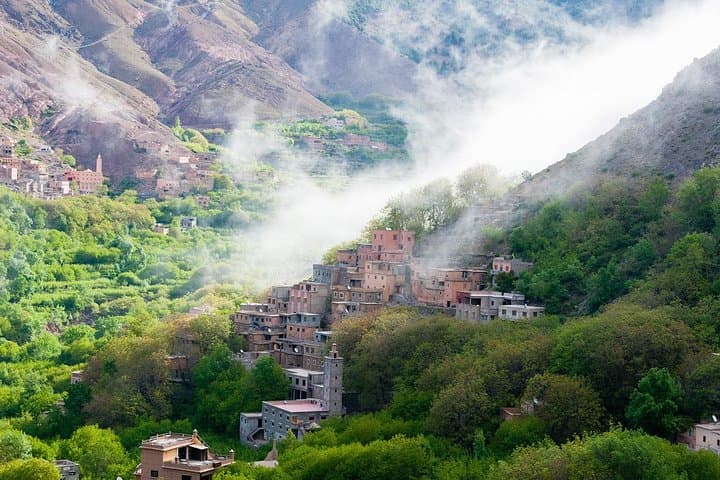
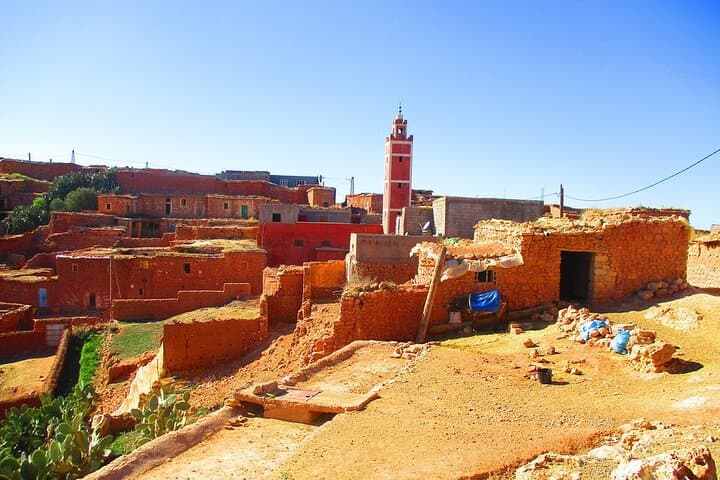
This route crosses the southern flank of the High Atlas, shaped by uplifted granites and ancient glaciers; the walk moves between adobe Berber villages, irrigated orchards and higher, rock-scraped passes. Local culture is visible at every step—flat-roofed stone houses, hand-built irrigation (seguias), and guides who read the landscape like a map of seasonal work.
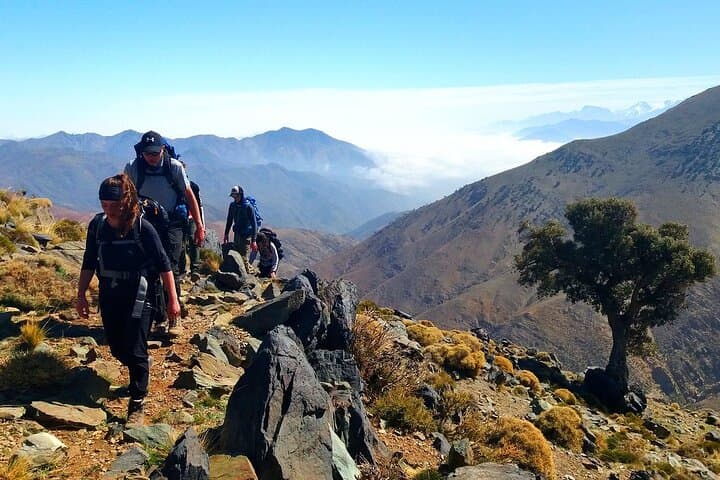
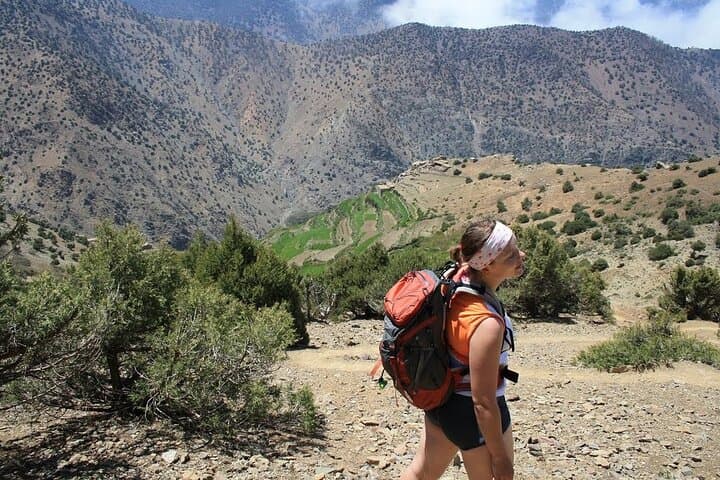
Day one is steady ascent to Ouaneskra (~2,200m), day two negotiates Tizi n’Tacheddirt (approaching 3,172m) and long descents past Labassene and Timichchi, and day three winds down to Setti Fatma and its waterfall before returning to Marrakech. Expect varied terrain: packed dirt, scree fields near passes, narrow village tracks and occasional steep switchbacks.
Practical guidance: start early to avoid afternoon weather, carry layers for large temperature swings, and rely on a local mule for heavy loads if you’re conserving energy. Hydrate and eat at regular intervals—altitude and steady climbs elevate exertion even for fit walkers. Footwear with solid ankle support and trekking poles are highly recommended for descent control. The itinerary suits hikers comfortable with 4–7 hours of walking per day and basic mountain trail conditions.
moderate.
3 days (approx. 12–17 hours hiking total).
Good aerobic fitness with experience on sustained ascents and descents; comfortable walking 4–7 hours a day.
You should be comfortable walking several hours on uneven terrain with sustained uphill and downhill sections; regular hikers with good cardio will find it manageable.
Yes—overnights are in Berber guest houses (gîtes) or simple tents with communal facilities; expect hearty local meals and basic bedding.
Yes, mules are provided to carry baggage and food; keep a light daypack for essentials and valuables.
Passes approach 3,100m so mild altitude effects are possible; ascend conservatively, hydrate, and report symptoms to your guide.
The High Atlas has long been home to Berber (Amazigh) communities whose stone villages and irrigation systems reflect centuries of mountain agriculture and trade routes between valleys.
Stick to marked trails and avoid collecting plants; water is managed locally—use refillable containers and respect village waste practices to minimize impact.
Marrakech experiences operates guided outdoor trips and adventures with an emphasis on safety, stewardship, and memorable experiences.
The morning air in Imlil bites with a mountain edge as your group straps on packs and loads mules for the first climb. Stone terraces rise above the valley, water channels murmur, and the trail threads through cedar and almond trees toward Tizi n’Tamatert, where a broad panoramic shoulder opens onto high ridgelines.
The morning air in Imlil bites with a mountain edge as your group straps on packs and loads mules for the first climb. Stone terraces rise above the valley, water channels murmur, and the trail threads through cedar and almond trees toward Tizi n’Tamatert, where a broad panoramic shoulder opens onto high ridgelines.
This route crosses the southern flank of the High Atlas, shaped by uplifted granites and ancient glaciers; the walk moves between adobe Berber villages, irrigated orchards and higher, rock-scraped passes. Local culture is visible at every step—flat-roofed stone houses, hand-built irrigation (seguias), and guides who read the landscape like a map of seasonal work.
Day one is steady ascent to Ouaneskra (~2,200m), day two negotiates Tizi n’Tacheddirt (approaching 3,172m) and long descents past Labassene and Timichchi, and day three winds down to Setti Fatma and its waterfall before returning to Marrakech. Expect varied terrain: packed dirt, scree fields near passes, narrow village tracks and occasional steep switchbacks.
Practical guidance: start early to avoid afternoon weather, carry layers for large temperature swings, and rely on a local mule for heavy loads if you’re conserving energy. Hydrate and eat at regular intervals—altitude and steady climbs elevate exertion even for fit walkers. Footwear with solid ankle support and trekking poles are highly recommended for descent control. The itinerary suits hikers comfortable with 4–7 hours of walking per day and basic mountain trail conditions.