
3-Day High Atlas Trek from Marrakech: Berber Villages, Tizi Passes & Imlil Waterfall
A three-day loop from Marrakech into the High Atlas that links village life, steep passes and a large seasonal waterfall. Expect 5–6 hour walking days, mule-supported luggage, and nights in local gîtes with home-cooked meals.
An Adventure In Marrakech.
A three-day loop from Marrakech into the High Atlas that links village life, steep passes and a large seasonal waterfall. Expect 5–6 hour walking days, mule-supported luggage, and nights in local gîtes with home-cooked meals.
Read the full experience
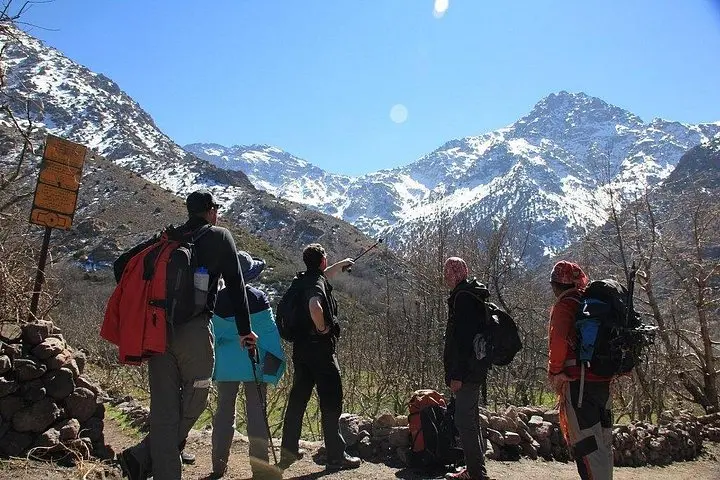
You leave Marrakech before dawn, the city lights shrinking as the road climbs into the High Atlas. Air thins and the landscape hardens into folded ridges; mule trains and stone terraced fields appear while muleteers prepare packs. By midmorning you’re walking a mix of mule tracks and stony footpaths, climbing toward Tizi n’Tamater (≈2,300 m) with views that point to Toubkal’s 4,167 m bulk on clear days.
You leave Marrakech before dawn, the city lights shrinking as the road climbs into the High Atlas. Air thins and the landscape hardens into folded ridges; mule trains and stone terraced fields appear while muleteers prepare packs. By midmorning you’re walking a mix of mule tracks and stony footpaths, climbing toward Tizi n’Tamater (≈2,300 m) with views that point to Toubkal’s 4,167 m bulk on clear days.
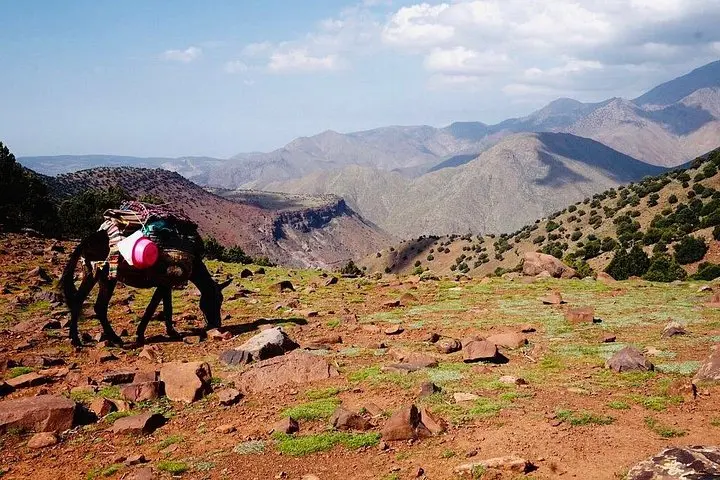
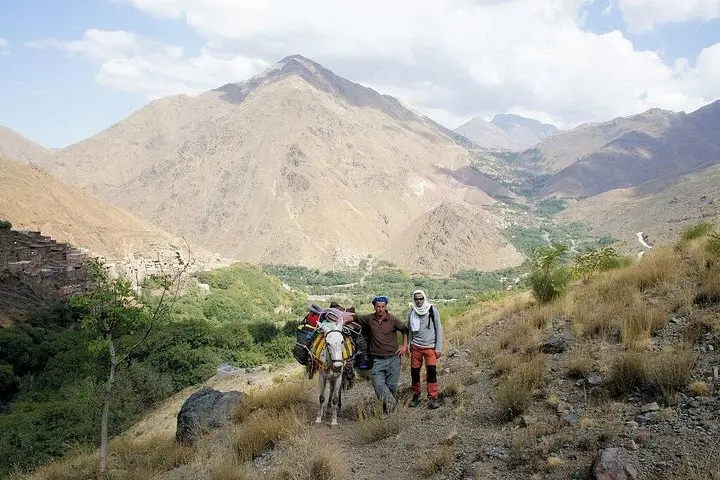
Geology here is blunt: uplifted sedimentary and metamorphic rock heaved by the African–Eurasian collision, cut into valleys by seasonal streams. Culturally, this is Amazigh country—small villages, flat-roof houses, and hospitality built around shared mint tea and communal kitchens. The route threads three valleys and multiple tizi (mountain passes), stopping in village gîtes where cooks serve tagines and mules carry luggage.
Expect steady ascents and descents: typical days run 5–6 hours on varied terrain—packed dirt, loose scree near high passes, and paved village lanes. Elevation markers include Imlil (~1,740 m), Tizi n’Tamater (2,300 m), Tanamroute peak (~2,720 m) and Tizi Mizzik (~2,500 m); daily gains can approach 800–1,000 m on the steeper stretches.
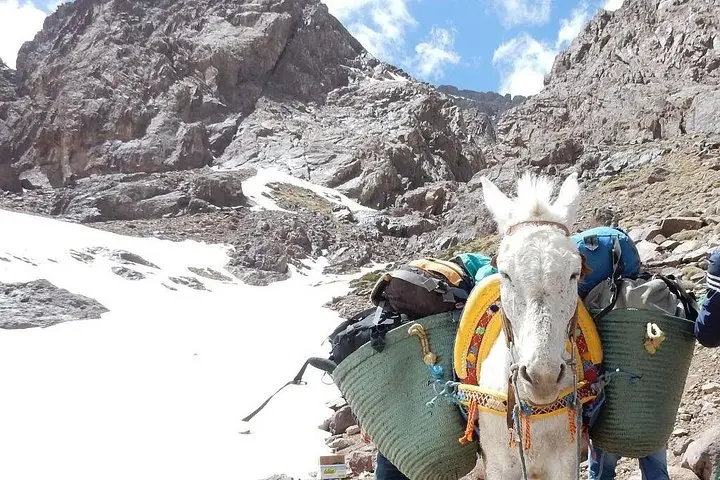
Practical guidance: bring sturdy boots, layered clothing for large temperature swings, sun protection, and a hydration system. Walk poles help on steep descents and scree. Mules and muleteers handle luggage, and guest-house accommodation means hot showers and cooked meals each night. Aim for spring or autumn for best weather; carry small bills for village purchases and tips—this trek balances immersive mountain travel with a practical, village-based support network.
Frequently asked questions
Expect moderate effort: 5–6 hours walking each day on uneven terrain with daily elevation gains up to about 800–1,000 m; no technical climbing required.
Nights are in local guest houses (gîtes) and a Berber guest house with hot showers and shared rooms; mules carry luggage so you only need a daypack.
Altitudes reach around 2,500–2,700 m; most travelers acclimatize fine but drink water, sleep well, and tell guides about prior issues—slow pace helps prevent symptoms.
All meals listed are included; guides and cooks can usually prepare vegetarian options with advance notice.
About This Experience
Marrakech Tours operates guided outdoor trips and adventures with an emphasis on safety, stewardship, and memorable experiences.
Adventure tips
Recommended gear
- Sturdy hiking boots: Support and grip for rocky mule tracks and scree sections.
- Layered clothing (base, insulating, waterproof): Temperature swings from valley heat to cold passes require adaptable layers.
- Hydration reservoir (2–3 L): Villages may have potable water but long stretches benefit from on-trail water capacity.
- Trekking poles: Helpful for stability on steep ascents and loose descents, reduces joint fatigue.
Photos of the experience
Related adventures & guides
Read the full experience
You leave Marrakech before dawn, the city lights shrinking as the road climbs into the High Atlas. Air thins and the landscape hardens into folded ridges; mule trains and stone terraced fields appear while muleteers prepare packs. By midmorning you’re walking a mix of mule tracks and stony footpaths, climbing toward Tizi n’Tamater (≈2,300 m) with views that point to Toubkal’s 4,167 m bulk on clear days.
You leave Marrakech before dawn, the city lights shrinking as the road climbs into the High Atlas. Air thins and the landscape hardens into folded ridges; mule trains and stone terraced fields appear while muleteers prepare packs. By midmorning you’re walking a mix of mule tracks and stony footpaths, climbing toward Tizi n’Tamater (≈2,300 m) with views that point to Toubkal’s 4,167 m bulk on clear days.
Geology here is blunt: uplifted sedimentary and metamorphic rock heaved by the African–Eurasian collision, cut into valleys by seasonal streams. Culturally, this is Amazigh country—small villages, flat-roof houses, and hospitality built around shared mint tea and communal kitchens. The route threads three valleys and multiple tizi (mountain passes), stopping in village gîtes where cooks serve tagines and mules carry luggage.
Expect steady ascents and descents: typical days run 5–6 hours on varied terrain—packed dirt, loose scree near high passes, and paved village lanes. Elevation markers include Imlil (~1,740 m), Tizi n’Tamater (2,300 m), Tanamroute peak (~2,720 m) and Tizi Mizzik (~2,500 m); daily gains can approach 800–1,000 m on the steeper stretches.
Practical guidance: bring sturdy boots, layered clothing for large temperature swings, sun protection, and a hydration system. Walk poles help on steep descents and scree. Mules and muleteers handle luggage, and guest-house accommodation means hot showers and cooked meals each night. Aim for spring or autumn for best weather; carry small bills for village purchases and tips—this trek balances immersive mountain travel with a practical, village-based support network.
Make a day of it nearby.
Verified experiences and guided adventures in the surrounding area.