THE ADVENTURE COLLECTIVE® · Independent discovery and booking for outdoor travel

Spend three days trekking into Bwindi Impenetrable Forest to meet mountain gorillas, then unwind on Lake Bunyonyi. This compact safari combines intense jungle hiking, a one-hour gorilla encounter, and cultural visits to Batwa villages.
Spend three days trekking into Bwindi Impenetrable Forest to meet mountain gorillas, then unwind on Lake Bunyonyi. This compact safari combines intense jungle hiking, a one-hour gorilla encounter, and cultural visits to Batwa villages.
Dawn breaks over steep ridges as the driver eases off the tarmac and into the green, folded slopes of southwestern Uganda. Wet leaves drip onto your jacket; the forest ahead feels alive, patient and watchful. In Rushaga, guides unclip radios and boots crunch leaf litter—today you’ll push into the Bwindi Impenetrable Forest where the mountain gorillas live.
Verified experiences and guided adventures in the surrounding area.
Operated by Jungle Ride Safaris · Kisoro, Kisoro District
Dawn breaks over steep ridges as the driver eases off the tarmac and into the green, folded slopes of southwestern Uganda. Wet leaves drip onto your jacket; the forest ahead feels alive, patient and watchful. In Rushaga, guides unclip radios and boots crunch leaf litter—today you’ll push into the Bwindi Impenetrable Forest where the mountain gorillas live.
Bwindi is an ancient forest, carved into volcanic highlands and fed by streams that challenge your footing and urge you onward. The park holds nearly half the world’s mountain gorillas; local Batwa communities preserve oral histories of living alongside these primates for generations. Geologically, the area sits on the margins of the Albertine Rift, with steep valleys and deeply weathered soils that keep the forest dense and humid.
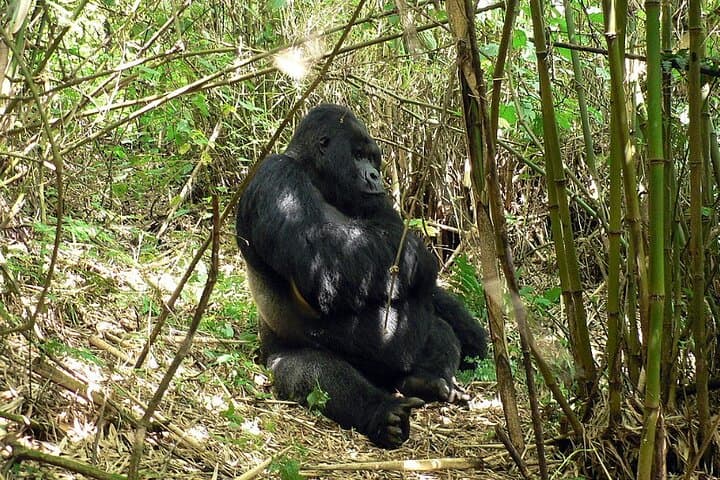
Expect a day of real hiking: dense vegetation, root-strewn trails and short, steep climbs—treks range from two to seven hours before you find a family of gorillas. Once located, regulations limit visits to one hour, an intense, intimate encounter where silverbacks sit like old guardians and infants inspect your presence warily.
Practical notes: permits are mandatory and limited; the dry months (June–Sept, Dec–Feb) offer firmer trails. Bring waterproof layers, sturdy boots, and a small daypack with water and snacks. Respect park rules: stay the permitted distance, follow your guide’s signals, and avoid coughing or sudden movements around the gorillas.
The itinerary often ends with a quiet paddle on Lake Bunyonyi and a visit to Batwa cultural sites—an essential cultural counterpoint to the raw wilderness of Bwindi.
challenging.
2–7 hours (trek day); total trip 3 days.
Moderate to good cardiovascular fitness with the ability to hike over uneven, steep terrain for several hours
Yes—gorilla permits are mandatory, limited in number, and tied to a specific date and park sector; obtain them through your operator or Uganda Wildlife Authority well ahead of travel.
Visits are limited to one hour once the gorilla group is located; the locating trek itself can take 2–7 hours depending on terrain and gorilla movements.
Treks range from moderate to strenuous; you should be comfortable hiking over uneven, steep, and muddy ground for several hours and able to ascend short steep sections.
Travelers commonly require routine vaccinations and yellow fever proof for entry to Uganda; consult your healthcare provider and check current entry health rules before travel.
Bwindi’s forests have been inhabited and managed by local communities for centuries; the park was designated to protect remnant montane forest and its gorilla population.
Gorilla tourism funds conservation and local jobs, but strict permit limits and close-guideline enforcement help minimize disturbance; stick to routes and avoid bringing food into the forest.
Jungle Ride Safaris operates guided outdoor trips and adventures with an emphasis on safety, stewardship, and memorable experiences.



Dawn breaks over steep ridges as the driver eases off the tarmac and into the green, folded slopes of southwestern Uganda. Wet leaves drip onto your jacket; the forest ahead feels alive, patient and watchful. In Rushaga, guides unclip radios and boots crunch leaf litter—today you’ll push into the Bwindi Impenetrable Forest where the mountain gorillas live.
Dawn breaks over steep ridges as the driver eases off the tarmac and into the green, folded slopes of southwestern Uganda. Wet leaves drip onto your jacket; the forest ahead feels alive, patient and watchful. In Rushaga, guides unclip radios and boots crunch leaf litter—today you’ll push into the Bwindi Impenetrable Forest where the mountain gorillas live.
Bwindi is an ancient forest, carved into volcanic highlands and fed by streams that challenge your footing and urge you onward. The park holds nearly half the world’s mountain gorillas; local Batwa communities preserve oral histories of living alongside these primates for generations. Geologically, the area sits on the margins of the Albertine Rift, with steep valleys and deeply weathered soils that keep the forest dense and humid.
Expect a day of real hiking: dense vegetation, root-strewn trails and short, steep climbs—treks range from two to seven hours before you find a family of gorillas. Once located, regulations limit visits to one hour, an intense, intimate encounter where silverbacks sit like old guardians and infants inspect your presence warily.
Practical notes: permits are mandatory and limited; the dry months (June–Sept, Dec–Feb) offer firmer trails. Bring waterproof layers, sturdy boots, and a small daypack with water and snacks. Respect park rules: stay the permitted distance, follow your guide’s signals, and avoid coughing or sudden movements around the gorillas.
The itinerary often ends with a quiet paddle on Lake Bunyonyi and a visit to Batwa cultural sites—an essential cultural counterpoint to the raw wilderness of Bwindi.