THE ADVENTURE COLLECTIVE® · Independent discovery and booking for outdoor travel

Three days of Georgia’s essentials: ancient capitals, mountain monasteries and the Kakheti wine country. This compact itinerary combines culture, highland drives and short hikes with practical advice for planning and packing.
Three days of Georgia’s essentials: ancient capitals, mountain monasteries and the Kakheti wine country. This compact itinerary combines culture, highland drives and short hikes with practical advice for planning and packing.
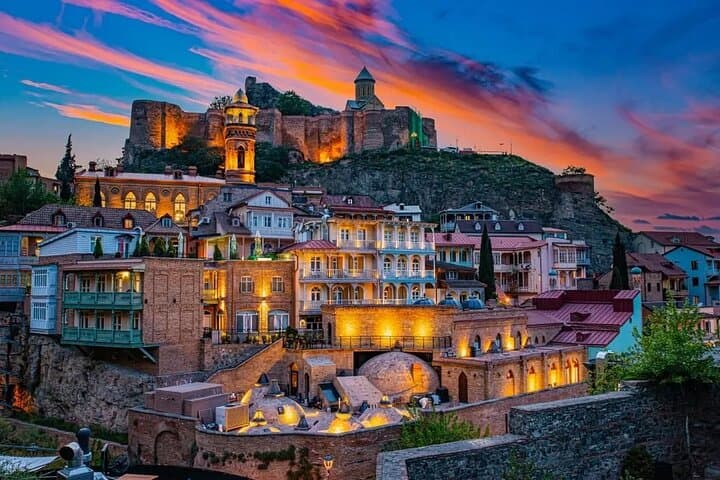
You step out of Tbilisi’s bustle onto a highway that climbs toward the Caucasus, the air changing from city dust to cold mountain clarity. Rivers braid and dare you from the valleys below as the Georgian Military Highway pushes the landscape higher; stone churches and fortress walls punctuate each bend. Over three days you’ll trade tramlines for dirt tracks, cathedral domes for snow-dark ridgelines, and urban sulfur baths for terraced vineyards.
Verified experiences and guided adventures in the surrounding area.
Operated by Beqa · Tbilisi, Tbilisi
You step out of Tbilisi’s bustle onto a highway that climbs toward the Caucasus, the air changing from city dust to cold mountain clarity. Rivers braid and dare you from the valleys below as the Georgian Military Highway pushes the landscape higher; stone churches and fortress walls punctuate each bend. Over three days you’ll trade tramlines for dirt tracks, cathedral domes for snow-dark ridgelines, and urban sulfur baths for terraced vineyards.
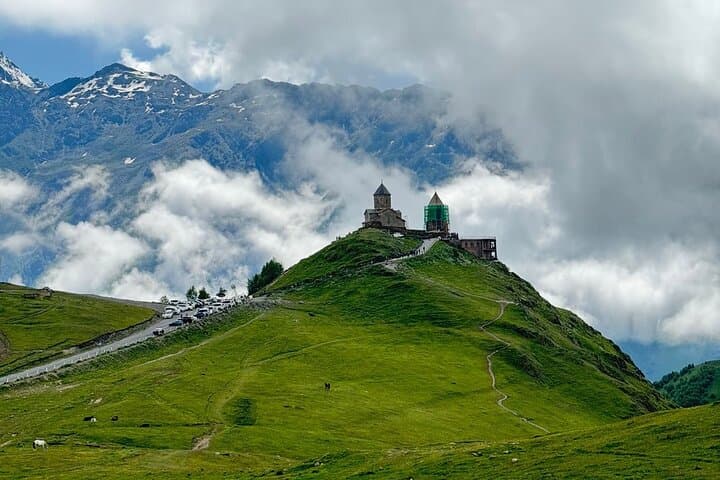
The route threads history and geology. Mtskheta’s Svetitskhoveli (11th century) and Jvari (6th century) sit where the Mtkvari and Aragvi meet; Ananuri perches above the Zhinvali reservoir, a medieval fortification that guarded approaches through mountain passes. Drive up through Gudauri for wide alpine plateaus at roughly 2,000–2,200 m, then to Stepantsminda (Kazbegi) at ~1,740 m and the Gergeti Trinity Church (approx. 2,170 m)—a short 3–4 km steep walk from town with ~400 m elevation gain if you skip the 4x4.
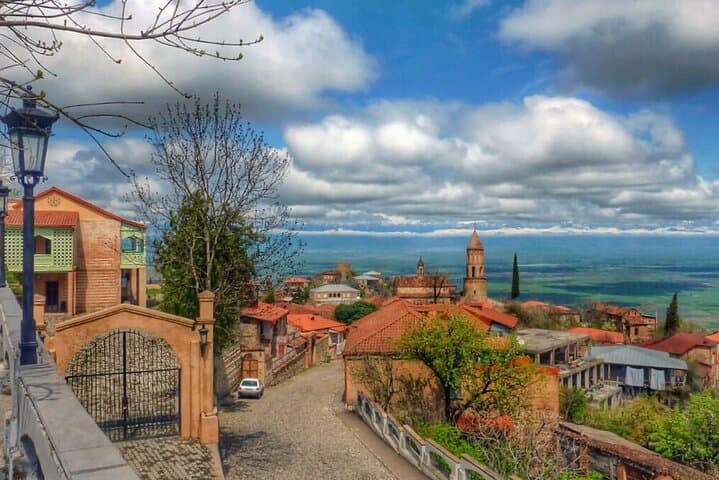
Kakheti’s sun-washed hills and Sighnaghi’s defensive wall tell the story of Georgia’s millennia of winemaking; taste qvevri-based wines in family cellars and sample fresh bread and cheese in village Badiauri.
Practical edge: expect mostly paved driving with short hikes and many photo stops; pack layered clothing for temperature swings between 0–20°C depending on season, sturdy shoes for rocky church approaches, a refillable water bottle, and local cash (GEL) for cable cars, 4x4 transfers, and small tastings. Depart early to avoid afternoon clouds in the high country and allow time for customs at popular viewpoints.
easy.
3 days.
Suitable for most fitness levels; expect several short walks of 1–4 km and one steeper 3–4 km ascent to Gergeti if you opt to hike.
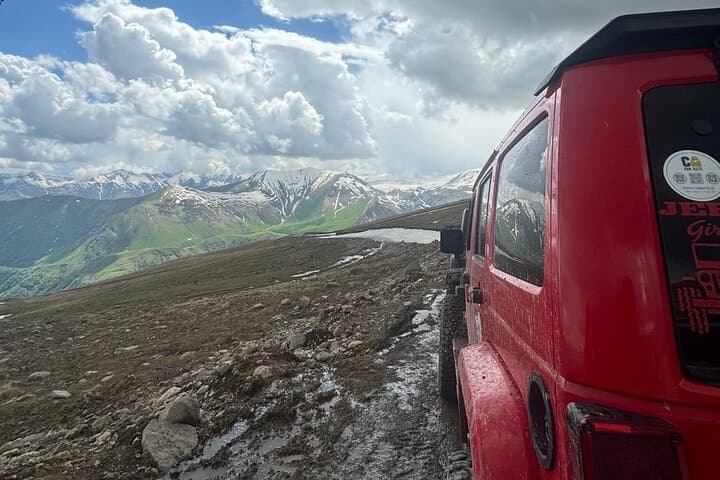
No — you can take a 4x4 from Stepantsminda for about 60 GEL each way or hike roughly 3–4 km with ~400 m elevation gain to the church.
Many nationalities can enter Georgia visa-free for short stays; check official government resources for your country before travel.
Standard itineraries often include a visit with tastings in Kakheti, but confirm specifics with the operator as some tastings are optional or extra-cost.
Expect several hours of driving with stops—roughly 20–150 km legs: Tbilisi–Mtskheta ~20 km, Tbilisi–Ananuri ~60–70 km, Tbilisi–Stepantsminda ~150 km, and Tbilisi–Sighnaghi ~110 km.
Mtskheta served as Georgia’s early capital and religious heart; its cathedrals and monasteries date from the 6th–11th centuries and reflect the country’s Christian heritage.
Highland ecosystems are fragile — stick to trails, avoid single-use plastics during tastings and support family-run wineries and guesthouses to keep tourism benefits local.
Beqa operates guided outdoor trips and adventures with an emphasis on safety, stewardship, and memorable experiences.
You step out of Tbilisi’s bustle onto a highway that climbs toward the Caucasus, the air changing from city dust to cold mountain clarity. Rivers braid and dare you from the valleys below as the Georgian Military Highway pushes the landscape higher; stone churches and fortress walls punctuate each bend. Over three days you’ll trade tramlines for dirt tracks, cathedral domes for snow-dark ridgelines, and urban sulfur baths for terraced vineyards.
You step out of Tbilisi’s bustle onto a highway that climbs toward the Caucasus, the air changing from city dust to cold mountain clarity. Rivers braid and dare you from the valleys below as the Georgian Military Highway pushes the landscape higher; stone churches and fortress walls punctuate each bend. Over three days you’ll trade tramlines for dirt tracks, cathedral domes for snow-dark ridgelines, and urban sulfur baths for terraced vineyards.
The route threads history and geology. Mtskheta’s Svetitskhoveli (11th century) and Jvari (6th century) sit where the Mtkvari and Aragvi meet; Ananuri perches above the Zhinvali reservoir, a medieval fortification that guarded approaches through mountain passes. Drive up through Gudauri for wide alpine plateaus at roughly 2,000–2,200 m, then to Stepantsminda (Kazbegi) at ~1,740 m and the Gergeti Trinity Church (approx. 2,170 m)—a short 3–4 km steep walk from town with ~400 m elevation gain if you skip the 4x4.
Kakheti’s sun-washed hills and Sighnaghi’s defensive wall tell the story of Georgia’s millennia of winemaking; taste qvevri-based wines in family cellars and sample fresh bread and cheese in village Badiauri.
Practical edge: expect mostly paved driving with short hikes and many photo stops; pack layered clothing for temperature swings between 0–20°C depending on season, sturdy shoes for rocky church approaches, a refillable water bottle, and local cash (GEL) for cable cars, 4x4 transfers, and small tastings. Depart early to avoid afternoon clouds in the high country and allow time for customs at popular viewpoints.