THE ADVENTURE COLLECTIVE® · Independent discovery and booking for outdoor travel

Walk the landing beaches of Gallipoli, visit Lone Pine and Chunuk Bair, then cross to Çanakkale to explore Troy and naval museums. This three-day tour pairs battlefield terrain with layered archaeological sites for a focused historical experience.
Walk the landing beaches of Gallipoli, visit Lone Pine and Chunuk Bair, then cross to Çanakkale to explore Troy and naval museums. This three-day tour pairs battlefield terrain with layered archaeological sites for a focused historical experience.
You step off the minivan onto the red-scarred sand at ANZAC Cove and the wind from the Aegean arranges itself around the memorial crosses, pushing you toward the lines of graves and the narrow gullies where soldiers once sheltered.
Verified experiences and guided adventures in the surrounding area.
Operated by Hassle Free Travel · Çanakkale, Çanakkale Province
You step off the minivan onto the red-scarred sand at ANZAC Cove and the wind from the Aegean arranges itself around the memorial crosses, pushing you toward the lines of graves and the narrow gullies where soldiers once sheltered.
This three-day itinerary moves from the Istanbul bustle to the strategic straits of the Dardanelles, guiding visitors through Gallipoli’s landing beaches—ANZAC Cove, Lone Pine, Johnston’s Jolly—and the Helles and Suvla sectors, before crossing to Çanakkale and the layered ruins of ancient Troy.
Gallipoli’s landscape is shaped by war and geology: low limestone ridges, chalky bluffs and sandy coves that funneled movement in 1915. Troy, meanwhile, records human occupation across millennia; Heinrich Schliemann’s excavations revealed at least nine phases from Bronze Age citadels to later settlements. Local culture still reflects the crossroads—fishing communities, Ottoman fortresses like Çimenlik and naval relics including the Nusrat mine-layer.
Practical guidance: expect frequent short walks on uneven ground and stairs at memorials; the tour includes two nights’ hotel accommodation, three lunches and many site admissions. Bring your passport and any necessary visas, carry water and sun protection, and plan for wind and sudden rain. Photography is allowed at open sites but observe memorial etiquette: keep voices low at cemeteries and follow guide instructions.
This trip is a compact, historically dense experience—ideal for travelers who want context, battlefield terrain, and a tangible link between Homeric legend and 20th-century history.
easy.
3 days.
Suitable for travelers comfortable with several hours of walking over uneven ground and stairs; minimal hiking fitness required.
Yes—admissions to the listed sites on the itinerary are included as noted in the tour description.
Expect multiple short to moderate walks at battlefield sites and at Troy, typically broken into 1–3 hour blocks with transport between locations.
Yes—hotel pickup and drop-off are included; exact pickup times are confirmed after booking and start 30–60 minutes before departure time.
Shared tour groups are up to 10 travelers; sales are final per the operator’s policy and cancellations are non-refundable.
Gallipoli is the site of the 1915 Allied campaign against Ottoman forces; Troy’s excavations by Heinrich Schliemann revealed layers of settlement dating to the Bronze Age and earlier.
Memorial sites are fragile—stay on paths, avoid touching artifacts and support local guides who manage visitor impact.
Hassle Free Travel operates guided outdoor trips and adventures with an emphasis on safety, stewardship, and memorable experiences.
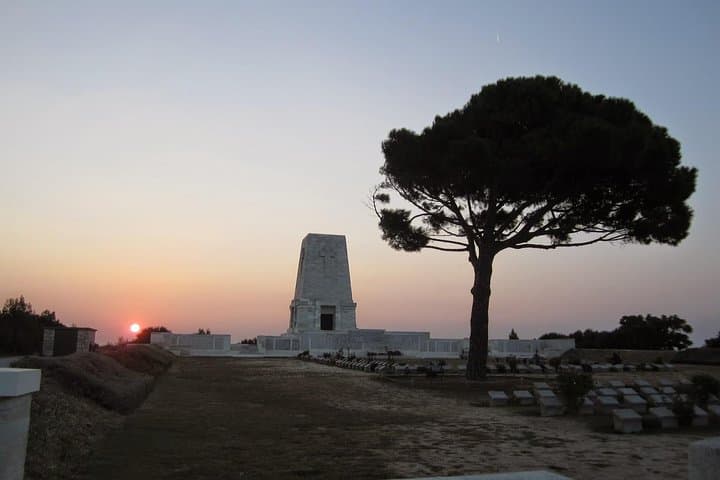


You step off the minivan onto the red-scarred sand at ANZAC Cove and the wind from the Aegean arranges itself around the memorial crosses, pushing you toward the lines of graves and the narrow gullies where soldiers once sheltered.
You step off the minivan onto the red-scarred sand at ANZAC Cove and the wind from the Aegean arranges itself around the memorial crosses, pushing you toward the lines of graves and the narrow gullies where soldiers once sheltered.
This three-day itinerary moves from the Istanbul bustle to the strategic straits of the Dardanelles, guiding visitors through Gallipoli’s landing beaches—ANZAC Cove, Lone Pine, Johnston’s Jolly—and the Helles and Suvla sectors, before crossing to Çanakkale and the layered ruins of ancient Troy.
Gallipoli’s landscape is shaped by war and geology: low limestone ridges, chalky bluffs and sandy coves that funneled movement in 1915. Troy, meanwhile, records human occupation across millennia; Heinrich Schliemann’s excavations revealed at least nine phases from Bronze Age citadels to later settlements. Local culture still reflects the crossroads—fishing communities, Ottoman fortresses like Çimenlik and naval relics including the Nusrat mine-layer.
Practical guidance: expect frequent short walks on uneven ground and stairs at memorials; the tour includes two nights’ hotel accommodation, three lunches and many site admissions. Bring your passport and any necessary visas, carry water and sun protection, and plan for wind and sudden rain. Photography is allowed at open sites but observe memorial etiquette: keep voices low at cemeteries and follow guide instructions.
This trip is a compact, historically dense experience—ideal for travelers who want context, battlefield terrain, and a tangible link between Homeric legend and 20th-century history.