THE ADVENTURE COLLECTIVE® · Independent discovery and booking for outdoor travel

Three days of structured apnea training on Lanzarote combine classroom breathing work with progressive open-water practice. Small groups, volcanic coves and focused safety drills make this a practical introduction to freediving in Atlantic waters.
Three days of structured apnea training on Lanzarote combine classroom breathing work with progressive open-water practice. Small groups, volcanic coves and focused safety drills make this a practical introduction to freediving in Atlantic waters.
A wind off the Atlantic trims the volcanic shore as students gather at a low concrete quay. Masks fog, long fins slap the dock, and the sea—cool and clear—invites controlled silence: the entry point for three days of structured apnea training.
Verified experiences and guided adventures in the surrounding area.
Operated by Ocean Freediving Lanzarote · Arrecife, Canary Islands
A wind off the Atlantic trims the volcanic shore as students gather at a low concrete quay. Masks fog, long fins slap the dock, and the sea—cool and clear—invites controlled silence: the entry point for three days of structured apnea training.
The Apnea Course on Lanzarote balances classroom technique and open-water practice. Over three days participants cover breathing protocols, equalization, and immersion mechanics before applying skills in shallow reef and sheltered bay settings. Lanzarote’s black lava fields and recent volcanic geology shape short, rugged coves where underwater terrain drops quickly; the island’s boating history and César Manrique’s cultural imprint are visible in concrete harbors and low-rise architecture along the coast.
Expect practical sessions: static holds, dynamic finning drills, buddy rescue practice, and progressive depth exposure under instructor supervision. Water temperatures average 18–24°C across seasons, so wetsuit choice matters; visibility is often good near protected coves but can fall with wind-driven surge.
For planning, arrive with a recent medical check if you have cardiovascular or spinal issues; basic swimming skill and comfort in open water are required. Bring a low-volume mask, a logbook to track times, reef-safe sunscreen, and patience—apnea rewards calm, consistent practice. Courses cap small, shared groups for focused coaching and include equipment use; certification outcomes vary by agency. On Lanzarote the sea is an active partner: it tests breath and focus, and it rewards slow, deliberate exploration.
moderate.
3 days.
Participants should have moderate cardiovascular fitness, comfortable swimming ability, and no serious respiratory or cardiac conditions.
Yes—courses are designed for novices with progressive drills, but participants must be comfortable in open water and follow medical screening.
Beginners typically build from surface and shallow drills to controlled open-water descents; many students safely reach 10–20 m under instructor oversight, depending on progress.
Many operators require a medical declaration and exclude people with significant heart or spinal conditions; check age minimums with the provider—young teens may be allowed with parental consent.
Certification depends on the provider and course level—introductory apnea courses often provide a course completion record, while advanced courses may award federation-recognized certifications.
Lanzarote’s coastline is defined by recent volcanic activity and traditional Canarian fishing villages; modern tourism coexists with fishing and art influenced by César Manrique.
Respect marine reserves and seagrass beds, use reef-safe sunscreen, and avoid touching or removing wildlife; small-group instruction minimizes environmental impact.
Ocean Freediving Lanzarote operates guided outdoor trips and adventures with an emphasis on safety, stewardship, and memorable experiences.

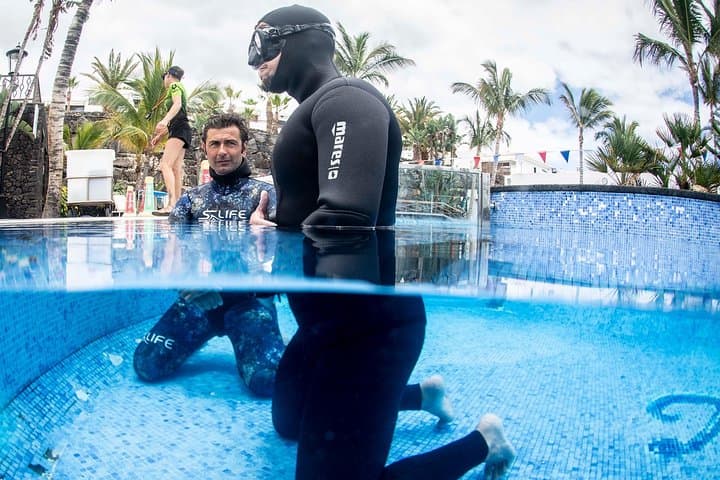


A wind off the Atlantic trims the volcanic shore as students gather at a low concrete quay. Masks fog, long fins slap the dock, and the sea—cool and clear—invites controlled silence: the entry point for three days of structured apnea training.
A wind off the Atlantic trims the volcanic shore as students gather at a low concrete quay. Masks fog, long fins slap the dock, and the sea—cool and clear—invites controlled silence: the entry point for three days of structured apnea training.
The Apnea Course on Lanzarote balances classroom technique and open-water practice. Over three days participants cover breathing protocols, equalization, and immersion mechanics before applying skills in shallow reef and sheltered bay settings. Lanzarote’s black lava fields and recent volcanic geology shape short, rugged coves where underwater terrain drops quickly; the island’s boating history and César Manrique’s cultural imprint are visible in concrete harbors and low-rise architecture along the coast.
Expect practical sessions: static holds, dynamic finning drills, buddy rescue practice, and progressive depth exposure under instructor supervision. Water temperatures average 18–24°C across seasons, so wetsuit choice matters; visibility is often good near protected coves but can fall with wind-driven surge.
For planning, arrive with a recent medical check if you have cardiovascular or spinal issues; basic swimming skill and comfort in open water are required. Bring a low-volume mask, a logbook to track times, reef-safe sunscreen, and patience—apnea rewards calm, consistent practice. Courses cap small, shared groups for focused coaching and include equipment use; certification outcomes vary by agency. On Lanzarote the sea is an active partner: it tests breath and focus, and it rewards slow, deliberate exploration.